
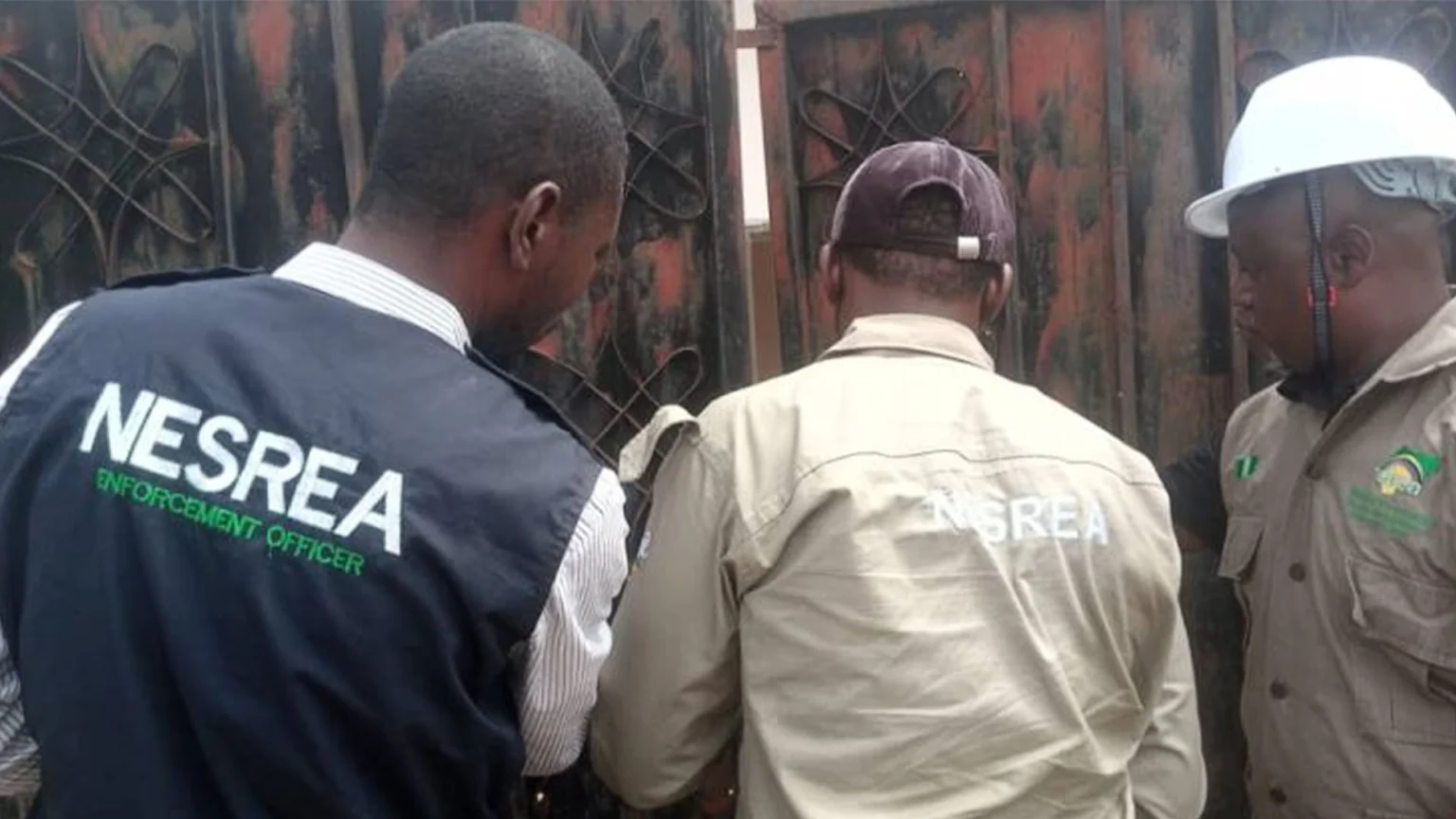
National Environmental Standards and Regulations Enforcement Agency (NESREA) has sealed 35 estates in Abuja for allegedly breaching Environmental Impact Assessment (EIA) regulations governing environmental compliance across sectors.
Director-General of NESREA, Innocent Barikor, disclosed this after the enforcement exercise, stating that the agency is mandated to enforce laws that protect air, water, land, biodiversity and public health. He was represented by the Director of Environmental Quality Control, Elijah Udofia.
Barikor said the construction sector poses significant environmental risks when safeguards are ignored, citing poor waste management and development on flood plains and ecologically sensitive areas as key concerns.
He added that the affected estate developers were linked to uncontrolled dust and emissions, unsafe handling of materials and chemicals, poor site drainage, erosion, sedimentation and adverse impacts on nearby communities.
According to him, the National Environmental (Construction Sector) Regulations 2011 impose clear obligations on developers and construction operators regarding environmental management, documentation and responsible site operations.
Barikor stated that the enforcement action followed routine inspections and compliance monitoring, which identified violations across multiple facilities. He noted that some operators failed to comply with requirements on environmental documentation and did not respond adequately to regulatory engagements.
He said failure to meet clearly communicated and time-bound compliance requirements constitutes a serious breach that threatens environmental safety and public health, stressing that compliance is mandatory.
The director-general added that the enforcement measures are backed by the provisions of the NESREA Act 2018 (as amended) and relevant construction sector regulations.
He urged developers, contractors and site operators to cooperate with the agency by meeting regulatory requirements, noting that environmental documentation is a legal obligation. He added that improved compliance would enhance environmental performance in the construction sector while ensuring safer communities and predictable regulatory processes.
In this article