
By Alabi Williams
If parties are going to do well in next year’s elections, this is the time to do a realistic assessment of areas of strength and weak points. They need to tidy their acts as they get set to select flagbearers for various offices. The types of primaries are spelt out in the Electoral Act 2026: direct or consensus. To avoid rancour, parties are instructed to give all aspirants equal access to the nomination process. Nobody is to be shut out. At the same time, a party may decide to zone tickets to particular areas, for certain considerations.
In doing that, parties must ensure that stakeholders are carried along. If the process is poorly managed, it could result in costly post-primary crisis that the parties might not have time to conclusively resolve. Getting it right at this stage is essential because it would put things in order and present a formidable and cohesive structure before election proper.
For the African Democratic Congress (ADC), the coalition has hardly had time to settle down for crucial housekeeping. Since the time it was put together around July 2025 and now, it has confronted different obstacles, including having moles within who are hired to ruin its prospects. Sensing there could be legal challenges, the types that currently entangle the party, the coalition partners originally sought to register a fresh party, which they named All Democratic Alliance (ADA). But they were frustrated.
The sudden fame ADC acquired when Atiku Abubakar, David Mark, Rauf Aregbesola, Rotimi Amaechi, Nasir el- Rufai and other opposition big wigs adopted it as their platform to contest 2027 elections, turned out to be the party’s nemesis. Before it became a coalition, ADC didn’t pose much electoral threat. Today, it is the major opposition causing the ruling party sleepless nights.
The Independent National Electoral Commission (INEC), has announced May 10 as deadline for parties to submit their membership register. The election management body also fixed parties’ primaries to be conducted between April 23 and May 30, 2026. The ADC is pressed for time to meet up with crucial timelines. No thanks to its leadership dispute, which curiously, INEC has assisted to magnify.
On April 14, the Supreme Court granted a request to accelerate the hearing of the appeal filed by the interim chairman, David Mark, regarding the party’s leadership dispute. On April 22, the court heard the matter but reserved judgment for a later date that was not announced.
For a party that must put its house in order before May 10, accelerated hearing as a legal construct should not be allowed to have another meaning. Already, there are worries that further delay by the court to announce the authentic leadership of the party could play into the hands of those who do not wish ADC well.
Meanwhile, there are those who think the ADC is to blame for its woes. It should have long settled its internal affairs before now. Another view is that, the party is not only dealing with enemies within, but with formidable enemies operating within the government of Bola Ahmed Tinubu. They cite the case of the Chief of Staff to the President, Femi Gbajabiamila, who in the glare of the global media encouraged Rep. Leke Abejide, one of the ADC contenders for the soul of the party, to stay back and destroy it from within.
That was more than a slip. Just the same way they conspired to destroy the Peoples Democratic Party (PDP) and the party was destroyed from within. The Social Democratic Party (SDP), showed signs of being a strong opposition the moment former Kaduna State Governor, Nasir el-Rufai, announced his membership. The party was engineered to collapse immediately from within. With the amount of slush fund available to the ruling party, it could bring down any system from within. But the opposition cannot afford to be distracted. Hopefully, the judiciary will not allow itself to be distracted and dragged into the arena.
As soon as the ADC leadership is restored, fillers are that it must commence processing aspirants for 2027 elections. If the party gets sorted at the national level, that might be a pointer for other tiers to follow. However, settling the issue of its presidential flagbearer is acknowledged as the party’s most contentious subject. There are considerations regarding the zone the presidential flagbearer might come from and the process leading up to that.
There is the argument that since there is the North-South rotational principle currently at work, it might make sense for ADC to work towards strengthening the arrangement. Since the Presidency is now in the South, some have canvassed that all the parties should pick their flagbearers from the South, to give the South eight years, the same way Muhammadu Buhari spent eight years on behalf of the North.
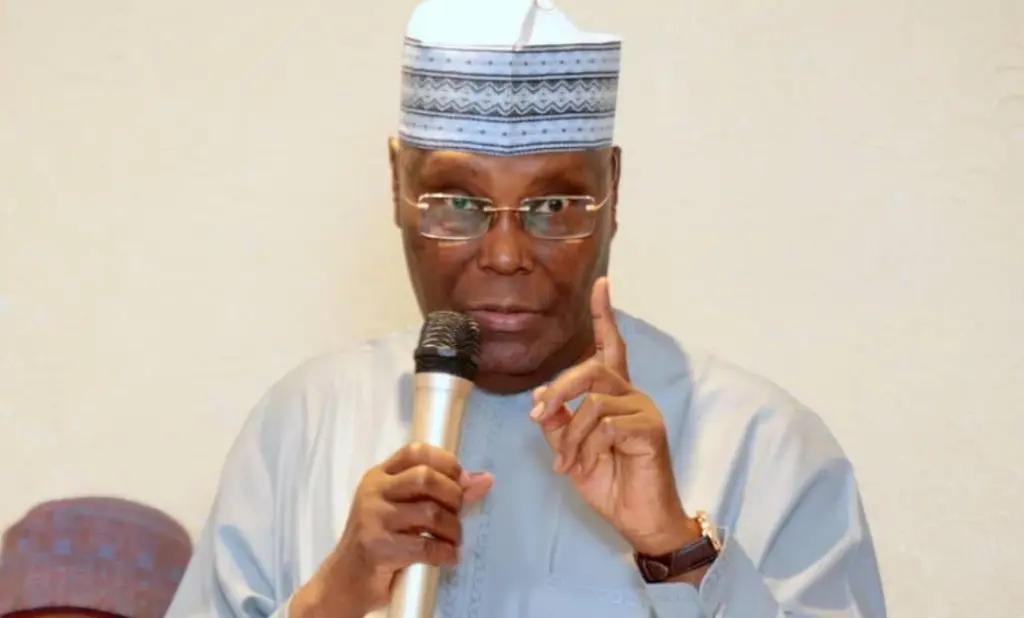
Atiku Abubakar, in a recent Arise TV interview, has indicated interest to run for the presidential election in 2027, if he is nominated or elected by their party. He explained that rotational presidency is not a constitutional provision, but a creation of the PDP, which was disrupted on May 5, 2010, when President Umar Yar’Adua passed on without completing his first four years in office, thus denying the North its share of rotational presidency under PDP.
That was the same contention the PDP could not resolve in 2023, when it fielded Atiku, instead of a southern candidate after Buhari’s eight years. Atiku’s body language remains that the ADC ticket is better left open, even though he pledged to support whoever emerged the flagbearer of the party. There are worries that if the party is unable to select a flag bearer through consensus, there are chances that Atiku could win in a free and fair direct primary. From commentaries, that could leave a proportion of ADC members and admirers who prefer a southern flagbearer disgruntled and uninterested. There is also a consideration for generational shift.
Power, however is not served ala carte. President Tinubu made that phrase popular. And it makes some sense here. Atiku is obviously the rallying point in the ADC. Anyone who thinks he will causally walk away from a lifetime ambition, without presenting a more compelling argument other than age and rotational presidency must think again.
The Atiku that featured on the Arise TV interview appeared refreshed and confident. He said he controls a fair share of votes in the North, if the historic dominance of Buhari were discounted. Atiku won 36 per cent of northern votes in 2023. Tinubu had 38 per cent with the support of Buhari. A lot has happened since the last elections, that may have shifted sentiments and data more positively to Atiku’s side.
Regarding Peter Obi, the man looks unstoppable. He is the most fleetfooted and engaging of the presidential contenders. He goes to where there are needs to confront them. Of those who could threaten Tinubu’s second term, Obi gives Tinubu followers more sleepless nights than the others. If Obi coughs, the entire Tinubu Presidency catches cold.
They remember how he shattered their 2023 permutations in Lagos, and fear he could be far more unpredictable in 2027, giving the lackluster performance of this government. In terms of a southern president, the argument favours Obi, who has promised to spend one term, to satisfy the North. If age were the consideration, he is equally favoured.
Rotimi Amaechi, former Governor of Rivers State and Minister of Transportation under Buhari, says he will fly the flag of the ADC for the presidency come 2027. He is entitled to run, and he has age on his side. But his aspiration is limited by a number of factors. He is no longer in government, where he spent eight years as speaker, eight years as governor and eight years as minister. Those years of service, particularly as minister came with leverage and opportunity to hug limelight and make political statements.
For instance, as minister, Amaechi championed the establishment of the Transportation University, which he located in Buhari’s Daura community. He was also credited with signing the Kano-Maradi (Niger Republic) railway line in 2021. For his efforts, Amaechi was turbaned as the Dan Amanar Daura (Trusted son of Daura). One cannot say how much of that trust is still available to translate to votes in 2027.
Rotimi Amaechi’s Rivers State has lost political cohesion since Nyesom Wike took charge. Wike has been handed the powers by President Tinubu to decide where Rivers aligns in 2027. Amaechi has a lot of work to do, to galvanise his primary constituency, and the larger South-South that is now under APC receivership.
It was reported last week that Obi visited Amaechi to solicit his support. Amaechi reportedly reminded Obi that he too is a presidential aspirant. At this point, one can only wish the three frontline aspirants God’s grace to be humble and truthful to their inner selves.
Obi has been tested in the 2023 presidential election, where he came third. Obi has not relented since that encounter; he is ever on the move. He has a movement waiting to be oiled for another bout. He doesn’t need ceremonies, just as the country cannot afford wasteful ceremonies at this point.
Somehow, a situation that appeared knotty for the ADC, now looks to have a solution in sight. The coming on board of former Kano State Governor, Rabiu Musa Kwankwaso, has presented remedy to the puzzle. A likely Obi and Kwankwaso alliance is gaining traction among the people. Perhaps, if the owners of ADC follow through with it, it can only provide opportunity for more sacrifices. The frontline contenders are men of immense capacity and courage, who have made sacrifices for the country. They must make more sacrifices now. They cannot afford to fail the country.
It does not serve their private and collective interests to dissipate energies in silos and make statements randomly. Let ADC be organised.
In this article