
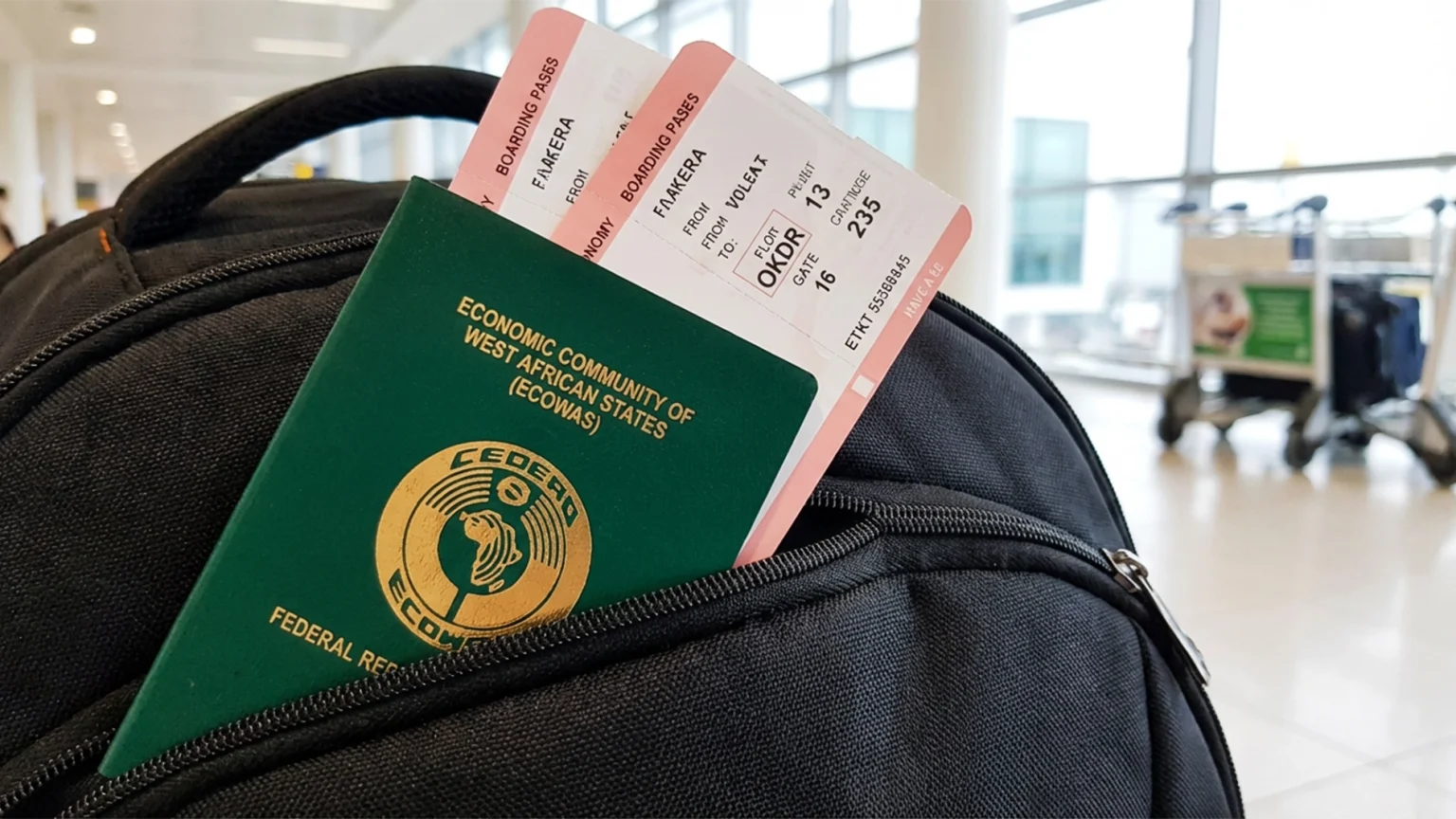
Sir: I wish to bring to your attention my predicament regarding my travelling passport application. I do this as a last resort so that you can intervene.
For most Nigerians, I reckon, obtaining a travelling passport is supposed to be a straightforward administrative process: complete the application, upload the required documents, go for your biometric capture, and wait for the document to be produced.
This has been the goal of your leadership, which has drawn accolades from sections of the Nigerian public. This is being obstructed by bureaucracy. Obtaining my passport has become a frustrating and exhausting ordeal for me. I have been stranded in uncertainty for months. Honourable Minister, sir, here is my story.
On March 1, 2025, I paid for my Nigerian Passport application and uploaded all the required documents for a change of data request. Like many Nigerians, I approached the process with patience and optimism, trusting that if I followed the official procedures carefully, the system would work as intended.
Ten days later, on March 11, 2025, I attended my first appointment. Rather than proceeding with biometric capture as expected, I was informed by an officer that my documents were still awaiting approval from Abuja and that I could not continue until that approval was granted.
Though disappointed, I accepted the explanation and continued to monitor the application patiently. Weeks later, on April 5, 2025, I finally received confirmation from the Nigerian Immigration Service that my application had been approved and that I could proceed to book another appointment. Relieved that progress was finally being made, I completed my biometric capture on April 7, 2025, at the Agodi Passport Office in Ibadan, Oyo State. At that point, I believed the difficult part was over. Unfortunately, that assumption proved wrong.
More than one year after completing biometrics, my passport has still not been produced. What makes the situation even more troubling is that I have consistently been told conflicting things by different officials despite evidence showing that my application remains active within the system.
Over the course of several months, I repeatedly contacted relevant offices and attempted to follow every appropriate channel available to me. Rather than receiving a clear explanation or resolution, I was informed on multiple occasions that my payment had supposedly “expired” and that I might have to restart the entire application process from the beginning.
This would mean making another payment and forfeiting the original one, despite the delays arising from administrative processes completely outside my control. As an applicant who complied with every instruction given, attended appointments as directed, and completed biometric enrollment successfully, I find this deeply unfair.
The most confusing aspect of the experience has been the inconsistent status updates attached to my application. For several months, via the online platform available to applicants to track their application progress, my passport status remained stuck at “Ready for Enrollment.” Then, unexpectedly, on April 16, 2026, the status changed backward to “Application Received” before progressing again to “Enrolled” on April 17, 2026.
These updates strongly suggest that the application still exists and remains active within the Nigerian Immigration Service system. Yet despite this, no clear answer has been provided regarding why the passport itself has not been issued after such an extraordinary length of time.
The emotional and practical consequences of this delay have been significant. A passport is not merely a booklet; it is an essential identification and travel document tied to opportunities, mobility, career plans, and personal responsibilities. The prolonged uncertainty has created repeated stress, wasted time, and countless follow-ups without meaningful progress.
Like many young Nigerians trying to plan for opportunities that may require travel documentation, I have found myself trapped in a bureaucratic limbo where no one appears willing or able to provide a definitive solution.
What is perhaps most discouraging is the sense of helplessness that many citizens feel when dealing with administrative institutions. The average Nigerian is often advised to “follow due process,” yet even after doing exactly that, resolution can remain painfully out of reach. Emails go unanswered. Complaints circulate endlessly between departments. Applicants are left depending on rumours, unofficial advice, or personal connections simply to access services they have already paid for legally.
This raises serious questions about accountability, communication, and efficiency within the system. If an applicant has completed payment, received approval, and successfully undergone biometric capture, what mechanism exists to ensure that the application is completed within a reasonable timeframe? More importantly, what protections exist for citizens when administrative failures occur through no fault of their own?
In my own case, I have retained documentation supporting every stage of the process, including payment records, approval emails, enrollment evidence, and screenshots showing changes in application status over time. These documents reflect a process that moved forward officially, yet somehow never reached completion.
I have attempted to pursue a resolution respectfully and through official and bureaucratic channels. However, after more than a year without a passport and without a clear explanation, I now feel compelled to reach the system through this means.
This article is not written out of hostility toward any institution or official. Rather, it is an appeal for accountability, transparency, and urgency in addressing administrative issues that affect ordinary Nigerians every day. Public institutions exist to serve citizens efficiently and fairly. When systems fail repeatedly without explanation, trust in those institutions gradually erodes.
No Nigerian who has complied fully with official procedures should remain stranded indefinitely in administrative uncertainty. At a time when the country continues to emphasise digital modernisation and institutional reform, experiences like this highlight the urgent need for stronger internal coordination, clearer communication with applicants, and better safeguards against prolonged unresolved cases.
Honourable Minister, my prayer: resolve my case, please. God bless the Federal Republic of Nigeria.
Omata Peter Odion-Akhaine can be reached via
omataakhaine@gmail.com
and 09059291219.
In this article