
By Sheriffdeen Tella
Every event deserves some study and analysis. To check lessons taught, identify significant issues, and prepare an appropriate response for
future occurrences. This is what is expected from progressive organisations and progressive governments. There is always a takeaway from every happening around us, and what we take from it depends on our perception of life. This is more important for the leadership of various countries that are desirous of inclusive development.
That kind of leadership, very common in Asia, is absent in most of Africa, particularly Nigeria. Governments of self-interest and collective betrayal dominate Africa. That is why you see the leaders bathing in affluence from endowed natural resources but happily leading poverty-stricken citizens. If we ask our grandfathers what the takeaways from the Nigerian civil war, the various oil booms, and the various recessions we have gone through as an independent country are, you can hardly get plausible answers. The focus of being in leadership here is to prepare for the emancipation of the family from poverty, not how to care for collective development. That is clearly demonstrated by the public valedictory speech of Adebayo Adelabu, the erstwhile power minister, who left office in greater darkness than he met it but richer in wealth than when he entered government. His case deserves greater details than this column can accommodate.
When American firms started landing in Japan after the Second World War, the Japanese government quickly saw the benefits in terms of employment generation, but also saw and grabbed the long-term takeaway of the opportunity to steal the corresponding technology brought in for the benefit of its citizens in terms of economic development of the country. Japan, with no valuable physical natural resources, intensified investments in human capital as the main and only factor that could fast-track technology transfer, and within a short time, Japan became industrialised, gradually moving from underdeveloped to one of the most advanced economies globally. It eventually became the second-largest economy in the world until recently displaced by China.
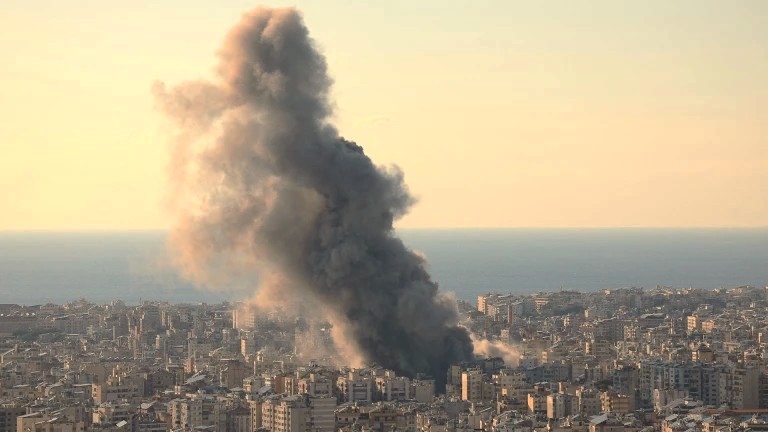
The US, Israel, and Iran war has brought untold hardship to the standard of living globally, in addition to the takeaways from the closure of the Strait of Hormuz, the attempt to destroy Iran’s longest bridge, and other significant developments. What have we learnt from all these, the takeaways, and what are our homegrown short-, medium-, and long-term plans? It is not only domestic events that we prepare defence for, but all issues that have domestic and global outcomes, whether favourable or unfavourable. Since the world has become a global village, it is easy to have contagion effects of events, and it is imperative that we have standby analysts, particularly the special advisers, who generally should work as, or, with a team to produce solutions or ideas for tackling such issues.
The cooperation of Iranians with their government in the case of an attempted attack on the long bridge depicts patriotism on the part of the citizens. Such patriotism is founded on deep-rooted support for their leaders. That was just the opposite of what happened when the President of Venezuela was arrested and taken away to the United States. A progressive government would ask itself what the reactions of its citizens would be in each of these two cases and work towards getting positive support if the indication is otherwise. Given the perilous situation on the ground, Nigerians are likely going to say it is the business of those in government. What have we really enjoyed as a dividend of democracy? The Nigerian government must work on this.
The untold hardship of the war with respect to energy price shocks in particular, what lessons have we learnt, and what plans are we making? It has become increasingly clear that we need to increase domestic output of crude oil to meet both domestic demand by Dangote Refinery and others, as well as the external creditors, and for exports. We can quickly renegotiate, on this basis of the war, with those external creditors we have a counter-trade agreement with, while getting new oil explorers or allocating more oil wells to Chevron, Shell, and others who have the capacity to quickly improve exploration and delivery of crude oil, as well as attract new markets to supply oil. Increased supply to Dangote and other domestic oil refineries will make it possible to control pump prices through crude supply at domestic prices and, invariably, keep inflation down in the country.
The Ukraine-Russia war caused global price increases primarily in wheat and subsequently in bread and other related food. Records show that many countries found an immediate solution in seeking new markets for wheat and subsequently engaged in wheat production or found alternatives to wheat in the production of bread and allied products. In Nigeria, like many African countries, the price was passed on to consumers with unfulfilled consumer and production subsidies. Eventually, wheat bread is now very scarce in the market, and there is no programme to encourage or revitalise the local production of wheat. The prices of bread made of flour remain outside the reach of very poor people, and also affect the prices of other commodities. Food-related diseases are now common, and the prices of medicines have also gone up. I once wrote on “the return to eleweomo” to alert the government to the return of people to herbal medicine, whose prices have now become untouchable.
When the war between Ukraine and Russia started, the former was the underdog, and it was thought that it would be crushed in weeks. Support came from the NATO members it was trying to join, and Ukraine started thinking of what it could do to save itself without total reliance on NATO. The main takeaway happens to be how to tackle the massive use of long-range missiles by Russia. Ukraine government sets in motion the production of missile interceptors to protect the country’s space from aerial attack. It quickly funded, among other measures, the domestic production of anti-ballistic missile gadgets. This is part of what has prolonged the war till today because the NATO members found that Ukraine did not find itself helpless and in total reliance. Today, many countries are requesting and purchasing Ukraine’s anti-ballistic missiles!
China is the number two global economy. is watching the current war between the United States, Israel, and Iran and saw that the takeaway should not be in taking sides in the war but seeking peaceful alliances with many of the Gulf countries in the areas of trade, technology, and financial development. That is exactly what China has been pursuing for its long-term economic benefits from the war. By the time the war ends in favour of whoever, those countries will not turn to the United States for rebuilding and reconstruction of their war-ravaged economies, but to China.
Whatever is happening around the world, truly world leaders, desirous of their country’s development, take advantage of the good outcomes and work on them, and minimise the costs of bad outcomes on their economy through prompt policy initiatives and implementation for the common good. That is the kind of leadership Nigeria, nay Africa, deserves, not selfish, arrogant, kleptocratic, and self-centred leaders that live in affluence and keep their citizens in avoidable poverty.
In this article