
*We don’t think of ourselves as a nation; ethnicity and religion have become instruments of division
*There will be no shortcuts, there will be no excuses, there will be no appeal to pity”
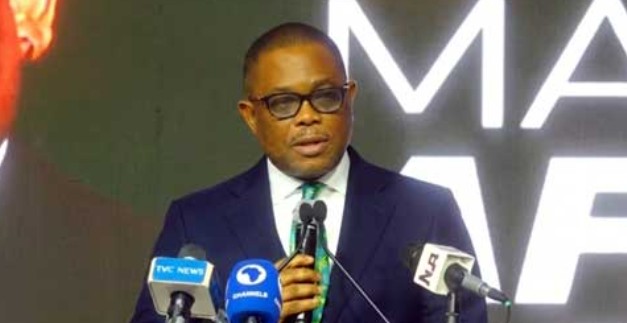
The President of the Nigerian Bar Association (NBA), Mazi Afam Osigwe, SAN, has challenged Nigerians to overcome physical, mental and institutional barriers and take deliberate steps towards rebuilding the country and fulfilling its long-standing promise of greatness.
Osigwe made the call at the 66th Annual General Conference of the Association, stressing that the theme, “Beyond Limits,” should serve as a rallying cry for Nigerians to abandon self-doubt and confront the obstacles holding the country back.
The Bar President said many Nigerians are constrained not only by physical and real challenges but also by imagined and mental barriers, which often prevent them from reaching their full potential.
“If you throw your heart over the bar, then your body will follow,” he said, explaining that people cannot overcome obstacles they have not first convinced themselves they are capable of conquering.
He urged Nigerians to go beyond limits, saying the call is particularly important in view of the hopes and aspirations that accompanied independence in 1960.
He recalled that at independence Nigeria was expected to become the beacon of Africa and a lighthouse that would guide other African nations towards greatness, but lamented that 66 years later many of those dreams remain unrealised.
He noted that the country had earned the description “Giant of Africa” because of its enormous human and natural resources, population and influence, but said it needed to wake up and translate its potential into tangible development.
“Sometimes it feels like telling Nigeria, ‘Oh, giant, awake.’ We have great potentials which we are yet to fully achieve,” he said.
Osigwe said the optimism surrounding the country at independence was built on several foundations: constitutional democracy, federalism, strong institutions, quality universities, visionary political leadership, an independent judiciary and a competent public service.
He expressed concern that ethnicity and religion, which were expected to be sources of strength within the country’s diversity, had increasingly become instruments of division.
Tribal and religious cleavages, he said, have made national development more difficult because many Nigerians now place ethnic or religious interests above the collective interest of the country.
“We don’t think of ourselves as a nation. We first think as members of our ethnic or religious group and hardly think of the best interest of Nigeria,” he said.
The Bar President recalled the optimism expressed by the country’s first Prime Minister, Sir Abubakar Tafawa Balewa, in his Independence Day address of 1 October 1960.
He quoted Balewa as saying that Nigeria appeared “destined to move with quiet dignity to our place on the world stage,” and challenged Nigerians to reflect on whether the country had lived up to that expectation more than six decades later.
He noted that Balewa had acknowledged the challenges facing the young nation while remaining confident in the determination and capacity of Nigerians to overcome them.
Osigwe said the country has retained its status as the Giant of Africa, with a population of more than 220 million people and significant influence over the continent’s political, economic and cultural affairs, but has yet to fully realise the dreams of its founding fathers.
“Yet, while Nigeria has not fully achieved the expectations and dreams of its fathers, it still possesses the potential to do so and to become one of the leading countries of the world,” he said.
The Bar President charged lawyers to play a leading role in transforming the country, describing them as custodians of the nation’s constitutional promise and defenders of the rule of law.
He urged the profession to broaden its focus to include African leadership, democratic consolidation, institutional reform and regional integration, particularly as Nigeria and other African countries approach critical political transitions.
Osigwe said achieving the vision behind the conference theme would require Nigerians to venture outside their comfort zones and confront challenges that might initially appear impossible, and that there would be no shortcuts to national transformation.
“To go beyond limits, both as a nation and as members of the legal profession, we must venture beyond the usual borders. We must sometimes undertake what appear impossible to reach and achieve our goals,” he said.
He added: “We must push through our limitations and beyond our comfort zones. There will be no shortcuts. There will be no excuses. There will be no appeal to pity.”
In this article