
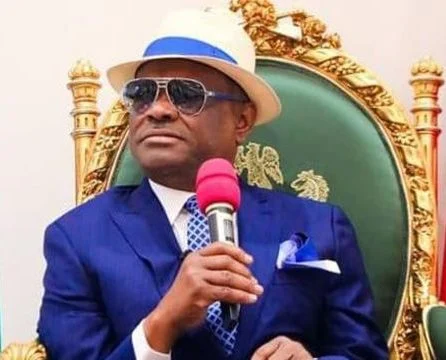
The Socio-Economic Rights and Accountability Project has filed a lawsuit against the 35 state governors and the Minister of the Federal Capital Territory, Nyesom Wike, over their alleged failure to account for the spending of about N14 trillion realised as fuel subsidy savings.
Other respondent includes the office of the Accountant-General of the Federation.
SERAP said the governors and the FCT minister have collected trillions of naira as increased allocations from the Federation Account Allocation Committee following the removal of fuel subsidy in May 2023, but that the funds have not translated into improved access to quality healthcare, education and other basic services for poor and vulnerable Nigerians.
The suit, marked FHC/L/MSC/1424/2025, was filed last Friday at the Federal High Court in Lagos, according to a statement signed on Sunday by SERAP’s Deputy Director, Kolawole Oluwadare.
SERAP is asking the court to direct and compel the respondents to disclose details of how the increased FAAC allocations, described as fuel subsidy savings, have been spent since mid-2023.
Specifically, the organisation is seeking an order to “direct and compel the governors and Mr Wike to disclose the details of the spending of the increased FAAC allocations being savings from the removal of fuel subsidy in May 2023.”
It is also asking the court to “compel the governors and Mr Wike to disclose details and the location of the projects executed, if any, with the increased FAAC allocations from the savings from the removal of fuel subsidy.”
In the suit filed by its lawyers, Oluwakemi Agunbiade and Valentina Adegoke, the organisation argued that, “The Federation Account Allocation Committee (FAAC) in 2024 distributed N28.78 trillion from the removal of subsidy on petrol to the three tiers of government, representing a 79 per cent increase from the previous year.
“State governments’ allocations increased by 45.5 per cent to N5.22 trillion. Monthly distributions in 2025 have reportedly exceeded N1.6 trillion.
“However, despite the increased allocations of public funds to states and FCT, millions of poor and socially and economically vulnerable Nigerians have not benefited from the savings.
“Many states reportedly owe civil servants’ salaries and pensions. Several states continue to borrow to pay salaries. Millions of Nigerians resident in several states and the FCT continue to be denied access to basic public services.
“Several years of allegations of corruption and mismanagement in the spending of public funds by several states and entrenched impunity of perpetrators have undermined public trust and confidence in governments at all levels.”
SERAP argued in the suit that Nigerians have a right to know how public funds, including fuel subsidy savings, are spent by state governments and the FCT administration.
It further argued that the savings from the removal of fuel subsidy ought to be spent solely for the benefit of poor and vulnerable Nigerians who are bearing the brunt of the policy.
“Directing and compelling states and FCT to disclose the details of the spending of the money collected as fuel subsidy savings would allow Nigerians to scrutinise them, and for public officials to account for the spending of public funds,” it said.
The organisation cited constitutional provisions, including Sections 13, 15(5) and 16(2) of the 1999 Constitution (as amended), as well as Nigeria’s obligations under the United Nations Convention against Corruption, to support its case for transparency and accountability.
It also relied on a Supreme Court judgment which held that the Freedom of Information Act applies to public records across the federation, including those relating to the spending of subsidy savings by states and the FCT.
No date has been fixed for the hearing of the suit.
In this article