
Senate has passed for second reading a bill seeking to compel Non-Governmental Organisations operating in Nigeria to register all foreign aid and donor-funded projects with the government.
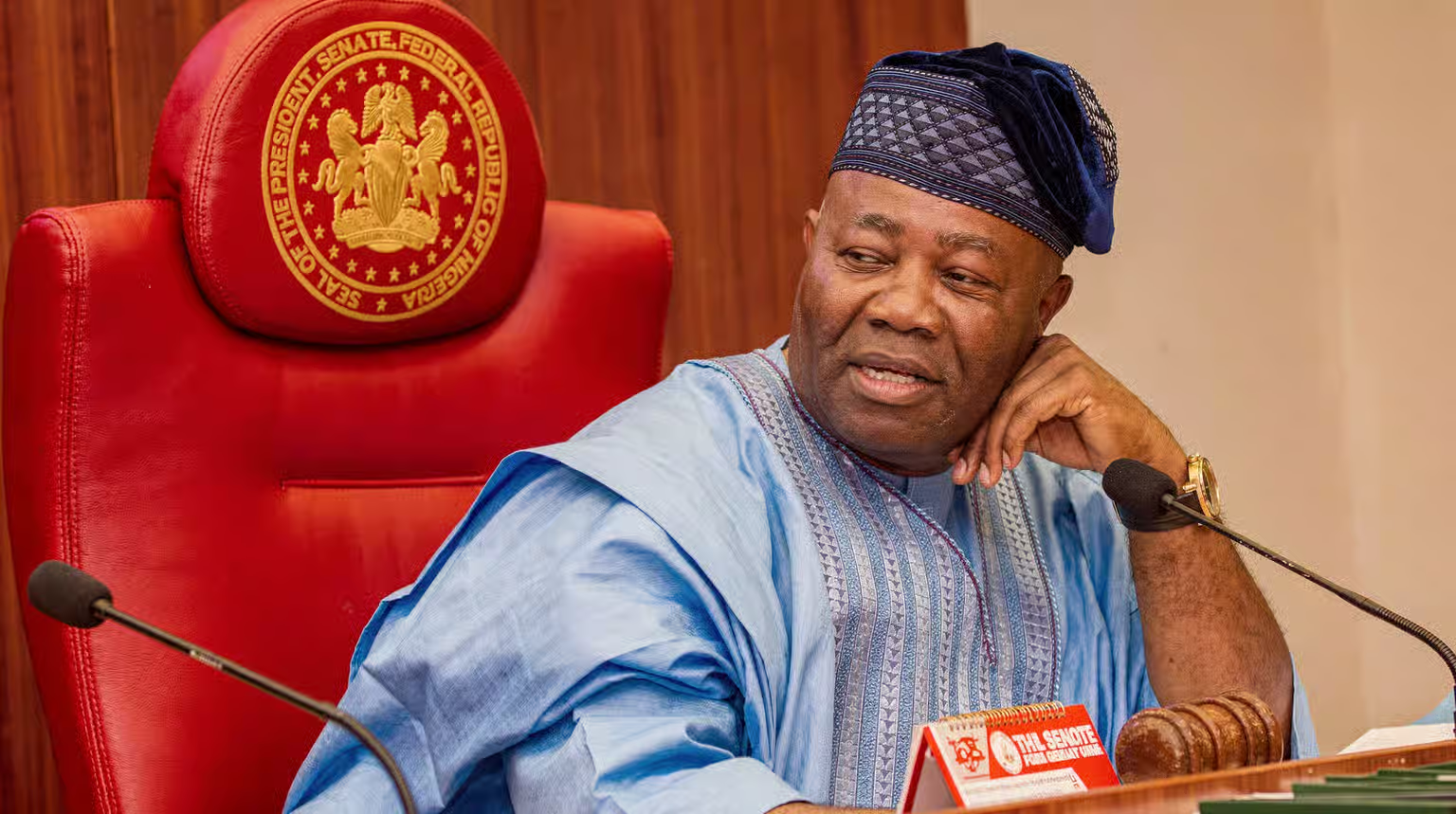
Senate President Godswill Akpabio announced the passage during Wednesday’s plenary after the bill received the support of a majority of senators through a voice vote.
Following its passage, the bill was referred to the Senate Committees on National Planning and Economic Development and Finance for further legislative action and public hearing. The committees were directed to report back within four weeks.
The bill, sponsored by Senator Ibrahim Dankwambo, representing Gombe North Senatorial District, seeks to establish a National Donor Coordination Framework, make the registration of all donor-funded projects compulsory, and create a national database of foreign assistance received and implemented in Nigeria.
It also proposes the integration of donor-funded interventions into government budgets, mandatory public disclosure of funding sources and project implementation details, and sanctions for diversion, misuse or non-registration of donor funds.
Leading the debate, Dankwambo, a former Accountant-General of the Federation and former Governor of Gombe State, said billions of naira in foreign aid are channelled to NGOs operating in Nigeria without adequate scrutiny of the sources of the funds or the purposes for which they are donated.
He warned that the absence of effective oversight poses serious national security risks and undermines public accountability.
According to him, Nigeria remains a major recipient of grants, technical assistance, humanitarian support and concessional financing from bilateral and multilateral partners, but the management of foreign aid in the country remains largely opaque.
Dankwambo said donor-funded projects are often scattered across ministries, departments and agencies, with many implemented outside the national budget framework, leading to duplication, poor coordination and weak accountability.
He said the proposed legislation would strengthen oversight of foreign aid received by NGOs and promote transparency, accountability and proper coordination of donor-funded interventions.
Nigeria hosts thousands of NGOs implementing projects funded by foreign governments, multilateral institutions, international charities and private foundations. These projects cut across humanitarian relief, healthcare, education, agriculture, governance, climate change, human rights and poverty reduction.
While many donor-funded interventions are implemented in partnership with federal and state governments, others are carried out independently by local and international NGOs, especially in conflict-affected states where humanitarian needs are high.
At present, NGOs are required to register with the Corporate Affairs Commission, while some also register with the Special Control Unit against Money Laundering under the Economic and Financial Crimes Commission to comply with anti-money laundering regulations.
However, there is currently no comprehensive law requiring NGOs to disclose all foreign donor-funded projects to the Federal Government or integrate such interventions into the national budget. Information on donor-funded projects is often scattered across government agencies, donors and implementing organisations.
Most senators who contributed to the debate supported the bill.
Senate Chief Whip, Tahir Monguno, representing Borno North, said many foreign donors channel financial assistance through NGOs without adequate scrutiny.
Deputy Senate President Barau Jibrin said while foreign assistance received directly by the Federal Government is usually reflected in the national budget, substantial funds channelled to NGOs and state governments remain outside effective public oversight.
“We can’t tell what money goes into the coffers of NGOs. Fraudsters set up bogus, pseudo NGOs and collect money from there,” he said.
Senator Adamu Aliero, representing Kebbi Central, said stricter regulatory compliance would improve the use of donor funds and strengthen the confidence of development partners through transparency and accountability.
Drawing from the oversight activities of the Senate Committee on Agriculture, Aliero recalled instances where donor funds were received but their utilisation could not be satisfactorily accounted for.
He also urged that the legislation should expressly cover state governments, in addition to NGOs, in order to strengthen the National Assembly’s oversight responsibilities.
Senator Sani Musa, representing Niger East and Chairman of the Senate Committee on Finance, said the proposed law would align Nigeria with global best practices and boost donor confidence through improved transparency.
He warned that inadequate scrutiny of donor-funded activities could create serious security concerns.
“Most of the aids coming to so-called NGOs are not subjected to scrutiny. We have seen instances where such arrangements create security concerns because we do not know who is accounting for what. Is it insurgents taking money meant for victims?” Musa queried.
He added that the legislation would help distinguish foreign investments from grants, thereby improving fiscal planning and policy coordination.
Senator Adams Oshiomhole, representing Edo North, said every donor fund entering Nigeria should be fully disclosed, documented and subjected to legislative oversight.
The former Edo State governor called for mandatory disclosure of all resources transferred to NGOs and civil society organisations, backed by stiff sanctions for non-compliance.
In his remarks after the debate, Akpabio warned that unregulated foreign funding could become a national security threat if left outside an effective regulatory framework.
The bill is expected to proceed to public hearing before returning to the Senate for further consideration.
In this article