
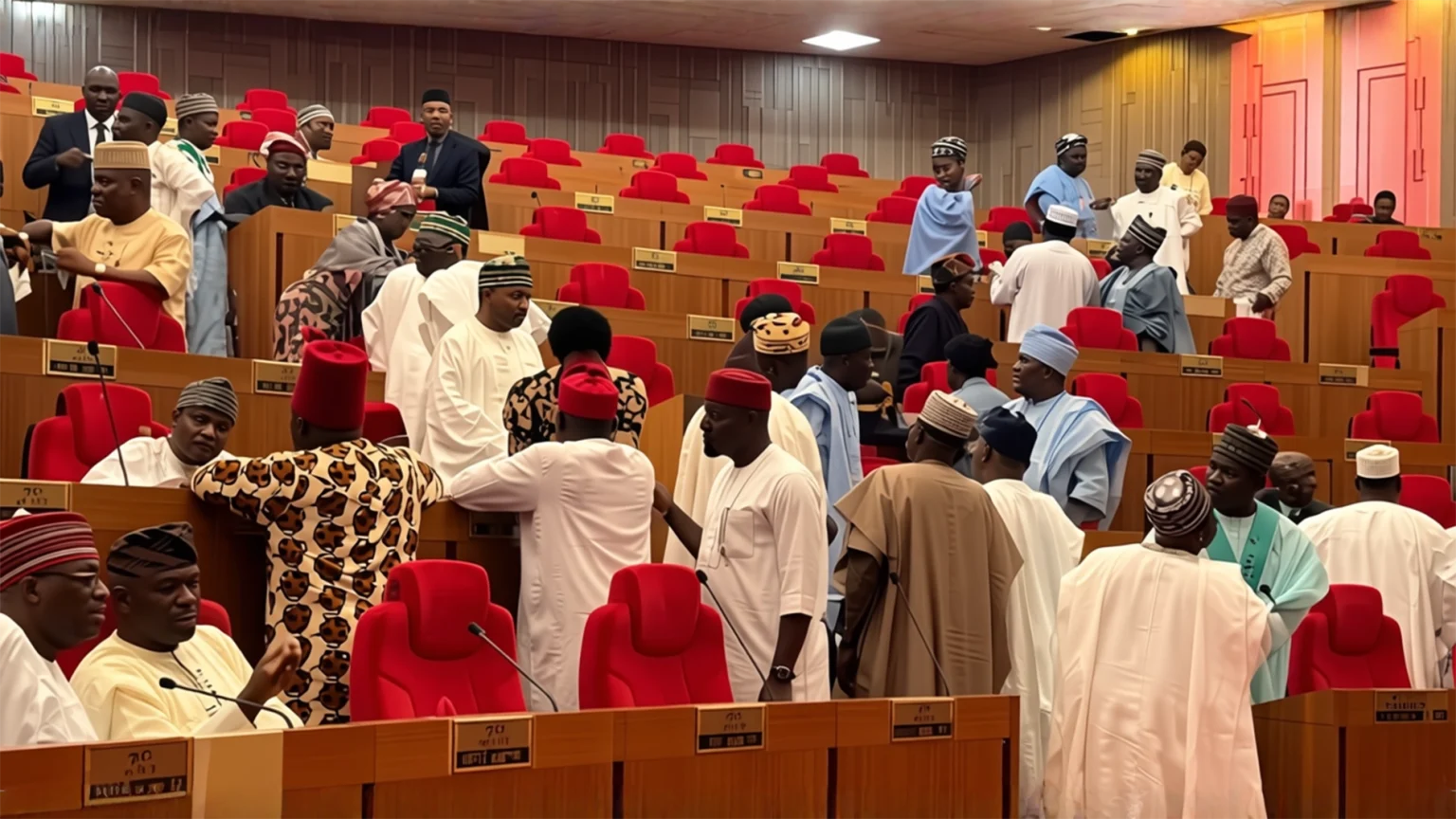
The House of Representatives on Wednesday passed for second reading a bill seeking to establish the National Commission for Rural Infrastructure and Development (NACRID), in a move aimed at creating a coordinated framework for financing, monitoring and supporting infrastructure projects in rural communities across the country.
The proposed legislation, sponsored by the member representing Bida/Gbako/Katcha Federal Constituency, Niger State, Hon. Saidu Musa Abdullahi, also provides for the establishment of a National Rural Development Fund to support rural infrastructure and development programmes.
Leading the debate on the general principles of the bill, Abdullahi said the legislation was designed to address the persistent infrastructure deficit in rural Nigeria despite years of government interventions and significant public investment.
He noted that most Nigerians live in rural communities, which remain the nation’s agricultural base and major source of raw materials, yet continue to suffer from poor road networks, inadequate access to potable water, unreliable electricity, weak healthcare services, insufficient schools, poor digital connectivity, limited market access and inadequate economic opportunities.
According to him, the neglect of rural communities has contributed to rising poverty, unemployment, food insecurity and increasing rural-to-urban migration.
“No nation can attain sustainable economic growth while neglecting the communities that produce its food, supply its raw materials and sustain its local economy. Rural development must therefore be regarded not merely as a social obligation but as a strategic economic priority,” he said.
The lawmaker anchored the proposal on Sections 14(2)(b) and 16(2)(d) of the 1999 Constitution (as amended), arguing that government has a constitutional obligation to promote the welfare of citizens through the provision of critical infrastructure and social services.
Abdullahi recalled the achievements and shortcomings of the defunct Directorate of Food, Roads and Rural Infrastructure (DFRRI), saying the proposed commission would build on past experiences while operating under modern principles of transparency, accountability, sustainable financing, digital monitoring and legislative oversight.
He explained that although several Ministries, Departments and Agencies (MDAs) currently oversee sectors such as roads, agriculture, water resources, power, health, education and communications, there is no single institution responsible for coordinating and financing integrated rural infrastructure development nationwide.
“As a result, interventions are often fragmented, funding is inconsistent, planning is sectoral rather than integrated, and many rural communities remain underserved,” he said.
The sponsor stressed that the proposed commission would not duplicate the responsibilities of existing MDAs but would instead provide policy coordination, financing, technical support, monitoring and performance evaluation for rural development initiatives.
He likened the proposed agency to intervention institutions such as the Tertiary Education Trust Fund (TETFund) and the Universal Basic Education Commission (UBEC), saying NACRID would serve as a dedicated intervention mechanism for rural infrastructure.
Abdullahi also explained that the commission would not function as a project-executing agency.
He said implementation of approved projects would be undertaken by State Rural Infrastructure and Development Boards or designated state agencies through a counterpart funding arrangement similar to the UBEC model.
Under the proposal, states would be required to prepare Rural Development Action Plans, provide counterpart funding, execute approved projects and account for the utilisation of intervention funds.
He said the framework would strengthen collaboration among the federal, state and local governments while promoting ownership, accountability and sustainability in rural infrastructure development.
Following debate, lawmakers overwhelmingly supported the bill, which was subsequently passed for second reading and referred for further legislative consideration at the committee stage.
In this article