
By Martins Oloja
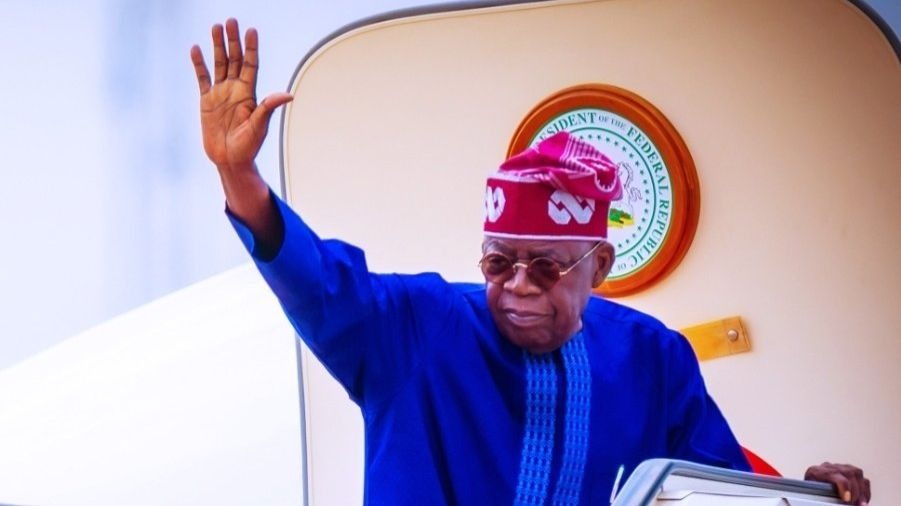
This is another time for me to speak to the powers that be, specifically to the elites in northern Nigeria who don’t appear to understand the times in the country and indeed the world today. It seems to me that the northern leaders do not know the man in office and in power today, President Ahmed Bola Tinubu who has just been curiously honoured by the British Empire.
I am not too sure that the northern elites understand the significance and majesty of the state visit, the colourful reception accorded Nigeria’s leader by the British powers. We will return to that later as the spirit leads.
I would like to clarify this quickly: I have a very solid relationship with many significant members of the northern elite corps members. My best friends and allies on this job hail from the North. A resourceful journalist and media entrepreneur who brought me to Abuja 38 years ago when he set up the premier newspaper in Abuja, hails from the North East. I have written extensively on the good man, Mallam Bukar Zarma, former Editor of New Nigerian who set up the first newspaper in Abuja in 1988. The newspaper, Abuja Newsday’s editorial management board was dominated by Christians from the North Central and the South. Behold, when ‘there was a country’.
I mean here that in my almost four decades of journalistic legwork, I have had more reliable friends of northern extraction. And so when the story of my life journey comes to be written, you will see more notable friends from the North who have remarkably shaped my career as reliable sources and pillars. What is more significant, my lovely wife, hails from the North (Central). In the main, I just want to state from the outset here that there is a sense in which I can introduce myself as a stakeholder in the North. Lest I forget, this same Bala Mohammed the Governor of Bauchi State used to call me ‘our in-law’ when he was FCT Minister because my wife was Solicitor-General of FCT then.
Amid the heat of June 12 crisis in 1994, I wrote an article in The Guardian issue of Sunday August 14, 1994 titled, ‘The Trouble With The Northern Press’ in which I challenged this same northern elite to swallow their pride, vanity and hypocrisy to embrace the true spirit of media entrepreneurship. Unfortunately, it was the edition of the newspaper the Abacha regime shut down, that same day (Sunday August 14, 1994). But the spirit of my article on the “Northern Press” promoted on the front page wasn’t buried. The Editor of The Nigerian Tribune then Mr. Folu Olamiti, culled the article and published it the following day as It was in The Guardian (on Sunday) then edited by the great Kingsley Osadolor, who wrote the scoop and lead story that shook the table that Abacha regime cabal didn’t like in Abuja: The lead, ‘Inside Aso Rock: The Raging Battle To Rule Nigeria’ was the table shaker.
In the same vein, ‘Sentinel’, a major news magazine in Kaduna then culled the same piece and recast the headline to read: ‘Why Newspapers Fail in The North’. Diverse and controversial reactions to the article in Sentinel, which ran for weeks were so heated that the management had to take a decision to stop publication. But the testimony, in this regard, is that the North hasn’t remained the same in the media industry after the wake-up-call article. Today there is Abuja-based ‘Daily Trust’, which is one of the most credible and influential newspapers in the country. The newspaper is published by the very respected Mallam Kabiru Yusuf, who was also part of the foundation of The Guardian. Besides, there are ‘Leadership’, ‘Blueprint’ and ‘People’s Daily’. There are several other online newspapers founded by journalists of northern extraction.
So, I am not a first timer on this beat when it comes to speaking truth to powers in the North, our North. Meanwhile, there have been several other remarkable articles and keynotes by writers and speakers from the North on the current trouble with the North. I will review some as soon as possible. But it is important to state clearly that this is a friendly fire, ‘lest the North should be the last’ as a poet, Kwesi Brew would have written.
So, as a stakeholder, I have again looked into the seeds of our perilous times and have seen some ominous writings on the wall. So it is another time to address our people, through the very influential northern elites to rise up from their dangerous slumber mode before it is too late. Here is the thing, if the power and business elites in the North remain in their complacency mode, the present artful leadership in Nigeria, they don’t understand will surprise them sooner than later and, ultimately leave them behind. Besides, they will be classified by followers of Alvin Toffler as “the Illiterate of the 21st century who cannot learn, unlearn and relearn”.
Yes this is politics time. It is another time to begin to deceive the people again with sophisticated framing and narratives in the likeness of 2015 model when President Jonathan’s administration was remarkably demonised through various political strategies including curious abduction of Chibok Schoolgirls in a Christian-dominated District in Borno State when the current vice president was the Governor. But it is surprising that despite reports of life threatening consequences of insecurity that began in the North, the only thing we hear from Kaduna and Sokoto are statements and keynotes that are full of sounds and fury, signifying nothing. When will the nation see concrete measures prefaced by enough-is-enough action plans by the northern leaders in Abuja and 19 northern State Houses, Assemblies and Community Town Halls? Whew will the rest of the nation hear condemnation of humongous amount of state funds being used as ransom payments as preached by the Sheik Gumis? Are the northern leaders at all levels aware that the present administration is merely tagging along in the name of politics? When will there be elite consensus in the North on how to develop their Marshall Plan to deal with multi-dimensional poverty and absence of reforms in the education sector in the North? What happened to the huge seed fund the Jonathan administration approved for nomadic education to deal with the al-majiri reproach in the core northern states?
Let’s not get it twisted anymore: a country or region without elite consensus on development strategy often finds itself stuck in a cycle of uncertainty and stagnation. Without a unified vision, policymakers struggle to implement effective reforms, and investors hesitate to commit resources. This lack of consensus can lead to policy Inconsistency. Frequent changes in government priorities and policies create an unpredictable environment, discouraging long-term investment and hindering economic growth. This is part of the trouble with the North.
Without an elite consensus, institutional weakness will be dominant in the polity. Meanwhile, divided elites often fail to strengthen institutions, leading to corruption, inefficiency, and poor governance. This also affects development in the North.
There will also be missed opportunities and here is why: without a shared agenda, opportunities for economic diversification and innovation are overlooked, leaving the country reliant on a few industries.
Even Nigeria has been a victim. Post-independence, Nigeria has struggled with aligning its elite on development strategies, contributing to economic challenges.
Countries like Argentina have faced similar issues, where political divisions hindered consensus on economic policies. But in Nigeria’s complex federation where the North once thrived on agriculture, lack of elite consensus has dome more damage to the political economy. The consequences have been glaring.
Economic instability: Lack of consensus fuels uncertainty, deterring investment.
Social inequality: Without inclusive policies, growth benefits are unevenly distributed.
Global marginalization: Countries may struggle to attract foreign investment and compete globally.
This is where dialogue and inclusivity can be helpful. The North needs to encourage dialogue among political, business, and civil society leaders beyond occasional speeches of lamentation in Kaduna where northern leaders always agonise instead of organising. They also need to strengthen their institutions of governance instead of rushing to take juicy federal jobs in Abuja. As northern elites have heard several times from a former U.S Speaker, House of Representatives, Thomas Phillip ‘Tip O’Neill, “all politics is local”. They need to stay at home in the states too to build robust institutions to implement policies consistently. That is where they will also engage in long-term planning to focus on sustainable development goals beyond political cycles.
Let’s not resort to blame game. It is a time for renewal of our minds. Northern Nigeria’s challenges are complex and multifaceted. The lack of elite consensus on how to end insecurity, for instance has indeed contributed to abject poverty, insecurity, and limited access to education. Some consequential issues include poverty and inequality. Doubtless, northern Nigeria has higher poverty rates compared to other regions, with many living below the poverty line. The media can’t cover the crushing poverty in the north where leaders spend millions on pilgrimage to the Holy Land. The region faces significant security challenges, including Boko Haram insurgency and banditry, which have disrupted economic activities and access to education.
What is more devastating, limited access to quality education has resulted in high illiteracy rates, hindering economic opportunities and development in the region. And the northern leaders most of who send their children to expensive schools abroad can’t blame any leader in Abuja at this time. They have only themselves to blame for lack of consensus on what they want to do to fund education of their own people.
So, this needs to be stressed to the northern leaders: building consensus among themselves on development priorities could help address these challenges at this time. Their children need education and skills development. Investing in education and vocational training can empower the youth and improve economic prospects.
The North can’t Security and economic opportunities*: Addressing insecurity and promoting economic opportunities can help reduce poverty and improve stability.
Let’s face some inconvenient truth and touch the elephant in this room today. The northern elite’s commitment to Islamic principles is understandable, but the pursuit of Sharia law, they want to spread to other regions has been linked to insecurity in the region. Focusing on quality education and economic development might be a more effective way to address poverty and instability. Investing in education can empower the youth and improve economic prospects, reducing the appeal of extremist ideologies.
Another inconvenient truth: there has been too much obsession with access to political power and office by our northern elites. Shifting focus from political power to education and economic development could help address the region’s challenges. We will continue next week with more facts on how and why the Tinubu administration that has strategically begun implementation of the finesse of federalism may leave the northern elites behind sooner than later if they continue to look up to the Tinubu hills in Abuja where they can’t find help to the life- threatening challenges in the region that multi-dimensional poverty can reproachfully isolate anytime soon.
In this article