
By Marcel Mbamalu
The integrity of Nigeria’s Federal High Court, and by extension the judiciary generally, has once again come under the spotlight, presenting a critical opportunity to rebuild public trust in one of the country’s most important institutions.
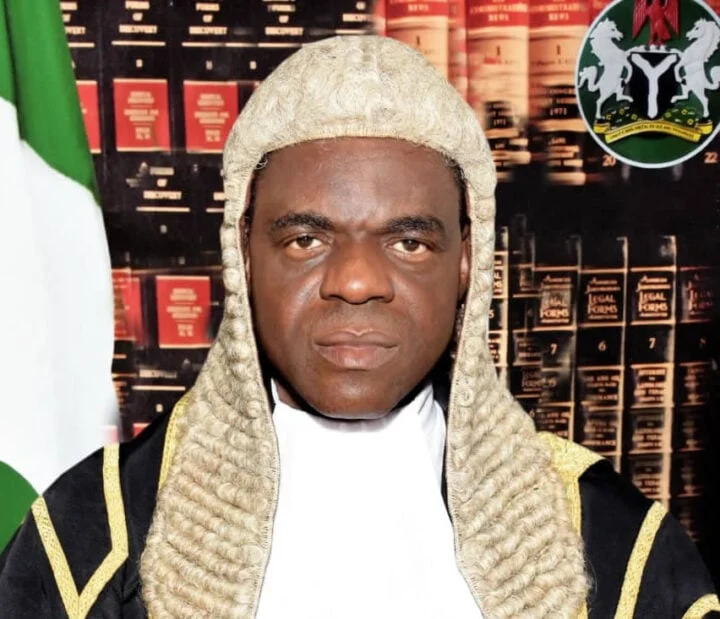
The Chief Judge of the Federal High Court, John Terhemba Tsoho, was reported last month to be facing allegations of failing to fully declare his assets, a legal requirement imposed on all public officers. The Code of Conduct Bureau reportedly summoned him in early March over discrepancies in his asset declarations, following reports by online newspapers alleging that certain assets were omitted in his 2024 declaration.
According to those reports, the form submitted on April 29, 2024, did not disclose several bank accounts. These allegedly include naira and domiciliary accounts, among them three accounts with United Bank for Africa and another with Access Bank. While these claims remain subject to verification, they raise serious concerns about compliance with statutory obligations.
Tsoho has indicated that he will appear before the bureau to respond to the issues raised, a step that underscores the importance of due process in matters of this nature.
Under Section 15 of the Code of Conduct Bureau and Tribunal Act, every public officer is required to declare all properties, assets, and liabilities immediately after taking office and at specified intervals thereafter. The law is explicit. Any false or incomplete declaration constitutes a breach and may attract sanctions ranging from fines to removal from office, or prosecution before the Code of Conduct Tribunal.
For judicial officers, however, disciplinary oversight rests primarily with the National Judicial Council. This creates a delicate institutional balance between investigatory bodies, such as the CCB and the NJC’s constitutional role in maintaining judicial discipline.
That balance now comes into focus. Questions remain about how the matter will be handled and whether the process will be transparent enough to inspire public confidence. The absence of clear public communication from the relevant institutions risks deepening scepticism.
Tsoho’s career has spanned decades within the judiciary. He was first appointed acting chief judge on July 26, 2019, by the then Chief Justice of Nigeria, Tanko Muhammad. On October 23, 2019, the NJC recommended him for substantive appointment to then President Muhammadu Buhari, who approved it on October 30. The Senate confirmed the appointment on November 5, 2019.
Born on June 24, 1959, in Benue State, he studied law at the University of Lagos and was called to the Nigerian Bar in 1985 after attending the Nigerian Law School. He joined the Benue State judiciary in 1986 and was elevated to the Federal High Court bench in 1998.
However, over the years, some of his decisions have attracted public attention and criticism. In November 2025, he faced scrutiny for reassigning a receivership case involving FBNQuest Merchant Bank and the Nestoil Group. In June 2023, some civil society actors also raised concerns after he declined an application to detain the former Central Bank of Nigeria Governor, Godwin Emefiele. While judicial decisions are subject to appeal and legal interpretation, such controversies have contributed to broader conversations about transparency and accountability within the judiciary.
Allegations against members of the bench and the bar are not new. What remains troubling is the recurring perception that such allegations do not always lead to clear, public outcomes.
In 2016, operatives of the State Security Service conducted raids on the homes of several judges across the federation, recovering large sums of money in local and foreign currencies. The incident generated national outrage and raised serious questions about corruption within the judiciary. While the NJC subsequently took disciplinary steps in some instances, including suspensions and recommendations for compulsory retirement, the overall response lacked sufficient transparency and consistency.
Since 2024, a group known as the Ekiti Lawyers Vanguard for Transparency petitioned the NJC to investigate some judges of the FHC over allegations of bias, inconsistent rulings, and conduct capable of eroding public trust. As with many such petitions, there has been limited public information on the outcome.
The case of former Chief Justice Walter Onnoghen remains one of the most prominent episodes involving asset declaration issues similar to that of Tsoho and which the public is expected that many cases should be handled that way. In 2019, he was charged before the Code of Conduct Tribunal over alleged false asset declarations, convicted, and subsequently removed from office.
Legal developments have also reinforced the protective framework surrounding judicial officers. In several decisions, courts have emphasised that allegations of misconduct against serving judges must first be addressed by the NJC before any criminal prosecution can proceed. While this framework is intended to safeguard judicial independence, it has also been criticised for creating procedural hurdles that may delay accountability.
These patterns contribute to a persistent perception problem. Investigations are initiated, petitions are filed, and allegations surface, but outcomes are often unclear or insufficiently communicated to the public.
In the case involving Tsoho, the Nigerian Bar Association has maintained that the NJC is the appropriate body to handle allegations against judicial officers, emphasising the need to follow established procedures. As of mid-March 2026, there is no clear public indication of any action taken by the council in relation to the matter.
With public trust in the judiciary already under strain, the handling of this case carries significant implications. It is not merely about one individual, but about the credibility of the institutions responsible for upholding the rule of law.
The current Chief Justice of Nigeria, Kudirat Kekere Ekun, like her predecessors, has repeatedly emphasised integrity and the importance of maintaining public confidence in the judiciary.
Recent reports also indicate that the NJC has commenced a broader probe into alleged misconduct by senior judicial officers, which may signal a willingness to address these concerns.
However, such commitments have never matched visible and consistent action.
This is notwithstanding that the Federal High Court occupies a central position in Nigeria’s legal system. It adjudicates complex commercial, financial, constitutional, and revenue matters. Its decisions shape governance, influence economic policy, and affect investor confidence. Allegations involving its leadership, therefore, carry far-reaching consequences.
Any perception of misconduct at that level has continued to weaken confidence not only in the court itself but in the broader justice system.
Judicial accountability is essential to democratic governance. Courts are not only interpreters of the law but also symbols of fairness and impartiality.
At the same time, the independence of the judiciary must be protected. Political or executive interference, whether overt or subtle, poses a serious risk.
This makes it imperative that institutions act within their constitutional mandates, while ensuring that accountability mechanisms are effective and transparent.
In the present case, Tsoho’s willingness to respond to the allegations before the appropriate authorities is an important first step. However, the responsibility does not rest with him alone. Both the CCB and NJC must ensure that the matter is handled in a manner that is fair, thorough, and transparent.
Accountability must not only be done, but it must also be seen to be done. Clear communication, adherence to due process, and timely resolution are essential.
Nigeria’s judiciary stands at a critical moment. How this and similar cases are handled will shape public perception for years to come. The demand is simple but profound: integrity, transparency, and accountability at all levels.
Only by meeting that standard can the judiciary reaffirm its role as a guardian of justice and a pillar of democracy.
In this article