
By GEB
For years, tensions between Iran, Israel and the United States simmered beneath the surface. Disputes over Iran’s nuclear ambitions, its network of allied militias across the Middle East, and Israel’s deep security anxieties created a combustible geopolitical environment waiting for a spark.
The latest U.S.–Israeli strikes on Iranian targets appear to represent the culmination of that long-building confrontation. Washington and Tel Aviv have justified the attacks as necessary to prevent Iran from advancing its military, particularly nuclear capabilities and threatening regional stability. At the heart of the crisis lies a single fear: the possibility of a nuclear-armed Iran.
For decades, both the United States and Israel have regarded such an outcome as an existential danger. Yet the strategic stakes extend beyond nuclear proliferation. Iran’s expanding economic and strategic partnership with China has also sharpened Western anxieties about the emergence of rival geopolitical blocs and a shifting global balance of power.
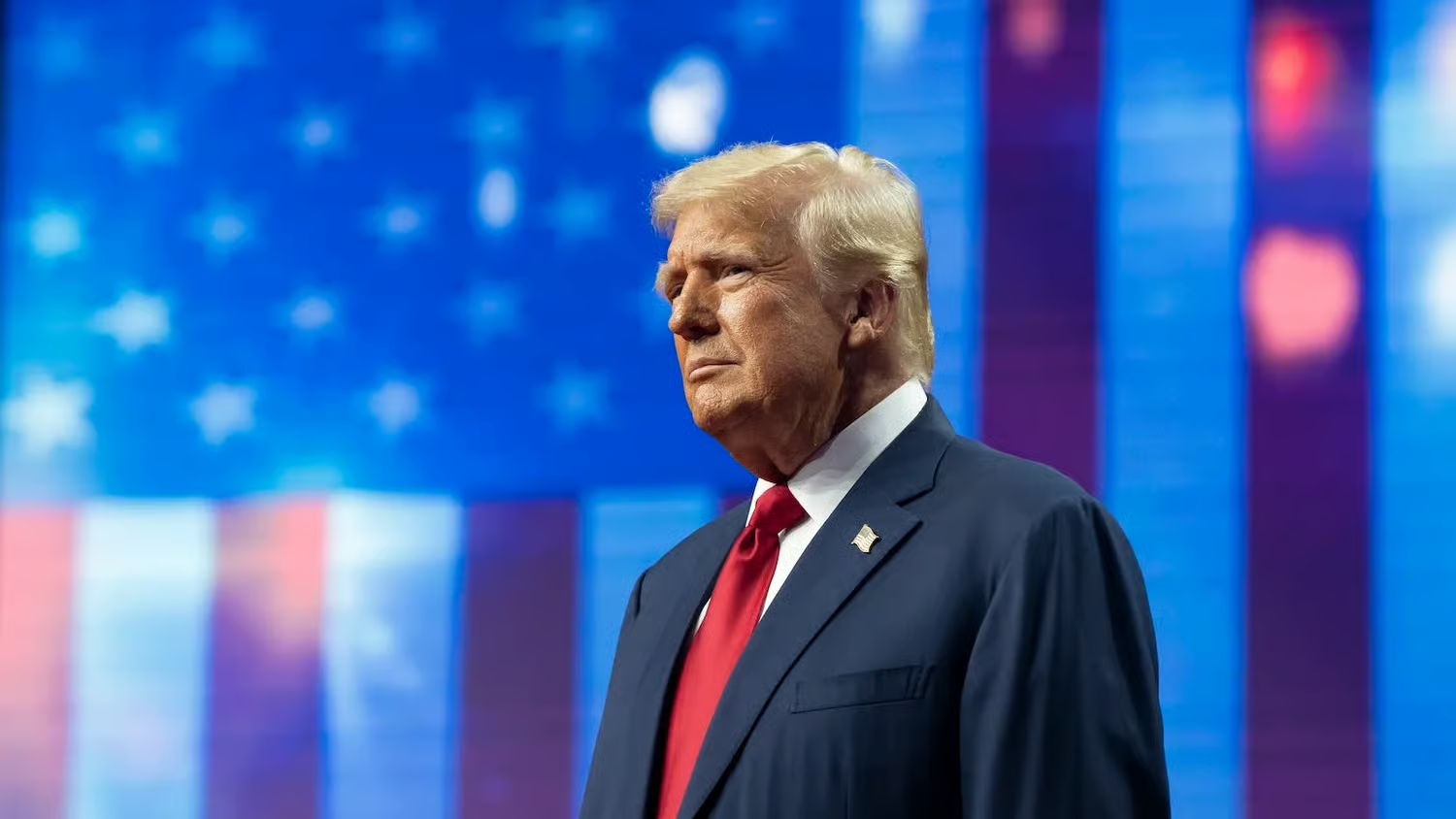
President Donald Trump defended the American strike as a defensive measure, arguing that Tehran was contemplating an attack on American interests. Supporters of that viewpoint point to the four-decade history of hostility between the two countries. Since the 1979 Islamic Revolution, Iran’s clerical leadership has repeatedly targeted American interests, supported militant proxies and sponsored organisations accused of terrorism across several regions.
To those who share this perspective, the strike was not merely strategic but overdue—a long-delayed confrontation with a regime they view as a persistent source of instability.
Tehran sees matters very differently. Iranian leaders have denounced the attacks as an act of aggression and have responded with missile and drone strikes against Israeli territory and American installations in the region. The result is a familiar and dangerous pattern: retaliation feeding retaliation.
Yet as always in war, the truth remains the most fragile casualty. Even before the outbreak of hostilities, conflicting accounts surrounded the diplomatic negotiations that preceded the strikes.
During discussions in Austria, Iranian officials reportedly told the American delegation that Iran had already achieved 60 per cent uranium enrichment and possessed the capacity to produce as many as eleven nuclear weapons within six weeks. Whether that claim was a calculated bluff or a genuine admission is almost beside the point. Once such a declaration is made, it inevitably alters the strategic calculus of adversaries. Faced with the possibility that a hostile state might soon cross the nuclear threshold, Washington could hardly be expected to remain passive.
Yet the story does not end there. Oman, which served as a mediator in the negotiations, has offered a different account. As a third party, its version might appear more credible. But the long and troubled relationship between the United States, Israel and Iran has always been characterised by intrigue, propaganda and deep mistrust. If the Omani account proves accurate, troubling questions arise about whether diplomacy was ever given a genuine chance to succeed.
Indeed, the uncomfortable possibility cannot be dismissed that the decision for war had been taken long before negotiations concluded. Intelligence briefings and diplomatic exchanges may simply have been steps along a predetermined path.
Europe’s reaction has been strikingly cautious. Despite occasional disagreements with Washington, European governments have historically deferred to American leadership on major geopolitical questions. When the United States is directly involved, the language of international law often becomes selective and criticism noticeably restrained.
Meanwhile, the conflict continues to expand. Iran is not an isolated actor. Its alliances and proxy networks stretch across Iraq, Syria, Lebanon and Yemen. Any prolonged confrontation risks drawing these groups—and potentially additional regional powers—into a wider war that could threaten global shipping lanes and destabilise already fragile governments.
In the short term, Iranian strikes on Gulf infrastructure are likely to drive the United States and the Gulf monarchies into closer cooperation. Faced with a common adversary, these states will almost certainly close ranks. Yet alliances forged in wartime are rarely permanent. Much will depend on developments inside Iran itself. Questions of leadership succession, internal unrest and the possibility of harsh security crackdowns could reshape the country’s political future and alter the regional balance of power.
For Israel and its leader Benjamin Netanyahu, the strategic equation is stark. Even with threats from Hamas and the Houthis, a weakened Iran may appear preferable to the resurgence of a powerful Iranian state with advanced military capabilities. From Tel Aviv’s perspective, dismantling Iran’s military command structure reduces a long-term strategic threat.
Beyond the battlefield, the conflict is already reverberating across the global economy. Disruptions to shipping and energy flows through the Strait of Hormuz have unsettled markets and pushed energy prices higher.
History offers ample warning. The United States should remember the lessons of its earlier interventions in the region. The twenty-year war in Afghanistan demonstrated how even the world’s most powerful military can become trapped in conflicts with no clear end. Previous American presidents, despite their profound disagreements with Iran, often resisted the temptation of direct war precisely because they recognised the dangers of escalation.
Events since the February 2026 strikes illustrate that risk vividly. Missile exchanges and drone attacks across the region have heightened fears of a broader confrontation. Casualties are mounting, infrastructure is being destroyed and millions face displacement.
Wars, as history repeatedly shows, are far easier to begin than to conclude. They acquire their own momentum, often exceeding the calculations of those who start them.
Instructively, recent remarks by President Trump suggest that Washington may now be searching for peace. President Trump has indicated that the military objectives of the United States and Israel may already have been achieved and that the number of high-value targets in Iran is diminishing. Such language hints at a leader preparing the public for the possibility of a diplomatic exit.
Quiet diplomatic contacts appear to be emerging through regional intermediaries. Yet the obstacles to peace remain formidable. Iran insists that any settlement must include guarantees against future attacks and compensation for the damage inflicted during the strikes. Israel, meanwhile, has indicated that it may favour a longer campaign aimed at permanently weakening Iran’s military reach.
The result is a dangerous stalemate: each side seeking advantage while the risks of escalation grow.
The path forward, however difficult, is clear. The first step must be an immediate ceasefire. Continued missile strikes serve little purpose beyond deepening the cycle of retaliation and increasing the likelihood of a wider regional war.
Diplomacy must follow swiftly. The United Nations should convene urgent negotiations involving not only Washington and Tehran but also key regional powers, including Saudi Arabia, the United Arab Emirates and Turkey. Neutral mediators could help bridge the profound mistrust between the parties.
A broader regional security dialogue must also emerge. For decades, the Gulf has been trapped in a cycle of proxy wars, sanctions, military build-ups and retaliation. Without a framework for mutual security guarantees, today’s war will simply become the prelude to tomorrow’s crisis.
History’s lesson is simple. Wars rarely deliver the order they promise. They end not in decisive triumph but at negotiating tables.
Peace is therefore not merely a moral aspiration but a strategic necessity. The longer this conflict drags on, the greater the human suffering, economic disruption and regional instability it will unleash. Silence the guns, return to diplomacy and rebuild a framework for regional stability. The alternative is a widening catastrophe from which no nation—near or distant—will remain untouched.
In this article