
By Lekan Sote
The Yoruba saying, “Die die ni alak’orun ndi ewu,” which roughly translates into English as “gradually, a singlet becomes a formal dress,” means that things happen in stages. Like Ethiopia’s “Creeping Revolution” of the 1970s, a month-by-month dismantling of the regime of Emperor Haile Selassie, the idea of state policing is gradually unfolding in Nigeria.
Under former President Muhammadu Buhari, the crescendo of agitation for state police rose, especially when clashes between herders and farmers became more frequent, and President Buhari and Abubakar Malami, his Minister of Justice, were looking the other way.
Malami and some others even suggested community policing to deflect proponents of state police away from what could have restored peace in the country by stemming banditry and kidnapping that have now become terrorism in Nigeria.
The state police idea stood against the (possible) ulterior motive of President Buhari, who looked like he didn’t want anything to stand in the way of the rampaging members of his ethnic group, who wanted to force their way into lands and communities other than their own.
When the Western Nigeria Security Network, or “Amotekun Corps”, was mooted and led by late Ondo State Governor Rotimi Akeredolu, many members of the Northern Nigerian political establishment opposed it.
Even Balarabe Musa, who Southern Nigerian progressives thought was one of their ranks, declared that the Amotekun Corp was tantamount to the Yoruba of Southwest Nigeria, announcing that they wanted to exit Nigeria.
Soon after President Bola Tinubu took his oath of office, not a few progressives thought that the state police was going to be his priority. And he did act so, by bringing up the matter with the Nigeria Governors’ Forum.
But it appeared that many Northern Nigerian governors were not interested. They usually gave a studied silence each time the President raised the matter. After a tally of Northern state governors who approved was made public, it didn’t turn the needle. Even after the President told them again at a Ramadan iftar in Aso Rock, they acted as if they didn’t hear him. The Yoruba would say, “Nwon fi gbigbo se alaigbo.”
Former Inspector General of Police, Kayode Egbetokun, who did not seem to like the idea either, declared, “On the issue of state police, it is the submission of the Nigeria Police Force that Nigeria is not yet mature and ready for the establishment of state-controlled police.”
He added: “State governors could use the police under their control for political or personal gain and undermine human rights and security. There would also be a conflict of jurisdiction.” AIG Ben Okolo, who read the speech on his behalf, later said that the position attributed to Egbetokun was his personal view.
In the controversial speech read on his behalf, Egbetokun enumerated the challenges that prevent the Nigeria Police Force from adequately performing its constitutional responsibilities to the people and assets of Nigeria.
These include inadequate manpower and operational equipment, such as vehicles, arms and ammunition, communication equipment, drones… helicopter, armoured vehicles, and inadequate training of personnel. These have not been possible over the years.
“Due to poor funding, or lack of funding, (there has been inadequate) training of personnel; inadequate office and barrack accommodation. (And) these have impacted negatively on the performance of the personnel (of the police force).”
Fatai Owoseni, former Commissioner of Lagos State Police Command, told a television audience about the same thing, but in a way that made officers of the Nigeria Police Force look like a pathetic lot that should be excused from delivering their statutory responsibilities.
His words: ‘What I should tell Nigerians is that the police deserve sympathy… I would take Ikeja Police Division… that has more than one million people, and you are funding that police division with N30,000 in three months.”
He added, “An average Nigerian policeman has been demeaned completely. He has been made to look like a beggar. He has to buy his uniform. He retires to poverty as well… We have a situation where a policeman is posted to the house of a judge; he has to find his way to the place by riding an okada.” That’s really no big deal.
Any complainant or accused who has provided funds, transportation, stationery items, or even food for investigating police officers can confirm the challenges that prevent Nigerian policemen from performing their responsibilities.
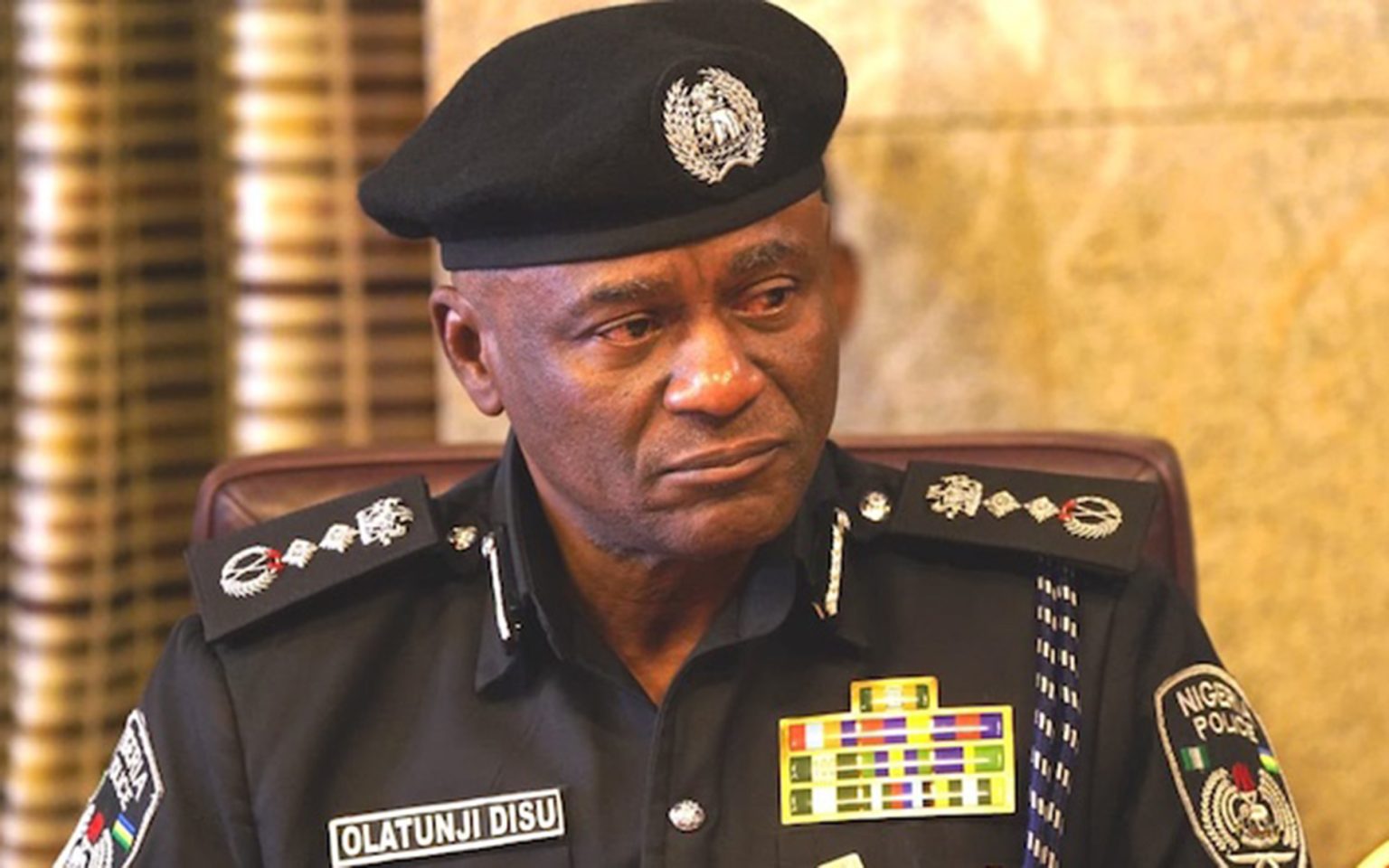
The scenario of inadequacies of the Nigeria Police Force, painted by Egbetokun, may have prompted President Tinubu to further push the idea of state police forces to complement the federal police and appoint Tunji Disu, who sounds like he believes in state police, as IGP.
IGP Disu has swung into action by setting up a seven-member steering committee, led by Olu Ogunshakin, a professor of police studies, to present the argument, logic and process of setting up police forces at the sub-national level of Nigeria.
When he was inaugurating the committee, Disu said its work is to “help shape the framework through which the state policing may operate in a manner that strengthens, rather than fragments, our national security system…
“Your deliberations must be guided by professionalism, objectivity and a clear appreciation of the unique complexities of policing a diverse nation such as ours…. The committee is expected to: review existing police models within and outside Nigeria; assess community security needs across the country;
“Propose an operational framework for the establishment and coordination of State Police structures; address issues relating to recruitment, training, standards, and resource allocation; (and) develop accountability and oversight mechanisms to ensure professionalism and public trust.”
In kicking in the argument that may please the President, Disu adds that “By bringing law enforcement closer to communities, state police institutions can deepen local knowledge of security dynamics and enable quicker and more targeted responses to emerging threats.”
To support this move of his IGP, President Tinubu has asked the National Assembly to amend the Nigerian Constitution to accommodate state police, in a way that it will not be abused by state governors, one supposes.
It is not impossible that the outcome of the deliberation and recommendations of the committee, led by Prof. Ogunshakin, will provide meat for the constitutional amendment and introduction of state police that the President was asking members of the National Assembly, also gathered at another iftar dinner at Aso Rock.
The President, obviously in a good mood, had said to the members of the National Assembly, “If security is local, we just have to work together to put pressure on our local people to accept the need for state police.”
The “public” that the President was referring to may likely include the state governors and members of the state legislators, who must buy into the idea before it can constitutionally become a part of the Nigerian security and law enforcement architecture.
But then, the President and IGP Disu must still go through the roadblock of Section 9 of the Nigerian Constitution. It requires that at least two-thirds of state legislatures must ratify the transfer of Item 45, on “police and other security services”, which is in Part I of the Second Schedule of the Exclusive Federal Legislative List, to the Concurrent Legislative List.
Anyone who truly wants improved security throughout Nigeria should join hands with President Tinubu and IGP Disu to actualise state policing.
X:@lekansote1, lekansote.com
In this article