
By Mansur Aramide, Joel Oladele
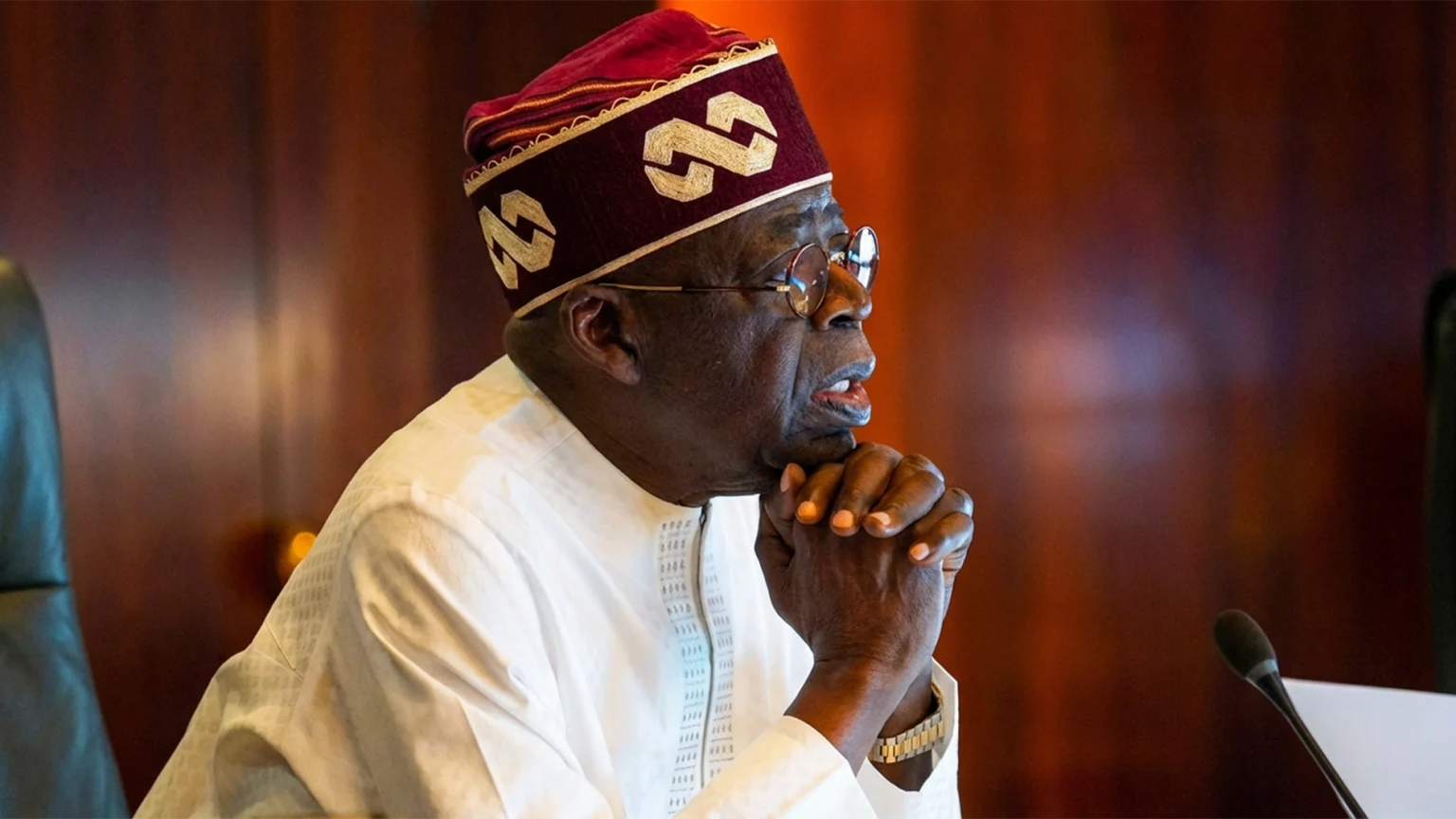
Director-General (DG) of Michael Imoudu National Institute for Labour Studies (MINILS), Ilorin, Kwara State, Isa Aremu, has explained how President Bola Tinubu calmed United States President Donald Trump during the recent genocide accusations and counter-accusations in some parts of Nigeria.
This was as the Minister of Information and National Orientation, Mohammed Idris, said the economic relations between the U.S. and Nigeria remained strong despite Nigeria’s designation as a Country of Particular Concern (CPC) by the U.S. over religious freedom issues.
Meanwhile, the New Nigeria People’s Party (NNPP) has written to the U.S. Congress to defend its 2023 presidential candidate, Rabiu Kwankwaso, following allegations linking him to terrorism.
Aremu, during his opening speech at MINIL’s fifth Ramadan lecture series, entitled ‘The Role of Muslims in Supporting the Bereaved’ organised by its Muslim community, said, rather than throw banters or call Trump derogatory names, Tinubu merely “kept quiet and worked underneath to dissuade him.”
Aremu said, “President Tinubu used diplomacy to stop Trump from attacking Nigeria with troops over an imaginary and non-existent genocide claim in certain quarters. If Tinubu had not deployed diplomacy in that case, perhaps we would have been chasing one another; we would by now be killing ourselves.”
The DG, however, urged all to be hopeful even in the face of the ravaging insecurity in parts of the country.
Urging diplomacy in settling the war between Iran and the U.S., Aremu said that “it is better to jaw-jaw than to war-war by the bereaved families.”
IDRIS, while receiving the Minister of Industry, Trade and Investment, Jumoke Oduwole, who visited him in Abuja yesterday to discuss ongoing economic reforms and efforts to promote Nigeria’s trade and investment opportunities, explained that although Nigeria faced criticism over religious freedom concerns, the U.S. continued to maintain strong economic engagement with the country, particularly through investments in key sectors of the economy.
According to him, recent developments show that international partners still have confidence in Nigeria’s economic potential and reform agenda.
The U.S., he added, has committed substantial resources to Nigeria’s healthcare system, describing the support as one of the largest such investments on the African continent.
“The point that needs to be emphasised is that even when Nigeria was being described as a CPC, the U.S. continued to invest in Nigeria,” the minister said.
Earlier in her remarks, Oduwole said her ministry was intensifying efforts to strengthen Nigeria’s industrial capacity and boost non-oil exports. She explained that the government’s economic strategy for 2026 was focused on expanding production, increasing exports and attracting strategic investments that can support long-term economic growth.
AJUJI, during an interview on Arise Television yesterday, stated that NNPP moved swiftly to counter what it described as politically-motivated accusations.
The NNPP chair said Kwankwaso, a former governor of Kano State, was unfairly singled out.
“In the first place, you understand that he was the only individual who was named by name. All the others are organisations. We wondered, therefore, why he was singled out and named among those that they think are the ones promoting terrorism in Nigeria,” Ajuji said.
Describing the allegation as controversial, Ajuji suggested that it may be politically-driven.
“This is a question that is wrapped in so many controversies. It is a religious kind of accusation, but at the end of the day, we believe that it is a political witch-hunt, which the U.S. Congress has embarked upon,” he said.
In this article