
By
Opinion
While the Islamic Republic of Iran and the United States were engaged in an active diplomatic process aimed at addressing differences through dialogue, Iran became the target of unprovoked and coordinated military attacks by the United States and the Zionist regime. These attacks were carried out on the tenth day of the holy month of Ramadan and on the eve of Nowruz, the Iranian New Year—timing that, by its very nature, magnifies the ethical, humanitarian, and moral gravity of the aggression.
The strikes directly targeted Iranian territory and civilian infrastructure, constituting a clear and serious violation of Article 2(4) of the United Nations Charter, which explicitly prohibits the threat or use of force against the territorial integrity or political independence of any state. Under international law, such actions amount to an act of aggression, and given their scope and consequences, represent a crime of aggression, entailing profound legal and moral responsibility for those who initiated and carried them out.
In the initial hours of the assault, multiple civilian sites, including educational institutions, were struck. In the city of Minab, a girls’ elementary school was almost completely destroyed. According to field reports, nearly two hundred young and innocent schoolgirls were killed or wounded. The deliberate targeting of schools and children constitutes a flagrant violation of international humanitarian law, including the principles of distinction and proportionality, and exposes the fundamentally unlawful and inhumane nature of the attacks.
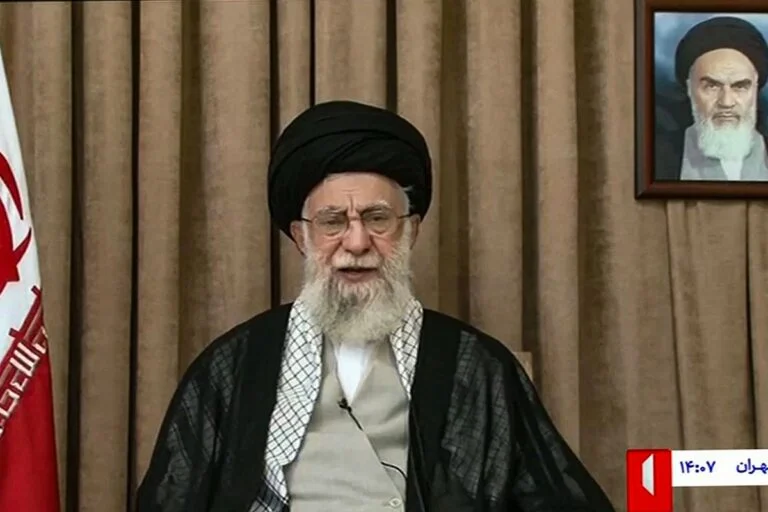
Beyond this devastating civilian toll, the same military operation included a direct and targeted attack against Iran’s senior leadership, resulting in the assassination and martyrdom of the revered Leader of the Islamic Republic of Iran. This act was openly acknowledged and claimed by the United States and the Zionist regime themselves, marking an unprecedented escalation and a direct assault on the sovereignty, constitutional order, and political independence of a UN member state. Such an action represents a grave breach of international norms and an explicit crossing of all legal, political, and moral red lines.
What makes these events particularly alarming is the context in which they occurred. The aggression took place while diplomatic channels were open and active, and while Iran and the United States were engaged in efforts to manage disputes through political means. Launching a military attack under these circumstances demonstrates a complete disregard for diplomacy, undermines confidence in peaceful conflict resolution, and sends a dangerous message that negotiations can be discarded at will in favour of force.
The timing of the attacks—during Ramadan and immediately before Nowruz—adds an additional layer of moral weight. Ramadan is a period associated with restraint, reflection, and respect for human life, while Nowruz symbolises renewal, peace, and hope. Targeting civilians, children, schools, and political leadership during such a period reflects a profound ethical collapse and contempt for shared human values.
From a legal perspective, the actions of the United States and the Zionist regime are entirely devoid of any legal, moral, or rational justification. They constitute a direct assault on Iran’s national sovereignty and territorial integrity and threaten the foundations of the international legal order. Silence or inaction in the face of such violations not only emboldens aggressors but also accelerates the erosion of international institutions and the principle of the rule of law.
The Islamic Republic of Iran has consistently affirmed its commitment to diplomacy and the peaceful settlement of disputes. Nevertheless, international law clearly recognises the inherent right of self-defence. Accordingly, Iran reserves its full and legitimate right to defend its people, sovereignty, national interests, and territorial integrity in a lawful, proportionate, and necessary manner.
Despite the immense human and national loss, Iran remains resilient, steadfast, and unwavering. The Islamic Republic of Iran will continue to defend its legitimate interests, national sovereignty, and territorial integrity with determination and resolve, harbour no doubt in this decision, and will not allow the aggressor to achieve its objectives. Commitment to diplomacy does not imply weakness; rather, meaningful diplomacy can only exist alongside firm defence of national dignity and security.
This aggression—carried out in the midst of a diplomatic process and marked by the killing of civilians, children, and the leader of a sovereign state—constitutes a serious threat to regional stability and international peace. The response of the international community at this critical moment will determine whether law, justice, and human dignity prevail or whether aggression and impunity are allowed to set a dangerous precedent in international relations.
Gholamreza Mahdavi Raja is the Iranian Ambassador to Nigeria
In this article