
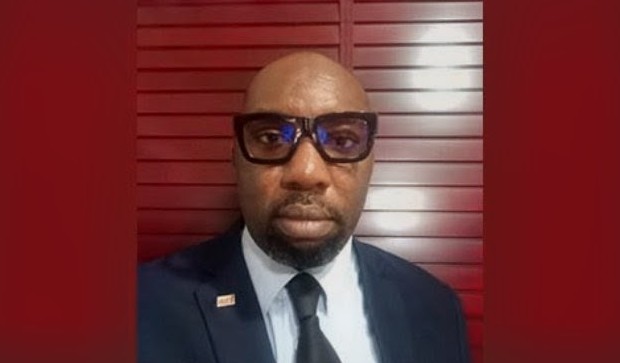
Nigerian Bar Association, Abuja Branch, popularly known as the Unity Bar, has condemned the arrest and detention of one of its members, Simon Aromosele, Esq., by operatives of the Inspector-General of Police Monitoring Unit at Force Headquarters, Abuja, describing the incident as an unlawful interference with the discharge of a lawyer’s professional duties.
The Branch said Aromosele was arrested over a letter he wrote to OPay on behalf of a client, requesting that a restriction placed on the client’s account be removed or, alternatively, that the court order authorising the restriction be produced.
According to the NBA Abuja Branch, discussions with the Investigating Police Officer, DSP Gambo Adamu, confirmed that the letter written by Aromosele in the course of representing his client was the sole basis for his arrest and detention.
The incident prompted an emergency intervention by the Branch after Aromosele raised a distress call.
The Unity Bar said it immediately deployed its Publicity Secretary, Michael Obinna Ochili, Esq., to the IGP Monitoring Unit, where he commenced discussions with members of the investigating team in an attempt to secure the lawyer’s release.
As the engagement continued into the evening, the Branch Secretary, Vincent Adodo, Esq., joined the intervention alongside Eudorah Ezeonye and Mojirayo Ogunlana.
The NBA officials subsequently engaged senior police officers over the circumstances surrounding Aromosele’s detention.
After several hours of discussions, the lawyer was released on self-recognisance bail at about 9:30 p.m. on Friday.
The Branch, however, maintained that his eventual release did not resolve the issue surrounding the circumstances of his arrest.
“The Branch strongly condemns this incident, which is one in a series of illegal arrests and detention of its members,” the association said in a statement signed by Ochili.
It demanded compensation for Aromosele, arguing that his liberty had been unlawfully restricted for carrying out what it described as a legitimate professional responsibility on behalf of a client.
The development has also raised wider concerns within the legal profession over the independence of lawyers and the use of law-enforcement powers against counsel for actions performed while representing clients.
The NBA Abuja Branch maintained that legal practitioners must be able to represent clients, write correspondence and challenge actions affecting their clients without fear that the exercise of those professional responsibilities would expose them to arrest or intimidation.
“The independence and safety of legal practitioners are essential to the administration of justice and the rule of law. No lawyer should be made to choose between faithfully representing a client and protecting himself from arrest or intimidation,” the Branch stated.
The association stressed that although lawyers are not above the law and may be investigated where there is evidence of wrongdoing, legitimate professional representation should not itself be criminalised.
It argued that arresting or detaining a lawyer merely because of correspondence written for a client could have consequences beyond the individual practitioner, as it could discourage lawyers from vigorously representing citizens in disputes involving financial institutions, government agencies or law-enforcement bodies.
The controversy centres on Aromosele’s letter to OPay concerning a restriction on his client’s account.
According to the Branch, the lawyer asked the financial services provider either to lift the restriction or disclose the judicial authority on which the restriction was based.
The NBA said that request, rather than any allegation that Aromosele personally participated in an underlying offence, was identified during its intervention as the reason for his detention.
The Branch consequently described the episode as part of a broader concern over what it said were recurring cases of lawyers being arrested, harassed or intimidated because of steps taken while acting for clients.
The Nigerian Bar Association has in recent years intervened in several disputes involving the arrest or alleged harassment of lawyers by security agencies, consistently maintaining that professional independence is central to citizens’ constitutional right to legal representation.
For the Unity Bar, the latest incident raises the question of whether lawyers can effectively protect the interests of clients if ordinary correspondence written in the course of representation can expose them to police detention.
The Branch said it would continue to pursue lawful and institutional measures aimed at protecting the dignity, independence, safety and professional freedom of its members.
It also maintained its demand that Aromosele be compensated for the period he spent in custody, while calling for safeguards against a recurrence of similar incidents involving lawyers acting in their professional capacity.
In this article