
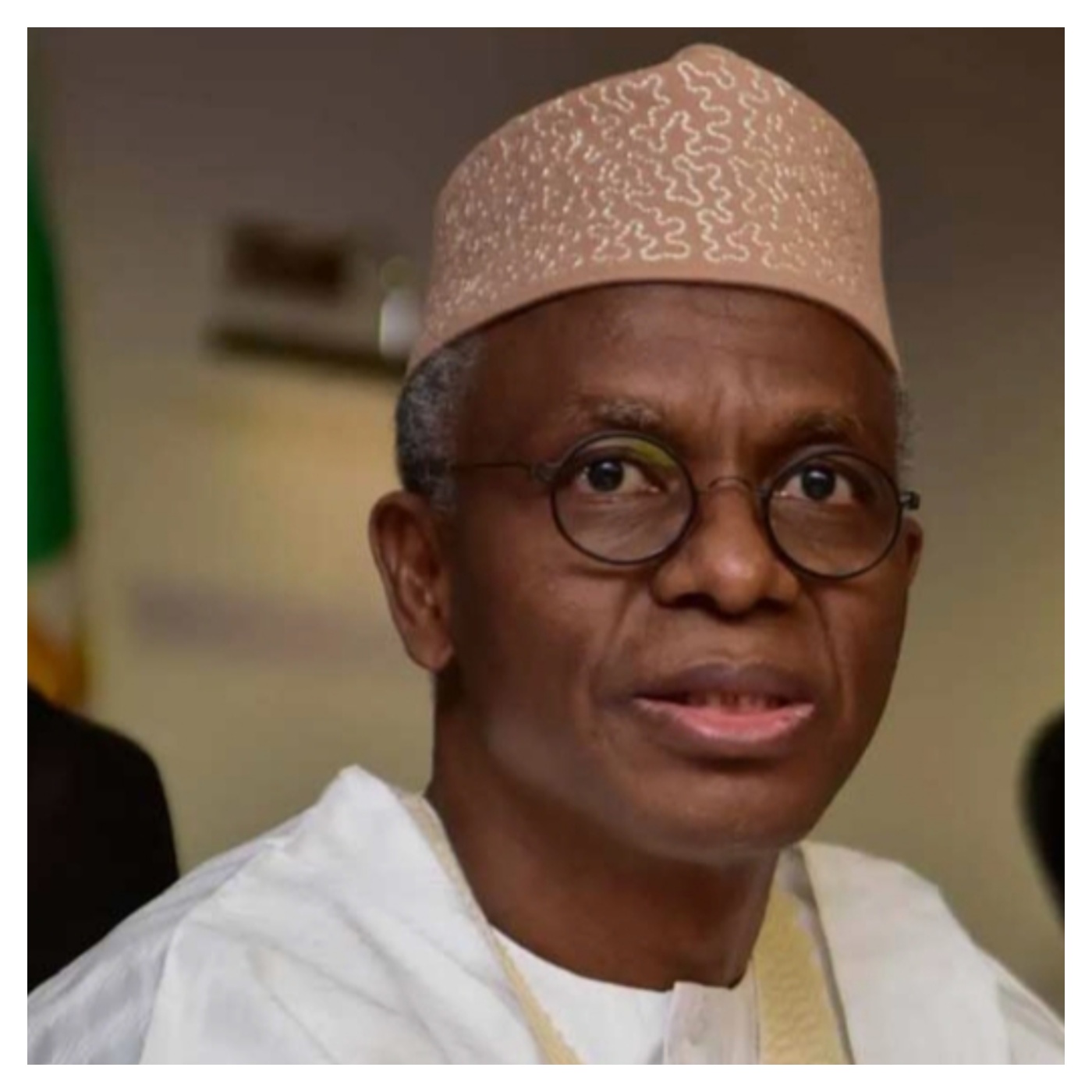
The Federal Capital Territory High Court sitting in Jabi, Abuja, has dismissed a fundamental rights enforcement suit filed by Joel Adoga, a co-defendant in the ongoing corruption trial involving former Kaduna State Governor Nasir El-Rufai.
Adoga had approached the court accusing the Independent Corrupt Practices and Other Related Offences Commission (ICPC) of violating his constitutional rights during its investigation into alleged corruption-related offences.
In the suit, marked CV/1012/2026, Adoga alleged that the anti-graft agency unlawfully detained him, denied him access to his family members and legal representatives, and pressured him into making statements during questioning.
He asked the court to declare that his fundamental rights had been breached and requested several reliefs, including an order for his release through habeas corpus, compensation, and an injunction preventing the ICPC from further investigating, detaining, or prosecuting him over the matter.
However, the court found no merit in his claims and dismissed the suit in its entirety.
In a statement released on Sunday by its Head of Media and Public Communications, John Odey, the ICPC said the judgment confirmed that the commission acted within the law throughout the investigation.
The commission told the court that Adoga’s allegations of unlawful arrest, intimidation, coercion, inhuman treatment, and denial of access to his family and lawyers were false.
According to the ICPC, Adoga was invited for questioning after a petition and preliminary findings linked him to alleged corrupt practices and suspicious financial transactions involving funds belonging to the Kaduna State Government.
The commission maintained that he was granted administrative bail during the investigation and that any later detention was carried out based on a valid remand order issued by a court with proper jurisdiction.
The ICPC further explained that after completing its investigation, Adoga was charged before the Federal High Court in Kaduna, where he was arraigned and granted bail.
It stated that his continued detention was not caused by any unlawful action from the commission but resulted from his inability to fulfil the bail conditions imposed by the trial court.
The anti-graft agency also rejected claims that Adoga was denied access to his family or lawyers, insisting that all statements obtained during the investigation were made voluntarily, under caution, and in the presence of his legal counsel.
Delivering judgment, Justice Mohammed Idris ruled that Adoga failed to provide sufficient evidence proving that the ICPC violated his fundamental rights.
The court consequently dismissed the case and affirmed that the commission’s actions during the investigation were lawful.
Adoga is currently facing trial alongside El-Rufai before the Federal High Court in Kaduna over a 10-count charge involving alleged corruption and money laundering offences connected to Kaduna State funds.
The ICPC alleges that between 2016 and 2023, El-Rufai received several deposits in United States dollars through his domiciliary account with Guaranty Trust Bank.
The commission claimed that some of the funds included $320,800 allegedly transferred in instalments by Adoga, alongside other deposits of $155,800, $305,300, and additional sums from various individuals, which investigators suspect may have been proceeds of unlawful activities.
Adoga was also accused of allegedly conspiring with El-Rufai in July 2019 to conceal the source of a $10,000 deposit made into the former governor’s account.
However, none of the defendants has been convicted, and the allegations remain before the trial court for determination.
The ICPC said the court’s decision reinforces its commitment to conducting investigations and prosecutions in accordance with due process, the rule of law, and respect for the constitutional rights of all individuals.
In this article