
By Ngozi Egenuka
The arrest of Prince Andrew and the measured response of his brother, King Charles III, depict a culture of the rule of law over and above family ties or friends. The undercurrent supremacy of the law is a major lesson for Britain’s socio-politically wayward former territories in Africa, NGOZI EGENUKA reports.
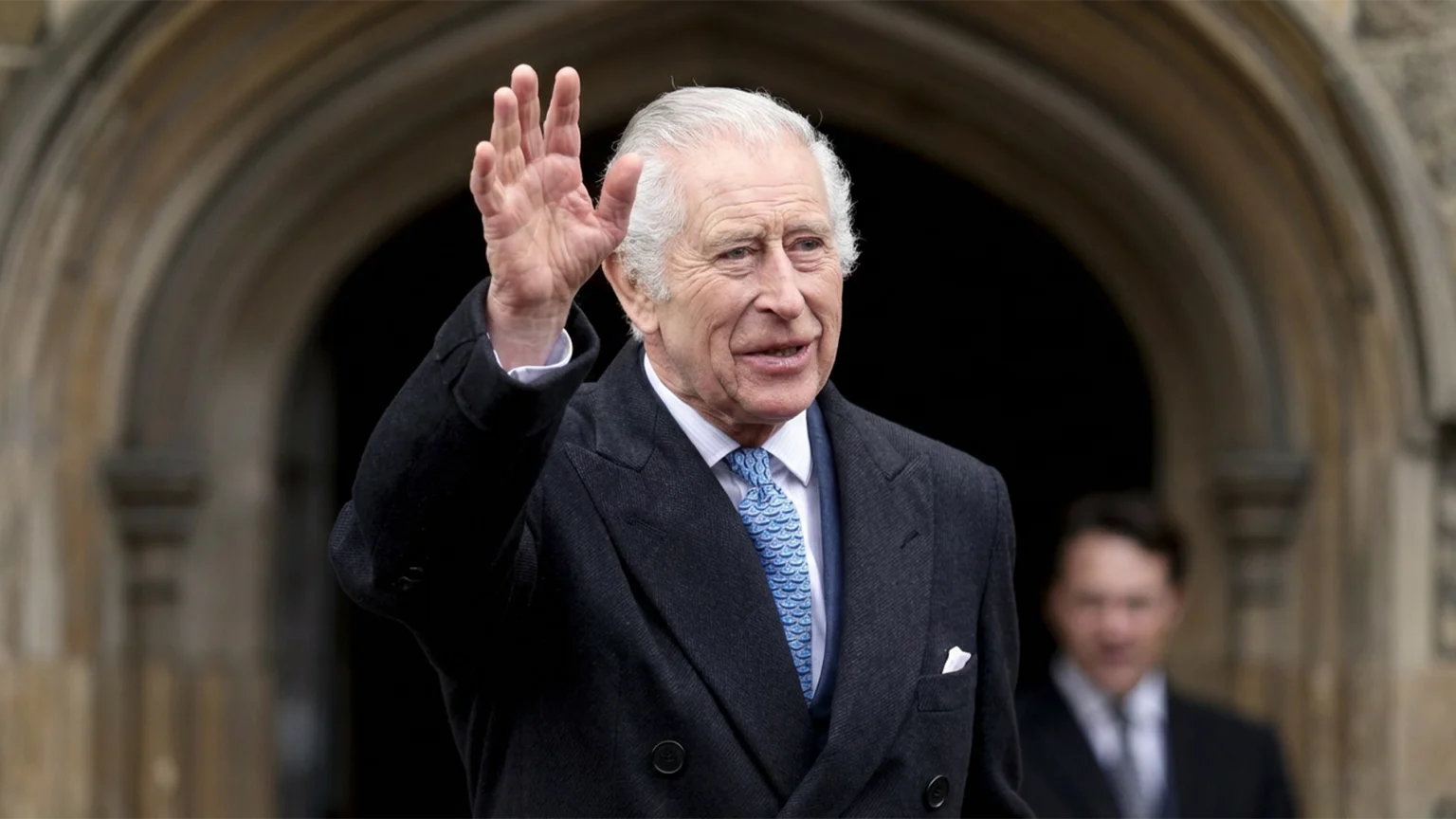
When King Charles III responded to the arrest of his brother, Prince Andrew, his words easily took a constitutional posture – the law must take its course.
The palace, he said, would give authorities its full and wholehearted support and cooperation. He and his family, he added, would continue in their duty and service.
Prince Andrew was arrested over allegations of misconduct in public office, becoming the first senior British royal in modern history to face arrest.
In January, the United States Department of Justice released more than three million documents relating to convicted child sex offender and American financier, Jeffrey Epstein.
The Epstein files are a partially released collection of millions of documents, images, videos, and emails detailing the activities of Epstein, including his social circle of public figures, politicians, and celebrities linked to his atrocities.
Prince Andrew was questioned by detectives from Thames Valley Police about his links to Epstein.
The Prince was released shortly after his arrest and has not yet been charged with any crime. Under United Kingdom law, police generally have about 24 hours to charge a suspect or release them pending further investigation.
His brother, King Charles, responding to the arrest, said: “ I learned with the deepest concern the news about Andrew Mountbatten-Windsor and suspicion of misconduct in public office.
“What now follows is the full, fair and proper process by which this issue is investigated in the appropriate manner and by the appropriate authorities. In this, as I have said before, they have our full and wholehearted support and co-operation.
“Let me state clearly – the law must take its course,” the king said, adding that he would not be commenting further amid the investigation into his brother’s case.
In constitutional democracies, institutions survive on perception as much as on procedure. By publicly distancing the monarchy from the unfolding investigation, King Charles showed that personal loyalty would not eclipse institutional integrity. The arrest and interrogation were symbolic, although critics argue that the palace was slow to respond decisively to the reputational damage arising from Andrew’s association with Epstein.
For Nigeria and much of Africa, where public office often fuses with private networks, the lesson is sobering. Too frequently, allegations involving relatives of those in power are met with silence, deception or institutional inaction. The reflex is usually defensive rather than declarative. Instead of “let the law take its course,” citizens hear either nothing or carefully hedged statements that suggest investigation is a political attack.
Across the continent, the problem deepens where family ties and the law meet. In South Africa during the time of Jacob Zuma, a judicial commission set up after his tenure revealed how proximity between leadership and private interests can metamorphose into systemic “state capture.”
In Equatorial Guinea, the long rule of Teodoro Obiang Nguema Mbasogo has been shadowed by international corruption cases involving his son, Teodoro Nguema Obiang Mangue. In each case, what eroded public trust was not merely the allegation, but the impression that power insulates from legal consequences.
Charles’ intervention demonstrates a different instinct. He did not personalise the matter. He did not delegitimise the investigators. He did not frame the arrest as persecution. He elevated the process above the person. Even the reported lack of advance notice to the palace subtly reinforces the idea that law enforcement operates independently of the sovereign. Although Nigeria’s democratic journey is young compared to Britain’s centuries-old constitutional evolution, the maturity of institutions is not solely a function of age, but one shaped by precedent. Each time a leader publicly subordinates family interest to legal scrutiny, it weakens accountability. Each time silence or interference prevails, it does the same. Unfortunately, the political culture in many African states still prioritises loyalty to kith and kin over loyalty to institutions.
What ultimately distinguishes King Charles’ response is not its symbolic eloquence but its restraint. It recognises that power must sometimes be demonstrated through withdrawal rather than intervention.
Reacting to this, Professor of Political Science at Lagos State University (LASU), Sylvester Akhaine, explained that Western countries went through turbulent periods in history, which made them realise that an absence of rule of law will create anarchy and instability.
“That is why they have the 11th commandment, ‘thou shall not get caught’ because once you are caught, the law takes effect,” he said.
He lauded the King for siding with the rule of law, comparing it to Nigeria, where the judiciary is questionable and those controlling state power at the centre grant prerogative of mercy arbitrarily .
Joey Barton given suspended sentence, restraining orders over social media posts
“We can only wish that the handlers of Nigeria can learn from these countries in terms of entrenching the rule of law,” he said.
Similarly, Professor of International Relations and Strategic Studies, David Aworawo, said Nigeria must draw a fundamental lesson from the event, which is that the supremacy of the law must be upheld.
He, however, advised that Prince Andrew should not be hounded because he is a member of the royal family and should also not be protected because of his status or influence. He said if the former Duke of York has not broken any law, he should be allowed to go. “But if he has breached the law, then it should apply to him as it would to any other citizen,” he quipped.
According to him, to build a decent society, the law must take its course and every individual must be treated equally before it. He stressed that the principle at stake is not about personalities but about institutional integrity.
The professor maintained that in Nigeria, there are many influential individuals in government whose children or relatives are often shielded when allegations arise.
He warned that when wrongdoing goes unpunished because of proximity to power, it sends a dangerous message to society. According to him, when citizens see that some people can act with impunity, the tendency to disregard law and order increases, and society itself is put in peril.
The don further argued that beyond disregard for law and order, lie the violation of ethical standards. Public figures, he insisted, must conduct themselves with the consciousness that their actions can eventually come to light. He warned against the illusion that misconduct will remain hidden forever, urging leaders and their associates to live as though their actions are constantly subjected to public scrutiny.
Prof. Aworawo added that if individuals act ethically and within the bounds of the law, they would avoid the kind of humiliation that often accompanies public scandals.
For Head, Security and Strategic Studies Division, Research and Studies Department, Nigerian Institute of International Affairs (NIIA), Prof. Joshua Bolarinwa, the global attention generated by the arrest of the former Duke of York demonstrates the enormous reputational implications such matters carry for a country’s image.
He said by declaring that the law should take its course, King Charles sought to prevent further institutional damage and avoid escalating a crisis that already had worldwide visibility. He noted that once law enforcement agencies became involved and the media amplified the story, it would no longer be managed quietly or “swept under the carpet.”
Bolarinwa argued that the situation illustrates how actions by prominent individuals can have far-reaching consequences for families, nations and even regional groupings. The scholar of international relations and strategic studies said scandals of this magnitude often expose uncomfortable truths and can trigger broader geopolitical conversations. This, he said, gets covered up most times.
On the lessons for Nigeria, he said leaders must recognise that personal misconduct or the misconduct of family members can tarnish the image of an entire nation. He stressed that those in authority should avoid wrongdoing and must not involve their children or relatives in actions that could damage public trust.
According to him, beyond politics, the deeper lesson is moral and humanitarian – leaders are expected to act rightly, uphold ethical standards and conduct themselves in ways that honour both their offices and the societies they represent.
In this article