
By Sheriffdeen Tella
Many times, particularly since his second coming, Donald Trump, the American President, has demonstrated an inability to manage the domestic economy and is trying to export his self-inflicted problems to the rest of the world. American political economic actions are usually assumed to be backed by research outputs, or so I thought, and the policies often yield valuable results. But President Trump has no patience for research outcomes. He seems to act according to personal conviction, which borders on self-centeredness, which is couched in arrogance.
Starting from the attack on the free trade doctrine sold to the world by the classical/neoclassical economists as the best trade policy, to the attack on the economic heart of a sovereign neighbouring economy – the oil resource of Venezuela, and now the extension to the global oil resources in the Middle East, Trump has demonstrated a unique style of leadership requiring special definition. The imposition of differential trade tariffs on different countries by President Trump since 2025 has changed the world’s trade equations and the United States relationships with its friends and United States allies.
He imposed 25 to 40 per cent tariffs on different countries and regional economic communities, from the European Union to its neighbours – Canada and Mexico, as well as South Korea, Japan, China, India, without excluding poor countries in Africa and Asia. The tariffs varied in product types and values, but they all had negative effects that necessitated painful retaliation against the U.S. economy. Reports state that the Yale group estimated that all tariffs imposed by Trump in 2025 raised average inflation-adjusted customs revenue by US$194bn as of January 2026, and that was above the 2022-2024 average.
Survey reports show that the tariffs imposed amounted to “a giant tax on the U.S. economy”, with the outcome passed on to consumers by businesses that could not absorb the cost. An additional report by the Federal Reserve in January 2026 indicates that throughout 2025, American citizens paid for nearly 90 per cent of the tariffs imposed by Trump. Initially, big businesses absorbed the costs of the tariffs, avoided raising prices to keep customers, and made lower profits, but they eventually had to pass on the costs to the consumers.
About 60 per cent of the small businesses were initially able to absorb some of the tariff costs, but that was for a short time before the price hike started, with a significant dip in business confidence. Despite the Supreme Court ruling that most of Trump’s tariffs were unconstitutional, he refused to obey and allowed the economy to reset. An economic recession had started, and President Trump knew he had lost people’s confidence. Of course, there have been external reactions to Trump’s economic mismanagement, as there were and are new alignments and policies between and among many global economic leaders.
The BRICS group, comprising Brazil, Russia, India, China, and South Africa, with their allies have formed a new monetary arrangement that can bypass the use of US dollars for their international transactions. Recently, England, Canada, and Australia were making similar arrangement and many will follow. These actions are definitely weakening the volume and value of US dollars in the international market, further compounding the economic problems of the United States.
Invariably, we all know that the US debt is heavy and weighing it down, and it also needs lots of crude oil for its industries. China, the second-largest economy and a major creditor to the United States, is in angry mode and not ready to play ball with Trump to ease his problems. Instead of using diplomatic means to get assistance, Trump is deploying a bravado tactic, which must compound his problem. He is thinking of dragging down other economies in a global recession.
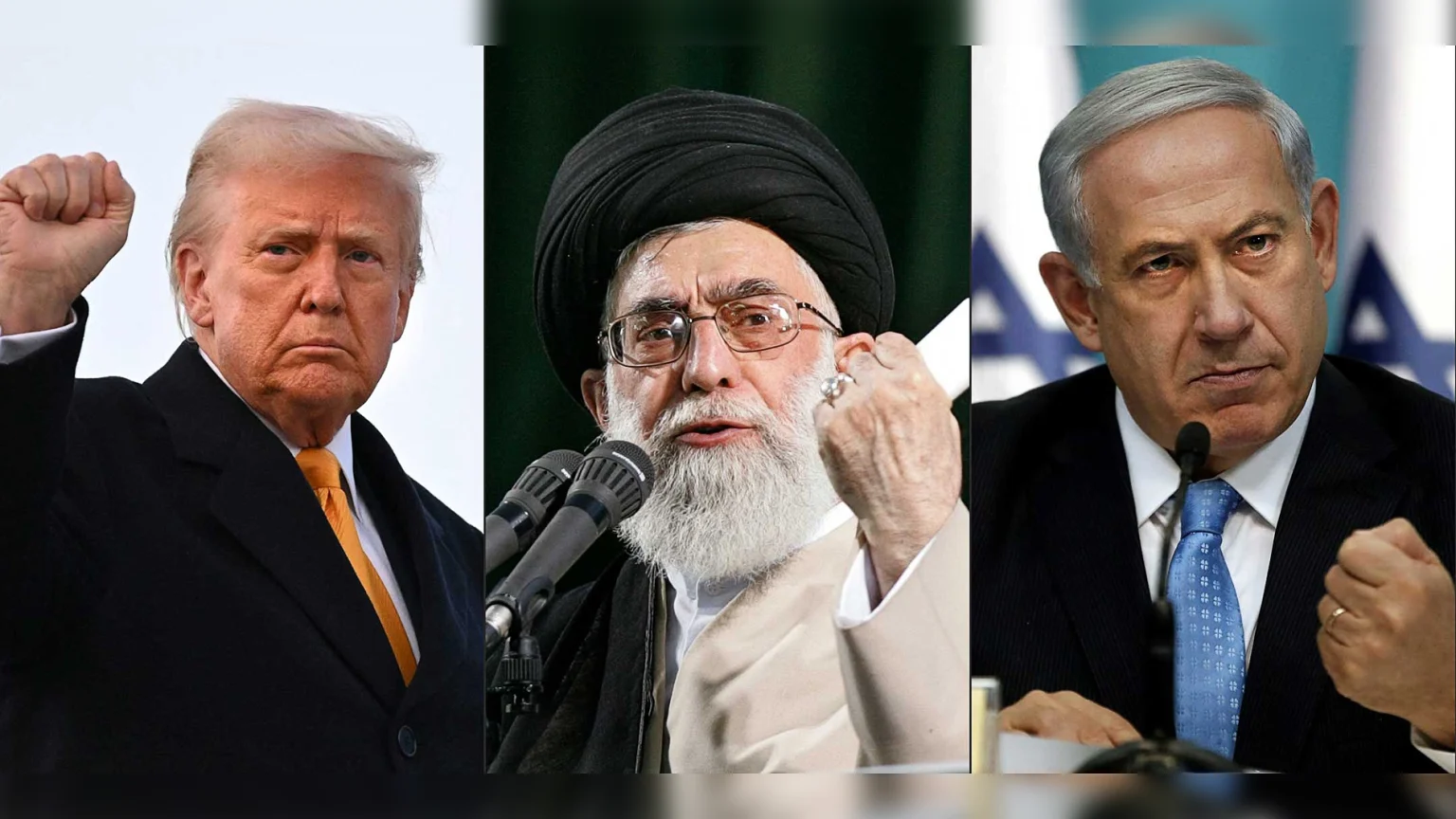
Like leaders of his gangré, he must externalise his domestic economic failure to divert attention of the Americans from domestic hardships. Given the linkage or contagion effects of policy implementation among the top economies in the world, externalising such domestic economic problems by one of them normally has global economic shocks. The invasion of Venezuela did not give him the magnitude of global effects he wanted, and he had to strike the global economic cord elsewhere. Iran seems to be the candidate for the second experiment, and it got the support of Israel, a nearby enemy of Iran.
He is trying to play a card of a Third World War that will completely take attention of American citizens away from the domestic economic problems he created, but it won’t work. New economic alignments are being formed, with the United States being isolated. The magnitude of the expected contagion effects is being weakened by the new alignment and some significant changes in the global payment system. A new economic order that will not centre around the United States will soon emerge, and Trump will soon realise that his agenda for a global recession will backfire.
Already, he is trying to force Britain to join him by indirectly calling the Prime Minister a weakling, but he has yet to extend the same to other European countries. Whether he will succeed or not depends on the resilience of the citizens and the leadership of each country. He will not talk to China because he knows the leadership there believes that more progress is made in peace than in war. And China has been making more economic progress through that model. What does anyone gain in imposing a global recession and promoting worldwide suffering and hardship? Prices of oil are already going up and will naturally have direct and indirect effects on other prices like interest rates, exchange rates, and wages and salaries, with negative implications on global living standards!
Trump is already talking about attacking Cuba. He claims citizens of some countries need the freedom that democracy preaches. If democracy means a country determining who leads another country, it is not worth being adopted as a political ideology. If it means political coercion, it is not worth it. The world must chart a new course, a new economic order that is inclusive of countries that want to be part of it. Wars bring death and destruction to past efforts expended on development. America will destroy a country through wars and promise to rebuild, but with that country’s resources. In fact, how many such countries have they rebuilt? Actually, leaders like Donald Trump put the lives of American citizens at risk globally. May the activities of 9/11 never occur again! It is not a prayer but a wishful thinking.
Sheriffdeen Tella
In this article