
By
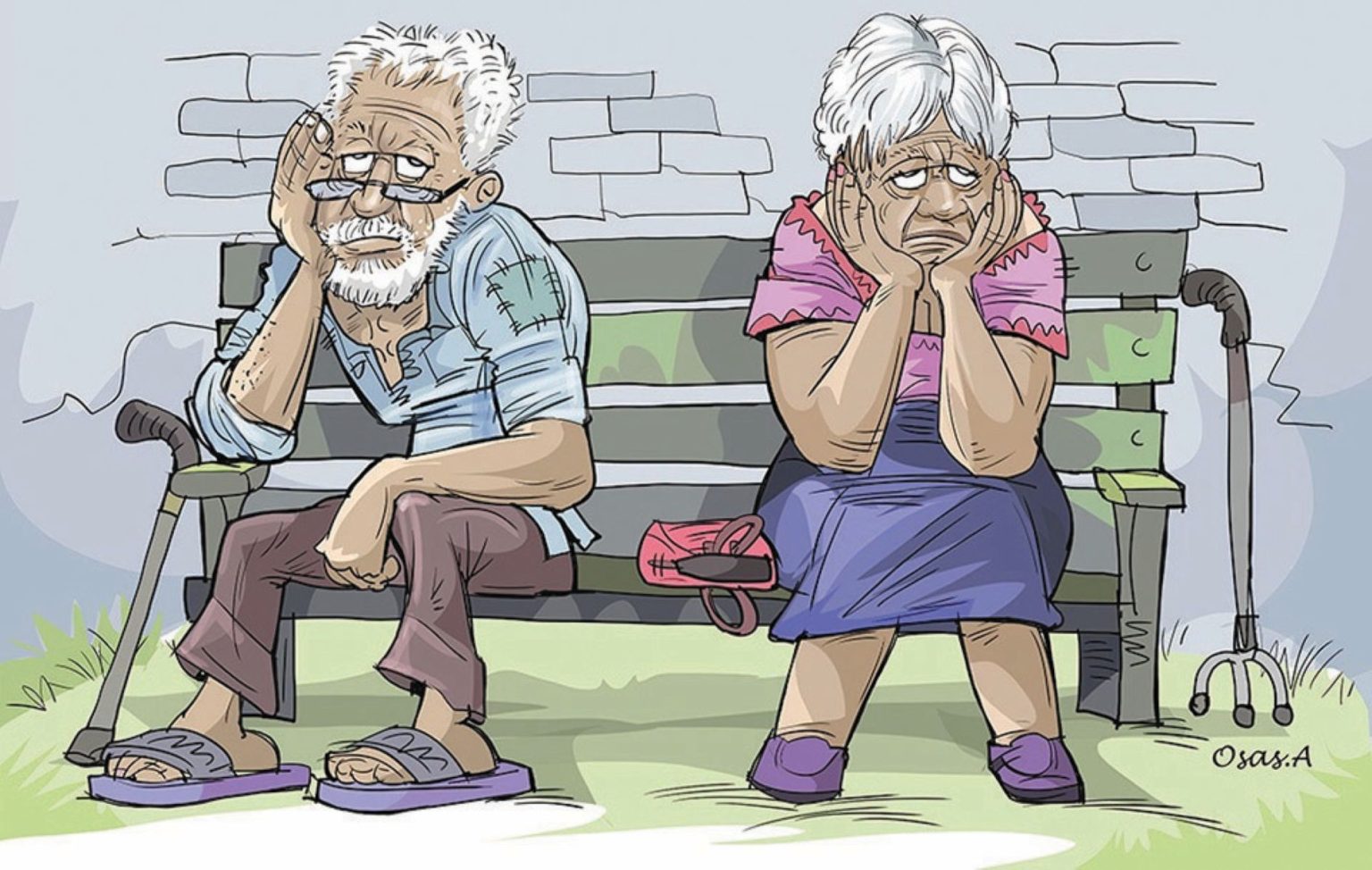
In the twilight of their lives, many senior citizens in South-West are resorting to alms soliciting as they face the grim reality of neglect, poverty, failed government policies and collapsing family support. This dangerous trend is sending a strong signal to the youths that, despite years of service to their families and country, old age has become a burden rather than a reward, with society turning a blind eye to their plight. SEYE OLUMIDE, AYODELE AFOLABI, ROTIMI AGBOLUAJE,
ADEWALE MOMOH, AZEEZ OLORUNLOMERU, and OLUWOLE IGE report.
At the Ojo Terminus in Ibadan, Oyo State, Alhaja Aduke Salami sat hunched on a slab, her eyes hollow with hunger and years of defeat. Once a vibrant trader in Osogbo, life’s cruel turns pushed her to Ibadan, where she now survives by soliciting alms.
In her mid-60s, Salami flinched when asked about her children, then broke into tears for a moment. As she mistook the reporter for a government agent, she took gentle, feeble steps and shortly vanished without a word. Three days later, Alhaja Salami resurfaced at Iwo Road, bowl in hand, continuing the silent business of survival.
Another elderly beggar, a frail man in his early 70s, mostly occupies a regular corner deep inside one of the sprawling markets nestled between Iwo Road and the Ibadan-Iwo Road Expressway. Bent by age and draped in a faded kaftan, he leans heavily on a weather-worn walking stick. His voice is barely above a whisper, yet it carries a haunting rhythm, repeating a prayer-laced plea to passersby: “God will have mercy on you… Please give me money to feed.”
As he plies his trade, he targets mostly those who appear pious – men in flowing white jalabiyas, women with hijabs or rosaries in hand, perhaps believing that faith might soften their hearts.
When approached for his name, he shook his head with a tired frown and waved the question off. But he disclosed, with a glimmer of faded pride, that he has three grown sons. “They’re still struggling… life has not smiled on them,” he said. “I came all the way from Apata to this place. I’m here every day.”
Once a carpenter, his calloused hands now only clutch a plastic plate, a key tool of the begging fraternity. “There’s no strength in these bones to carry a hammer or nails anymore,” he added. “No family support… and the children, they’re not serious.”
But even his story pales next to that of Alhaja Noimot, whose appearance alone startles many. She is a hunched, elderly woman whose left side bulges with a mysterious ailment, and a visible hunch rises from her back like a burden she’s carried for decades.
She moves painfully, slowly, dragging her twisted feet across motor parks, markets, and sometimes into the expansive grounds of the University College Hospital (UCH), where she appeals to patients and visitors alike for help.
Like the others, her story is muddled by memories and pains. Though she can barely recall the whereabouts of her children, she nevertheless hints at having had “three or four husbands” in her youth. “They have all disappeared,” she murmurs. “None of them even ask where I am…”
When pressed to estimate her daily takings, Noimot’s cloudy eyes turned downward. “Some days, maybe N1,000. Other times, N3,500 if a good
Samaritan shows up,” she said. “But this period? The money no dey come like before. People too suffer now.”
Her voice cracked as she spoke. She clutched her torn wrapper closer to her aching side, her dignity slowly fraying alongside the cloth.
Across Ibadan and other parts of the South-West, geriatrics are daily sliding into despondency as scenes of them soliciting alms are rampantly playing out outside churches on Sundays, and on the fringes of mosques on Fridays.
At major street junctions where vehicular traffic builds up, and at bus parks, elderly Nigerians, some in their 60s, 70s and 80s, kneel in the dust, or lean against walls or sundry support structures begging for survival. They are casualties of broken pensions, vanished social welfare, absent families, and a deepening economic crisis that has left them behind.
Among this burgeoning pool of oldies comprised of married, unmarried, widows and widowers, are also those abandoned by their children, who have migrated far away from their aged parents, or can no longer support them due to economic hardship.
There are also those whom the removal of fuel subsidy, inflation, and dwindling social safety nets have worsened their plight just as many of them lack access to health insurance or any form of welfare service at the government’s behest, impacted by a collapsing traditional support system, inadequate pensions, and a near-absence of social welfare programmes targeted at the aged.
No care for the elderly in Osun, Ogun, others
The silent crisis is also unfolding in Osun State. In motor parks across Osogbo, from the bustling old garage to the chaotic stretch of Aregbe and Ilesa Garage, a growing population of elderly beggars is emerging, casting a bleak shadow over the state’s social fabric.
An investigation by The Guardian reveals a surge in the number of senior citizens, who now line the entrances of motor parks, bus stops, and roadside corridors, stretching out trembling hands to passersby, praying aloud for sustenance and mercy.
At first glance, their weathered faces and whispered blessings might seem like fleeting interactions in the daily bustle. But dig deeper, and their stories reveal a grim truth: Nigeria’s economic realities, coupled with failing familial structures, are pushing the nation’s aged into the unforgiving arms of street begging.
In Osogbo, our correspondent observed that these elderly men and women have become a near-permanent fixture in transport hubs. Some kneel with rosaries and Qur’anic verses on their lips, hoping prayers might unlock pity and cash. Others shuffle from vehicle to vehicle, too weak to plead, yet desperate to survive.
While many cite hunger and economic hardship as their primary reasons for begging, others appear to have turned the act into a profession, borne not just of poverty, but also of neglect. A recurring narrative emerged: grown children, either unemployed or underemployed, are unable, or unwilling, to care for ageing parents.
One 65-year-old woman at Aregbe Motor Park, speaking anonymously, voiced the dilemma: “It’s shameful, yes. But I must eat. My children are artisans; they try, but it’s not enough. So, I came here.”
Worryingly, Osun State has no functional rehabilitation centre or government-run home for the elderly, leaving these vulnerable citizens exposed to the elements and to danger from the very roads they hover beside in search of compassion.
In Ogun State, the same sorrowful scene plays out at Kuto Garage in Abeokuta. There, a 76-year-old Adanibu Mercy, recounted her descent into begging following her husband’s death. “No one was left to care for me,” she said, clutching a plastic bowl of coins.
Even those who once served the government are not spared. Omolade Akinmila, an octogenarian and retired civil servant, lamented that his pension is a pittance in today’s economy. “I developed a serious sight problem. I needed help. That’s why I now ask strangers.”
Unlike in Lagos, Oyo, Osun, and Ogun, elderly beggars are a rare sight on the streets of Ekiti State, even though this quiet dignity conceals growing hardship.
In the “Land of Honour and Integrity,” senior citizens are slipping into silent suffering. While many elders still find shelter in the traditional safety nets of family and faith, critics say the state government has done little to address the deepening crisis of old-age poverty.
Civil Society Organisations and concerned residents accuse the Ekiti government of neglecting its elders. The absence of visible street begging, they argue, is not proof of welfare but a reflection of religious values and cultural pride that discourage public pleas for help.
Begging: A social welfare failure
While Ondo State’s cultural code still frowns at open begging, the dual crises of economic hardship and internal migration are slowly reshaping a once-rigid norm, exposing the limitations of informal support systems in a changing Nigeria.
Open begging, particularly among the elderly, is both culturally alien and socially stigmatised. Known for their sophistication and deep-rooted pride, the Yoruba-speaking people of the Sunshine State traditionally frown at public solicitation for alms, viewing it as a mark of failed communal responsibility.
As a longstanding norm, the elderly are cared for by their children, extended families, and increasingly, Christian institutions, given the dominant religious demographics of the state.
For the Ogun State Commissioner for Women Affairs and Social Development, Adijat Adeleye, the trend is disturbing. “It’s both a social welfare concern and a reflection of evolving family dynamics,” she said.
Adeleye insisted that the state is not turning a blind eye to the plight of elderly people. “We’ve rolled out several programmes, financial empowerment like Oko’wo Dapo, medical outreach, and palliative distribution. We’re working with development partners to ensure that no elderly person is left behind.”
Yet, she warned that the burden cannot rest on the government alone. “Every elderly person belongs to a family and a community. To abandon them is to betray the values that define us.”
Adeleye’s counterpart in Ekiti State, Mrs Peju Babafemi, insists that the state government is not looking away as it has several interventions underway.
“Street begging is alien to our values,” she said. “We’re clearing pension backlogs, paying gratuities, and distributing food palliatives across the LGAs. The governor’s wife, through her WAOH Project, also supports elders, widows and the vulnerable.
“Our youths are no longer here to care for their parents like before. Even when they send money from abroad, it’s hardly enough. And emotional warmth, something irreplaceable, is missing. The government alone cannot bear this burden. Families, religious groups, and civil society must rise to the task.”
According to the National Bureau of Statistics (NBS), over 63 per cent of Nigerians are multi-dimensionally poor, with older persons among the most affected due to neglect, poor health infrastructure, and lack of income security in retirement. In the absence of sustained state intervention or community-based support structures.
Elderly begging in Yorubaland represents severe sociocultural dislocation, a near-complete inversion of the Yoruba saying: “ti okete ba dagba, omu omore nii mu” (when an African giant rat grows old, it relies on being fed by its kittens’ breast). Elders in Yorubaland were once venerated as custodians of wisdom, traditions, and value systems and were guaranteed family care through extended family systems, but now appear as street beggars due to collapsed traditional support structures, urbanisation, digital exclusion, and harsh economic realities.
The elderly, disproportionately suffering within the region’s 40 per cent multidimensional poverty rate, are left with no social security or safety net programmes like pensions and other economic participation opportunities. This socioeconomic condition has transformed them from society’s most honoured to its most vulnerable, one of the most fundamental ruptures in the Yoruba social fabric.
Shedding light on some of the major drivers of elderly begging in Yorubaland, the Director General of DAWN Commission, Seye Oyeleye, said that with the collapse of traditional extended family support systems, the structures that once provided necessary care for the elderly in traditional Yoruba society have been replaced by urbanisation and the individualistic lifestyles that accompany it.
Secondly, economic transformation has created new vulnerabilities. The shift to industrialisation and service economies tied working-age adults to capitalist wage systems, but this transition brought widespread unemployment and underemployment among those who should be supporting the elderly.
Oyeleye added that since most members of the elderly generation worked in informal sectors where there are no pensions or savings schemes available to them, they are bound to struggle, just as the current economic realities have rendered traditional pension sources inadequate.
He also emphasised that due to intergenerational poverty, many poor families cannot support elderly members when struggling for basic survival themselves.
A chieftain of Yoruba Socio-political group, Afenifere, Femi Okurounmu, agrees with Oyeleye, saying: “Elderly begging in South-West Nigeria reflects a troubling mix of economic hardship, social breakdown and weak state support systems. Many older people, having spent their productive years in informal work such as farming, trading and craftsmanship, enter old age without pensions, savings or social protection. Rising inflation, fuel price hikes and soaring food costs have further stripped them of economic stability.”
He noted that the absence of functional social security schemes across most South-West states has left the elderly largely excluded from structured welfare, while the traditional extended-family system that once provided care has been eroded by urban migration, unemployment and shrinking household incomes. Health challenges, including chronic illness and disability, compound their vulnerability, limiting their ability to work and increasing daily expenses.
“As social isolation deepens and street begging becomes tolerated in urban centres, many elderly people resort to public alms as a survival strategy. The trend exposes a widening gap between increased life expectancy and the lack of dignity and security in old age across the region,” the elder statesman submitted.
Ageing must come with dignity, social support
THE Executive Director of the Gender Relevance Promotion Initiative (GRIP), RITA Ilevbare, told The Guardian that the states must do more to rid the region of the smouldering menace.
She called for the revival of past welfare schemes like Owo Arugbo (Money for the Elderly) and Ounje Arugbo (Food for the Elderly), initiatives launched by former governor Kayode Fayemi.
“The elderly are begging behind closed doors. In their youth, they cared for their children; worked all their lives, yet now they go hungry because those children are unemployed or abroad. Their pensions are meagre, and many never worked in the formal sector. They can’t feed themselves, and they can’t die. So, they beg.”
She warned that unless insecurity and unemployment are addressed, the burden on the aged will worsen. “The state must lead with compassion and food. Food is a basic right.”
Even though DAWN boss, Oyeleye, admits that Southwestern state governments’ responses have increased over time through policies and initiatives directed toward social security for the elderly, he emphasised that their effectiveness remains severely limited.
“Ekiti State pioneered formal intervention when the Fayemi government enacted the Senior Citizen Welfare Act in 2012. This law provides welfare assistance in the form of cash grants or in-kind assistance to elderly persons resident in Ekiti State. However, several critical problems undermine this seemingly progressive legislation.
“Lagos State is increasingly focusing on supporting its senior citizens (60-plus) through targeted financial aid, free health check-ups, and social inclusion initiatives, often implemented through the Lagos State Office for Disability Affairs and partnerships like the Renewed Hope Initiative for Economic and Social Stability (RHIESS) initiative. Key interventions include providing stipends of N200,000 to vulnerable elders, offering free medical screenings covering blood pressure, blood sugar, and cholesterol checks, and programmes aimed at integrating them into society. While these initiatives represent meaningful efforts, they face significant limitations. The geographic concentration in Lagos means many elderly remain largely unreached, particularly those in rural and peri-urban areas.
“Oyo State recently implemented interventions through the Renewed Hope Initiative (RHI), a project led by Nigeria’s First Lady, Senator Oluremi Tinubu, and coordinated in Oyo State by Mrs Tamunominini Makinde. The initiative has empowered thousands in Oyo State, including support for 250 elderly citizens with N200,000 each, and agricultural support for women farmers.
“But the rising costs of living have transformed elderly vulnerability into acute destitution by making food unaffordable, healthcare catastrophic, and community safety nets collapse, while state government efforts, though increasing, remain tokenistic interventions that cannot meaningfully counteract these economic forces. Governments must commit to comprehensive, institutionalised, and adequately funded elderly welfare systems with recurring monthly support indexed to inflation and universal healthcare coverage to curb this phenomenon of elderly begging,” Oyeleye stated.
Thinning number of elderly homes as a concern in South-West
FINDINGS revealed that institutional care for the aged across the South-West states is alarmingly scarce, as only a handful of old people’s homes exist in the region, most of which are privately run, poorly funded, or religious-based, with limited government involvement.
In Lagos, the few available elderly care homes, such as Regina Mundi Home in Mushin, Amazing Grace Foundation on the Mainland, and Holy Family Home in Ikorodu, are operated by churches and charities. While these facilities offer basic care and emotional support, they are often overwhelmed and underfunded.
As of now, there is no dedicated, state-run geriatric centre in Lagos. The situation is more dire in other states. In Oyo, old people’s homes like Jesus Children Mission Outreach and Mother Theresa’s Home in Ibadan cater to only a few individuals. Largely run by missionaries or charities, these facilities lack consistent government support.
In Ogun State, facilities like the community-run home in Ijebu-Ode and the Ijamido Elderly Home in Ota exist but face neglect. Osun, Ekiti, and Ondo States are even less served. Apart from a few small centres like St. Vincent’s Home for the Elderly in Akure, there are no notable public or private old people’s homes.
In Ekiti, only the Ekiti Parapo Old People’s Support Centre operates, with minimal reach. Religious institutions, NGOs, and families continue to shoulder the burden.
However, experts warn that the absence of a structured, state-backed geriatric care system is unsustainable, especially as life expectancy improves and traditional family systems weaken.
The federal government has yet to implement a national policy on elderly care, while state governments across the South-West have focused primarily on youth empowerment, infrastructure, and healthcare, with little attention to ageing populations.
Advocates are calling for a regional framework for elderly care, including the establishment of geriatric hospitals, residential care homes, and community support centres.
While Yoruba Ronu Leadership Forum laments that things have taken a dangerous nosedive for the aged in Yoruba land, it recalled that the Western Region, particularly Lagos, had old people’s homes established to care for those who may not have children to look after them.
President of the Forum, Akin Malaolu, said: “Rather than to improve facilities in old people’s homes, the homes became extinct for reasons unknown. Not only are we seeing Yoruba people embracing the begging culture, but we are also aware that the menace was a result of many economic and moral factors.
“To save Yoruba people from accepting the culture of begging, the government of the South-West must brainstorm and find solutions to the menace that is fast spreading. The time to do so is now,” he said.
‘Plan early for post-retirement life, old age’
ACCORDING to the Executive Director of ZIONCLIFF, Mrs Alaba Ehindero, while many retirees are unprepared for post-retirement life, the lack of state-led social welfare for the elderly is part of the broad challenges that fuel the menace of elderly begging, even as the National Senior Citizens Centre’s limited presence also hinders effective interventions.
She added that the traditional resistance to old people’s homes in many parts of the country, and a lack of patronage, have led to the closure of many such facilities, even though private ones are now emerging.
Bayo Aina, spokesman of the Yoruba Leaders of Thought, lamented the collapse of the South-West’s once-strong communal system, saying: “In the past, children grew up within a close-knit community and collectively cared for the elderly. Today, many young people are leaving in search of greener pastures. Ironically, most of them are struggling where they are, making it difficult to cater for themselves, let alone their parents or older relatives,” he said.
Aina explained that begging by the elderly goes beyond those seen on the streets, including many who are homeless, undernourished, or unable to access healthcare, yet remain largely invisible. He stressed the importance of early personal planning for old age, warning against relying solely on children for care and urging individuals to avoid extravagance in youth. “Owning a home significantly reduces the risk of destitution in old age,” he added.
The Lagos State Commissioner for Information and Strategy, Gbenga Omotosho, said that the state has taken steps to address these challenges.
He highlighted the state’s network of old people’s homes, strategically located to offer shelter, basic care, and social support for the elderly without family backing. NGOs regularly visit these facilities, particularly during festive periods, to support residents.
Omotosho said that the state focuses on income and health security for its ageing population, especially retired public servants, and also has sustained prompt pension payments to prevent poverty after retirement, a key factor that contributes to elderly destitution
He further highlighted Ilera Eko, the state’s social health insurance scheme, which allows retirees and other residents to access medical consultations and treatment for common and chronic illnesses without high out-of-pocket costs.
According to Omotosho, personal preparation remains critical. Younger Nigerians are encouraged to embrace structured retirement plans and insurance schemes, alongside relying on government support, to ensure dignity in old age.
In this article