
By Femi Ogbonnikan
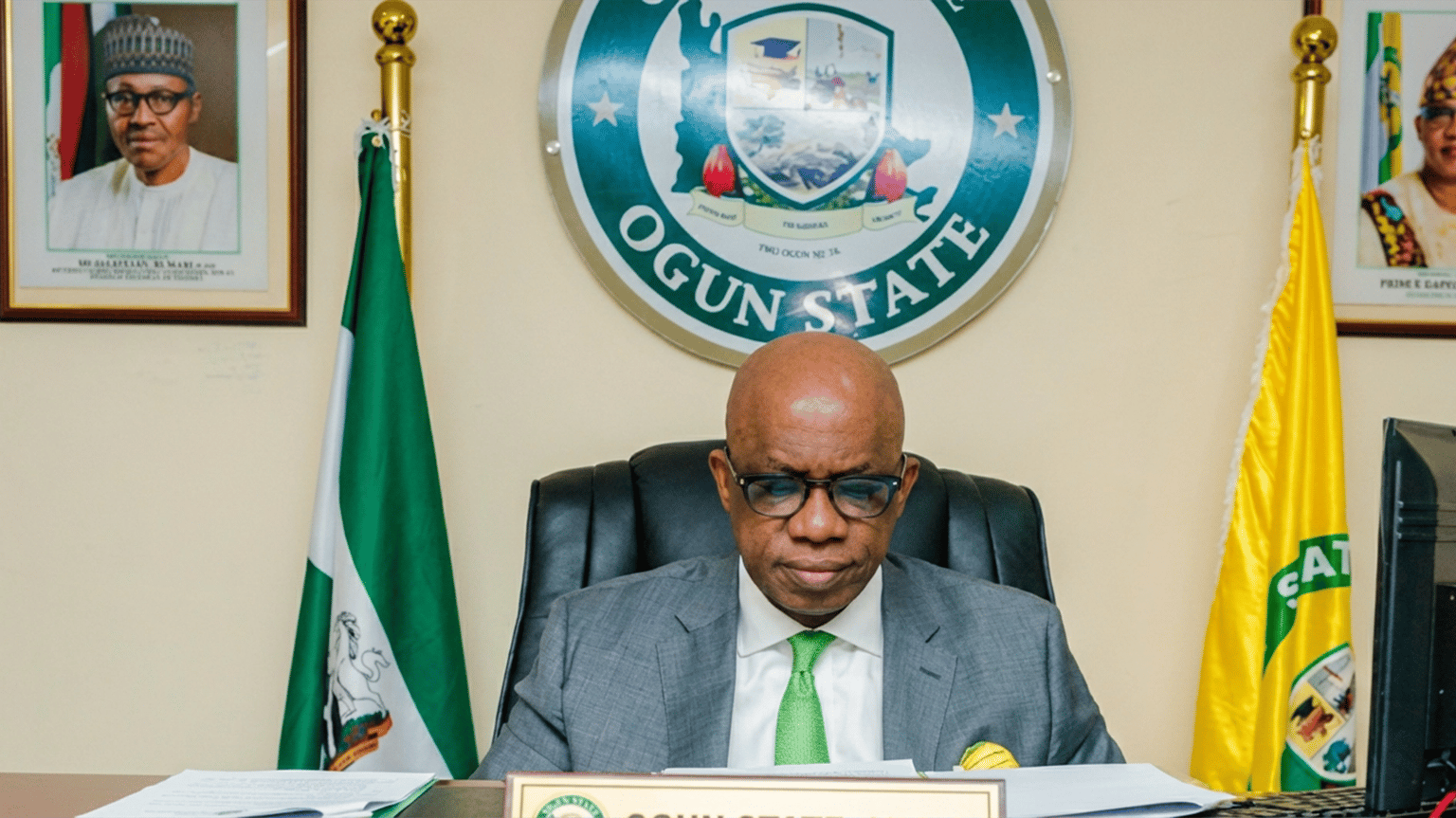
Nigeria is, once again, caught in the fever pitch of pre-election politics. In Ogun State, the conversation is no longer just about the Governor, Prince Dapo Abiodun’s current achievements; it has moved to the next level. The burning question is: what comes after 2027?
While the answer is still tucked away in the womb of time, the whispers within the All Progressives Congress (APC) are becoming louder. Communities, concerned groups and high-ranking party leaders are reportedly nudging the Governor towards a Senate seat. It is a strategic move that would see him remain a vital force in the nation’s political fabric, ensuring his experience continues to serve the interest of his constituents well beyond his departure from Government House, Okemosan, Abeokuta.
This pressure from the party leadership is not merely ceremonial; it is a calculated move to preserve the party’s ranking influence within the National Assembly. By elevating an experienced executive to the Red Chamber, the APC seeks to bridge the gap between state-level governance and federal policy-making, ensuring that the ‘ISEYA’ legacy has a powerful voice in Abuja. In Nigeria, the Senate is often referred to as the retirement home for Governors, but in a strategic sense, it is about relevance. For the APC, having an experienced ally like Abiodun in the Red Chamber ensures that the party maintains a high-ranking loyalist at the federal level who can still influence Ogun State politics from Abuja.
With the presidency currently in the Southwest, the APC hierarchy is keen on consolidating power. By moving a sitting governor into the Senate, the party ensures that the legislative arm has heavyweights who can defend the interests of the region and the party’s national agenda, especially regarding federal allocations and regional projects.The Senate operates on a ranking system. If Abiodun wins a seat in 2027, he enters with the prestige of a two-term governor. The party hierarchy may see him as a potential candidate for a Principal Officer role (like Senate President or Chief Whip) in the future, which brings more federal power and resources back to Ogun State.
By encouraging the Governor to move to the Senate, the APC hierarchy may be trying to manage succession politics. Providing the outgoing Governor with a clear next step can prevent internal friction between him and whoever emerges as the party’s gubernatorial candidate for 2027, ensuring a smoother transition of power within the state.
The governor’s performance is no longer a localised metric but a ‘proof of concept’ for his federal potential. His success in Ogun’s Industrial Revolution and IGR growth, ranking only behind Lagos, serves as his primary credential for a seat in the Red Chamber. The shift in conversation from his performance on the ISEYA mantra to his 2027 options suggests that stakeholders have already certified his executive competence. The current rating criteria have evolved: voters are now assessing his ability to translate state-level success into legislative influence at the national level. By positioning himself for the Senate, Abiodun is signaling a desire to protect his legacy.
A high rating in 2027 would effectively serve as a Letter of Recommendation’ from the people of Ogun to the National Assembly. Ultimately, the Governor’s performance rating has become the bedrock of his post-2027 viability. By transforming Ogun into a top-tier investment hub and securing accolades like the Forbes ‘Best of Africa’ award, Abiodun has moved beyond mere state-level appraisal. His record is now being viewed as a Federal Resume, where every completed project strengthens the argument for his transition to the Senate as a seasoned administrator capable of high-level policy advocacy. The shift in focus towards 2027 is essentially a transition from a ‘State Performance Review’ to a ‘Federal Job Interview.’ Abiodun’s rating is no longer tied to local road repairs alone, but to his Economic Viability. Having overseen an Ogun State budget that crossed the N1 trillion mark—ranking the state as the 3rd highest in Internally Generated Revenue (IGR) nationwide—his performance is being interpreted by the stakeholders as a ‘proof of concept’ for his readiness to lead high-level Finance or Appropriation committees in the Senate.
However, a holistic performance rating must also account for the last mile challenges. While the Gateway International Airport stands as a crown jewel of his administration, hitherto, critics in areas like Sango-Ota and Agbado point to the deplorable state of Federal-link roads as a lingering issue, but have been reconstructed. For Abiodun, a Senate seat is being framed not just as a reward, but as a strategic necessity—giving him the legislative platform to finally fix those federal bottlenecks that even a Governor’s executive powers could not fully resolve.
Beyond political maneuvering, the Governor’s performance scorecard serves as a testament to a dependable leadership style that citizens can rely upon. In an era where effective service delivery is often the exception rather than the rule, his administration’s focus on the ‘ISEYA’ mantra has provided a blueprint for tangible results. This track record suggests that his potential transition to the Senate would not just be a change of office, but a scaling up of a proven model for robust legislative representation and community development.
His dependable track record cuts across the key areas like infrastructure, transport projects, education, housing, industry and investment, security as well as social welfare. In infrastructure, Abiodun has constructed more roads than any of his predecessors. Within six years, he has constructed well over 1,500km of roads and completed the Gateway International Airport. The Airport seves as a proven ability to lobby for Federal Aviation & Transport projects. His investment initiatives are tied to reform policies, like the Ease-of-Business Ranking, leading to attraction of over 70 percent of Nigeria’s new manufacturing companies.
These achievements present him as an ideal candidate for Senate Committee on Industry and Investment. The administration’s grassroots-focused development that impacts could be seen in the renovation of over 1,000 schools (Yellow Roofs revolution) and upgraded Primary Health Centres in 236 wards.
Overall, this performance scorecard is a testament to Governor Abiodun’s dependable leadership style people can rely upon for effective service delivery, robust legislative role and community development. Over the years, he has demonstrated skill in navigating federal bureaucracy and policy. Through his robust legislative potential, he was able to successfully lobbied for Ogun to be recognized as an oil-producing state. As the Governor approaches the twilight of his second term, the clamour for his Senate bid is fueled by a simple logic: dependability. Having transformed Ogun into a top-tier industrial hub and Nigeria’s investment destination of choice, the ‘womb of time’ may soon reveal that his next chapter is in the hallowed chambers of the Senate—carrying with him the same spirit of effective service that has defined his governorship.
While the ultimate decision remains under wraps, the consensus among political analysts is clear: a leader who has proven himself a dependable steward of a state’s resources is the ideal candidate to protect those to at the federal level. As the sun begins to set on his gubernatorial term, the womb of time seems poised to birth a new chapter of service—one where the robust legislative role of Dapo Abiodun becomes the cornerstone of Ogun’s continued growth in the Red Chamber.
A central theme in this unfolding narrative is the prolonged yearning of the Ogun East Senatorial District for effective and heavyweight representation at the Red Chamber. This has been a recurring discourse among stakeholders who feel that the district requires a representative with the executive clout to navigate the complexities of federal legislation. Expectation is high that Governor Abiodun will heed this call, transitioning from the state house to the Senate to fill this perceived void. This expectation is rooted in a dependable leadership style that the people have come to rely upon.
• Ogbonnikan wrote from Abeokuta, Ogun State.
In this article