
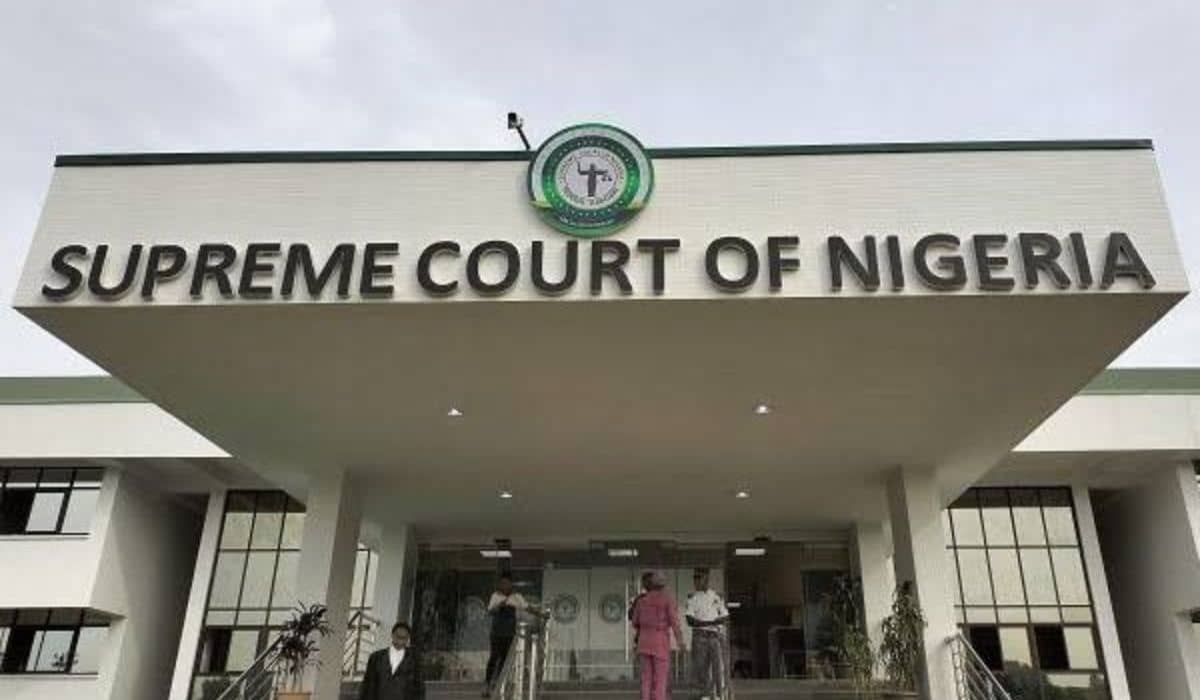
The Supreme Court of Nigeria has taken its digital transformation drive to the ongoing Nigerian Bar Association Annual General Conference, showcasing a range of technology-driven solutions designed to modernise court operations, simplify legal processes and strengthen the verification of documents across Nigeria.
Announcing its presence at the conference, the apex court said its exhibition booth is demonstrating digital products including the Nigeria Case Management System e-Filing platform, e-Notarisation, Enrollment and Credence, Notary Registration, as well as other technology solutions being introduced to improve justice delivery.
“We are officially LIVE at the NBA Annual General Conference!” the Supreme Court stated.
It invited lawyers and other conference participants to visit its booth to experience the innovations and interact with officials involved in their deployment.
“Visit the Supreme Court of Nigeria booth and discover how we are transforming court operations through innovative digital solutions, including NCMS e-Filing, e-Notarization, Enrollment & Credence, Notary Registration, and much more,” the court said.
The Supreme Court also urged participants to scan a QR code displayed at the booth or speak directly with its team to learn more about how technology is being deployed to reshape justice administration in the country.
One of the major platforms being demonstrated is the Nigeria Case Management System Electronic Filing platform, which is designed to provide lawyers and court users with an electronic gateway for filing processes before Nigeria’s superior courts.
The NCMS e-Filing platform is intended to reduce dependence on purely physical filing processes and provide a digital interface through which eligible court processes can be initiated and managed.
Another major feature of the Supreme Court’s exhibition is its emerging electronic notarisation system, promoted at the conference under the message: “The Future of Notarisation is Here.”
The system is presented as a way of allowing users to notarise documents in a manner described as smarter, safer and faster, including remotely.
According to information displayed at the Supreme Court booth, the process enables a user to upload a document, connect with a notary online and have the document notarised electronically.
The digital notarisation initiative also contains a verification component aimed at institutions that routinely rely on notarised documents.
The Supreme Court said banks, embassies, regulators and Ministries, Departments and Agencies would be able to connect directly to an Electronic Notary Register to verify documents in real time.
The system is designed to operate as what the court described as a “trust layer” that organisations can incorporate into their existing operational processes.
“Bring this Trust Layer into your Organisation’s workflow,” information displayed at the booth stated.
Under the proposed arrangement, organisations would be able to integrate the verification system through an Application Programming Interface, or API, without necessarily changing the systems through which they already conduct their operations.
The Supreme Court said this could enable financial institutions, diplomatic missions, government agencies and regulators to confirm whether notarised documents presented to them are genuine at the point of use.
The system is also intended to reduce fraud and the dependence on manual document verification.
According to the information displayed at the booth, it “reduces fraud and manual document checks at the point of intake.”
For organisations without sophisticated technological infrastructure, the court said a low-code integration option would also be available, potentially broadening access to institutions with more modest digital capabilities.
Conference participants were invited to scan the displayed QR code for further information or enquiries concerning integration of the electronic verification system into their organisations.
The presentation also highlighted the Supreme Court’s Enrollment and Credence initiative and digital Notary Registration, indicating a broader attempt to bring different aspects of legal professional authentication and court administration under technology-enabled platforms.
The innovations form part of an ongoing effort within the judiciary to reduce paperwork, strengthen the integrity of legal documents, improve accessibility and make interactions with the justice system more efficient.
The Electronic Notary Register could be particularly significant for institutions that frequently receive affidavits, declarations, powers of attorney and other notarised documents because it is designed to provide a direct means of verifying their authenticity rather than relying solely on physical seals or manual confirmation.
The Supreme Court’s presence at the NBA conference also provides lawyers with an opportunity to see the systems first-hand and seek clarification about their operation, registration requirements and potential integration with legal practice.
“The Supreme Court of Nigeria [is] driving digital transformation in justice,” the court stated, positioning the initiatives as part of a broader shift towards technology-driven justice delivery.
With NCMS e-Filing, online notarisation, electronic document verification, Notary Registration and Enrollment and Credence being showcased together, the apex court’s exhibition reflects an increasing push towards a justice system in which court filings, professional authentication and the verification of legal documents can be carried out electronically, with less dependence on physical processes.
In this article