
*How Nigeria can build its way out
Affordable housing models are emerging across the country, but the real challenge is moving from isolated projects to scalable systems that align housing prices with per capita incomes. Experts are calling for reforms that bring together affordable land, faster transactions, lower approval costs, local production of building materials, standardised designs, targeted subsidies and longer-term mortgage finance, Chinedum Uwaegbulam reports.
Nigeria’s housing crisis is pushing policymakers, developers and housing finance institutions to look beyond conventional mass housing schemes as the country searches for practical ways to provide homes for low- and middle-income households.
The Federal Government’s National Housing Data Technical Committee recently put the country’s housing deficit at 14.925 million units, highlighting the scale of the challenge as rapid urbanisation continues to drive up housing demand.
While governments and private developers continue to announce large housing estates, several alternative models are being tested across the country. These include incremental housing, cooperative housing, rent-to-own arrangements, public-private partnerships and the use of locally produced building materials.
The approaches differ in size and financing structure, but they share one objective: reducing the gap between the cost of producing a house and the income of the household expected to occupy it.
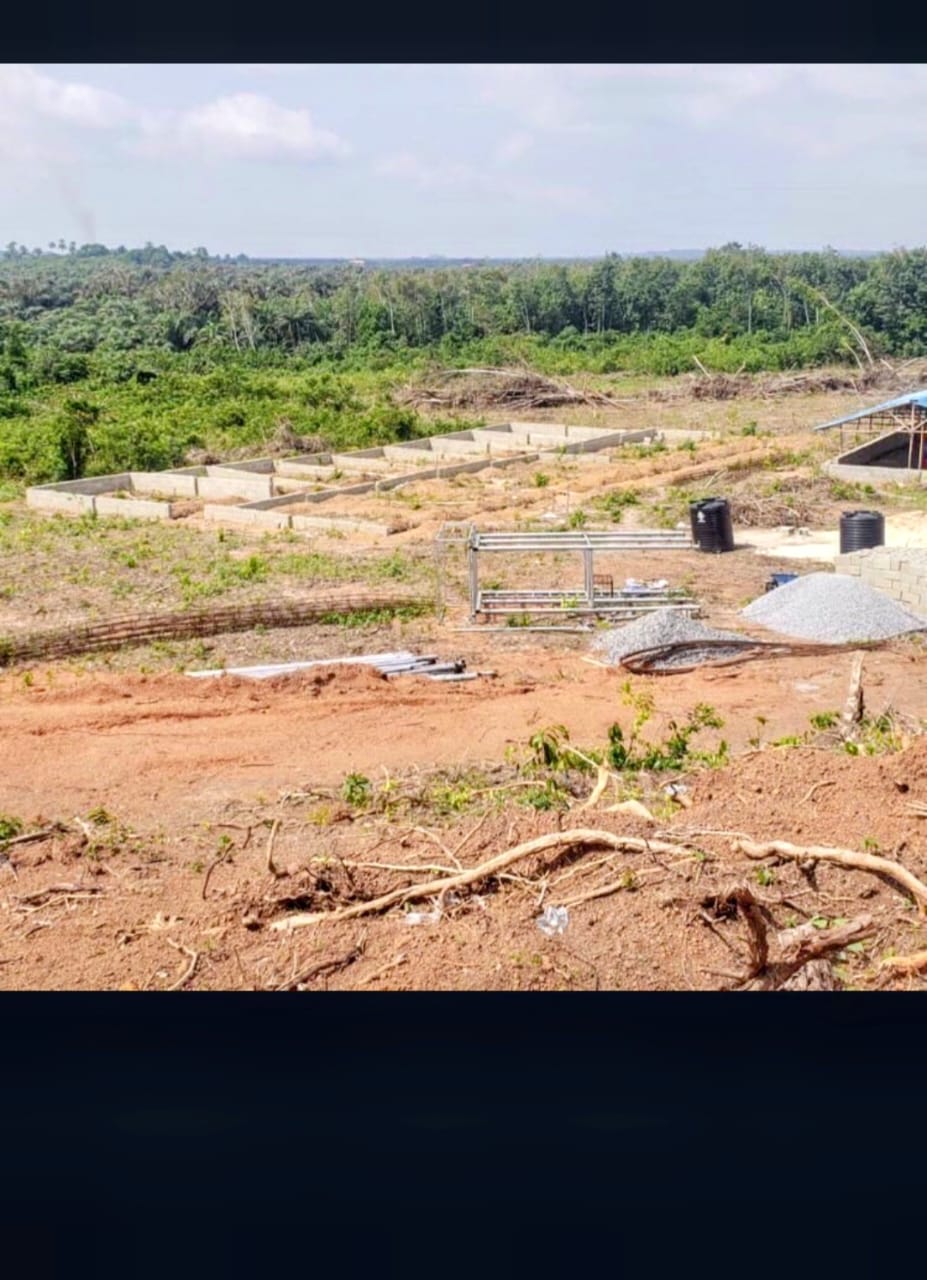
At Grand Luvu, near Abuja, the Millard Fuller Foundation has tested an incremental housing model that does not require a household to finance its ultimate home from the beginning. The Grand Luvu 3B project comprises 248 housing units, with 177 designed to be expanded as occupants’ needs and incomes increase.
The model allows a household to acquire a smaller unit and add rooms later, rather than paying for a larger house it may not immediately need. It is particularly relevant to households outside the formal salaried sector, where income can fluctuate and conventional mortgage finance remains difficult to access.
A 2025 peer-reviewed study of the project found that monthly incomes of interviewed residents range from N75,000 to N400,000. However, the research also exposed the difficulties of converting affordable housing supply into sustainable homeownership. Only about 30 per cent of the total units were owner-occupied, while some purchased units were being rented out.
The experience demonstrates that delivering a house at an affordable price does not automatically guarantee ownership by the intended beneficiaries. Household income, access to finance and repayment capacity remain critical.
The Federal Mortgage Bank of Nigeria (FMBN) has supported such developments through its Cooperative Housing Development Product. WaterLake Estate in Abuja is one example. The project comprises 40 three-bedroom detached bungalows developed for the Nigeria Police Multipurpose Cooperative Society with FMBN financing.
Housing cooperatives provide another route to ownership by allowing members to pool resources for land acquisition and construction. The cooperative structure enables members to combine their resources and access housing finance collectively.
However, collective ownership does not automatically guarantee affordability. Land acquisition, documentation, project management, construction costs and repayment capacity can all influence the final cost to members.
For many prospective homeowners, another major obstacle is the large initial deposit required to purchase a house. Rent-to-own schemes seek to address this by allowing households to occupy a property while making structured payments towards eventual ownership. Bungalow City in Abuja is one of the latest examples. In June this year, beneficiaries received keys to houses under the bank’s Rent-to-Own arrangement.
The model reduces the burden of raising the entire purchase price before occupation, but affordability ultimately depends on the monthly repayment. Household income, expenditure and other financial obligations will determine whether payments remain sustainable over the repayment period.
While incremental, cooperative and rent-to-own models operate at relatively smaller scales, government is deploying public-private partnerships and large housing estates to increase supply.
The Federal Government’s Renewed Hope Cities and Estates programme includes a first phase targeting 50,000 housing units nationwide. The government has announced standard prices of N8.5 million for one-bedroom units, N11.5 million for two-bedroom units and N12.5 million for three-bedroom units.
Several major developments are under construction. In Lagos, the Renewed Hope City at Ibeju-Lekki comprises 2,084 housing units, while the Karsana Renewed Hope City in Abuja has 3,112 units.
These projects demonstrate both the potential and complexity of mass housing. At Karsana, substantial access infrastructure has been required to support the development, underscoring the fact that an affordable home involves more than constructing a building.
Roads, drainage, water, electricity and transport connections can significantly affect the final cost and livability of an estate. Where these facilities are absent, residents may face additional costs that undermine the affordability of the house itself.
The cost of construction remains another major threat to affordability. Cement, steel, imported components, transportation and other inputs have risen sharply in recent years, increasing the cost of producing homes.
Researchers and construction professionals have consequently advocated greater use of locally sourced and alternative materials. Compressed earth construction, for instance, has been identified as an alternative to conventional concrete blocks.
Research conducted in Abuja has suggested that houses constructed with compressed earth bricks could cost significantly less than comparable conventional buildings, although savings depend on design, material availability, labour and location.
The challenge is moving alternative materials beyond individual projects and creating reliable industrial supply chains. Building professionals also stress that locally produced materials should meet established standards for structural strength, durability, fire resistance and environmental performance before widespread adoption.
The Chief Executive Officer of the Millard Fuller Foundation, Samuel Odia, told The Guardian that there is insufficient evidence to determine which affordable housing model is currently delivering the best results for low- and middle-income Nigerians, but noted that incremental housing appears to be one of the most practical options.
“There is little evidence to support which affordable housing model is currently delivering the best results. However, circumstantial evidence suggests that in an environment such as ours, where affordable and easily accessible mortgage services are almost non-existent, most Nigerians will build their homes incrementally,” he said.
Odia identified inconsistent commitment by governments, inadequate affordable long-term financing, limited availability of large tracts of land for serious developers and cumbersome land transactions as major barriers to scaling affordable housing.
He said the effectiveness of any housing model would ultimately depend on whether intended beneficiaries could afford the homes delivered. “Depending on who the intended beneficiaries really are, it would appear that the vast majority of homes being supplied into the market remain far out of reach of the populace,” Odia said.
He noted that although households are generally expected to spend no more than 30 per cent of their income on housing, many Nigerians spend 40 per cent or more. He also said construction costs had risen by as much as 200 per cent over the past two years, further shrinking the segment of the population capable of purchasing newly built homes.
The former Vice President, South-West, Real Estate Developers Association of Nigeria (REDAN), Debo Adejana, identified incremental housing as the model delivering the most homes to low-income Nigerians.
Adejana told The Guardian that high construction costs, low incomes and the absence of accessible mortgage finance were major obstacles to affordable housing delivery. He called for a functional mortgage system offering low interest rates and repayment periods of at least 15 years.
He also argued that genuinely low-priced housing was difficult to achieve without government or other forms of subsidy. “Without subsidies, affordable homes, by this I mean low-priced homes, are not presently possible in our economy,” he said.
Adejana said housing expenditure should ideally not exceed 30 per cent of household income, but cited studies by property market intelligence firms such as Estate Intel and Northcourt indicating that some Nigerians spend between 50 and 60 per cent of their income on housing.
He called for a review of the National Building Code and reforms to improve land accessibility while reducing titling, documentation, design and approval costs.
He also advocated standardisation and prototyping of selected one-, two- and three-bedroom designs to create economies of scale. Standardised designs, he said, could encourage mass production of building components and reduce construction costs.
Adejana further called for stronger waste-to-wealth and recycling initiatives within the construction sector, arguing that recycled materials could lower costs while addressing environmental concerns.
The Chief Executive Officer of NISH Affordable Housing Ltd, Dr Yemi Adelakun, said Nigeria’s huge housing deficit required the deployment of multiple models, including cooperative, incremental, community-led and public-private-people partnerships.
He said community-based models were already delivering homes but remained limited in scale because of inadequate policy support and weak enabling conditions. Digitalisation, public enlightenment and mobilisation, he argued, could make such approaches more effective and facilitate their replication across Nigerian cities.
Adelakun advocated low-interest housing finance, land equity and a revolving Nigeria Social Housing Fund to support the delivery of hundreds of thousands of homes to low- and middle-income Nigerians.
He proposed housing finance at interest rates of not more than three per cent, alongside land equity, offtake guarantees and moderate housing designs using a high proportion of locally sourced materials.
Adelakun expressed concern that many current housing initiatives were not sufficiently targeted at low-income earners, whom he estimated account for almost 70 per cent of prospective homeowners and renters across the public, private and informal sectors.
“Most houses in the market by both public and private developers are priced above N20 million. How many Nigerians can afford these prices in a situation where the United Nations and housing advocates say rent or mortgage should not exceed 33 per cent of household income?” he asked.
Adelakun proposed a Nigeria Integrated Social Housing Programme incorporating land equity, infrastructure development, off-take guarantees to Engineering, Procurement, and Construction – Finance providers, a housing demand database and pre-approved housing finance for first-time homeowners at an interest rate of not more than three per cent.
The programme, he said, should promote cost-effective architectural designs, locally produced building materials, housing cooperatives and a revolving social housing fund. “If this policy can be developed and implemented by the Federal Government in partnership with State Governments, hundreds of thousands of houses can be delivered within a short period,” he said.
For the Founder and Director of the Centre for Housing and Sustainable Development, University of Lagos, Prof. Timothy Nubi, there is no single solution to Nigeria’s housing crisis. Rather, the country needs a combination of models supported by stronger institutions and financing.
Nubi said public-private partnerships had often been unbalanced, with government contributions frequently limited to land, sometimes in locations requiring substantial reclamation and infrastructure investment. “In other climes, government supports with infrastructure,” he said.
He added that each housing model faced its own difficulties. Cooperative housing, for instance, could be constrained where members lacked certificates of occupancy needed to secure funding, while incremental housing remained vulnerable to fluctuations in building material prices.
Nubi stressed the importance of expanding mortgage finance and spreading the repayment of housing costs over 20 to 30 years. “Affordability comes in when the repayment of this huge capital outlay could be spread over 20 to 30 years,” he said. “We must do everything to grow the mortgage system. As far as it is cash and carry, many Nigerians will not be able to own a house in their lifetime.”
He also called for renewed investment in domestic building-material industries, noting that Nigeria’s dependence on imported tiles, sanitary wares and other construction inputs undermines efforts to reduce housing costs.
In this article