
By Alade Rotimi-John
The many records of the unsettling affairs and events surrounding the Nigerian Bar (used here advisedly to mean the justice delivery system) have made pundits to ruefully ruminate regarding the obvious departure from the early cherished history or beginnings of the once elegant profession of the Bar.
Many have romanticised the then direct correlation between contemporary political experience and the criticism from the Bar devoted to society’s corrective or reformist quest. It is significant to recognise that many civil society platforms, notably the Bar, reproduced the fire and polemical ardour of the Aka-Bashorun hue in the early days of the nation’s return to democracy. Their criticisms took a clearly discernible aluta continua posture regarding our social and political difficulties.
Not for that glorious Bar the seduction or enticement of complacency, the avoidance of responsibility to the general public or the cheap or vain hope or desire for political preferment or office. It is worrisome that the tradition of social criticism that we inherited and whose influence was pervasive even during the military era has waned.
It is tempting to always want to take the charm or allure of old for granted. We are quick nowadays to glamorise the past even as we are faced with the sobering difficulty and danger of attempting to dogmatise about the standards of legal or moral behaviour effectively observed in the days of old. Like many generally-held opinions, the views concerning society’s presumed ornate past are universal or cosmic. They probably contain intrinsic truths than fibs or taradiddle.
The civic appropriateness of the Bar as a disquieting spirit or as a disturbing presence among us particularly in moments of the threatened or objective official infringement of personal liberty, of the restriction of fundamental human rights or of the abeyance of the rule of law is today unfortunately viewed only in historical perspective or significance. Even as our state-society relations are at dismal variance with our deep-seated sensibilities regarding propriety, normative patterns, and the centrality of justice in the affairs of men, our Bar has curiously carved for itself the unenviable image of a mere demotic inscription on a conspicuous wall – reminding us merely of its past pomp, glory or majesty.
Any reasoned study of the times cannot fail to recognise the primal position of the Bar as a major critical platform for opening up the democratic space and for the achievement of the goals of our social contract. The Bar, properly positioned, is able to subvert society’s inclination towards complacency or resignation. Our general limited imagination and the bogus or primitive self-interest of our political leaders can be rationally challenged by an enlightened or truly learned Bar.
It is proper to identify the Bar as being in the eye of the storm regarding our threatened democracy. The Bar must therefore acutely sense its pride of place respecting the requirement for reasoned combativeness, thoroughness or product knowledge and her unique centrality for resolving many of our socio-political difficulties. It is required that it should jealously pursue its undoubted right to interrogate the validity or fairness of administrative acts of ministers, ministries, agencies of government and of local and subordinate authorities.
The inexplicable electricity supply conundrum, the Fulani herdsmen brigandage, the poor or failed performance of government regarding its expressed promises or manifesto, the threatened official restriction of the fundamental right to hold opinion or of association, of peaceful protest, the un-federal nature of our Federation, etc are live matters which find their place at the very heart of Nigeria’s complex of historical or social engineering.
The Bar has lost its voice even to condemn the open betrayal by government of the people’s expectations or of the otherwise solemn promises made in the fierce glare of the public. Policy somersaults or the numerous 360 degrees freaky capricios that have become the stained badge of a government that the people have stoically endured this much long, have all gone unchallenged by a Bar burdened by a conflict of moral choices.
In a season in which the reasoned discussions of the untrue nature of Nigeria’s federalism are at fever pitch and have rightfully taken the centre stage regarding a widespread denunciation of the cant; when the future is threatened by up-beat separatist agitations; when government seems to have lost its bearing concerning the recognition of cherished values or the performance of vaunted policies; when the nation’s constituent units are clamouring for a renegotiation of the terms of their coexistence, it is grotesque for the Bar to play the ostrich or take a flight of fancy to Afghanistan or to Outer Mongolia.
At a time when a menacingly vindictive or vengeful “Hate Speech” law threatening the constitutionally-guaranteed free speech milieu is being proposed to be armed with new fangled teeth, the Bar must be identified as possessing the grit to stop the initiators of such stone age development in their tracks.
The Bar must distinguish herself away from the identified Nigerian malaise of the critical lack of a profound sense of history. She must learn from the inexorable lessons of history. In 1965, when the disturbed peace in the Western Region of Nigeria was threatening the stability and good governance of the entire Nigerian federation, the Balewa government ignored the glaring signs of an all-pervasive implosion. It curiously preoccupied itself with the organisation of peace talks for “finding a diplomatic solution” to the Rhodesian (now Zimbabwe) independence imbroglio.
Even as law is a social institution, it represents life; and ‘life’ in large measure, is a social reality. The lawyer himself is a member of society, possessed of a specific social status: he receives some measure of social recognition and reward; he has a ready audience, at least in the courtrooms. The law’s social function nexus places the practitioner in the furnace of resolving social questions. The burden of the practitioner is therefore not discharged until answers are found for his quests for social order, harmony and justice.
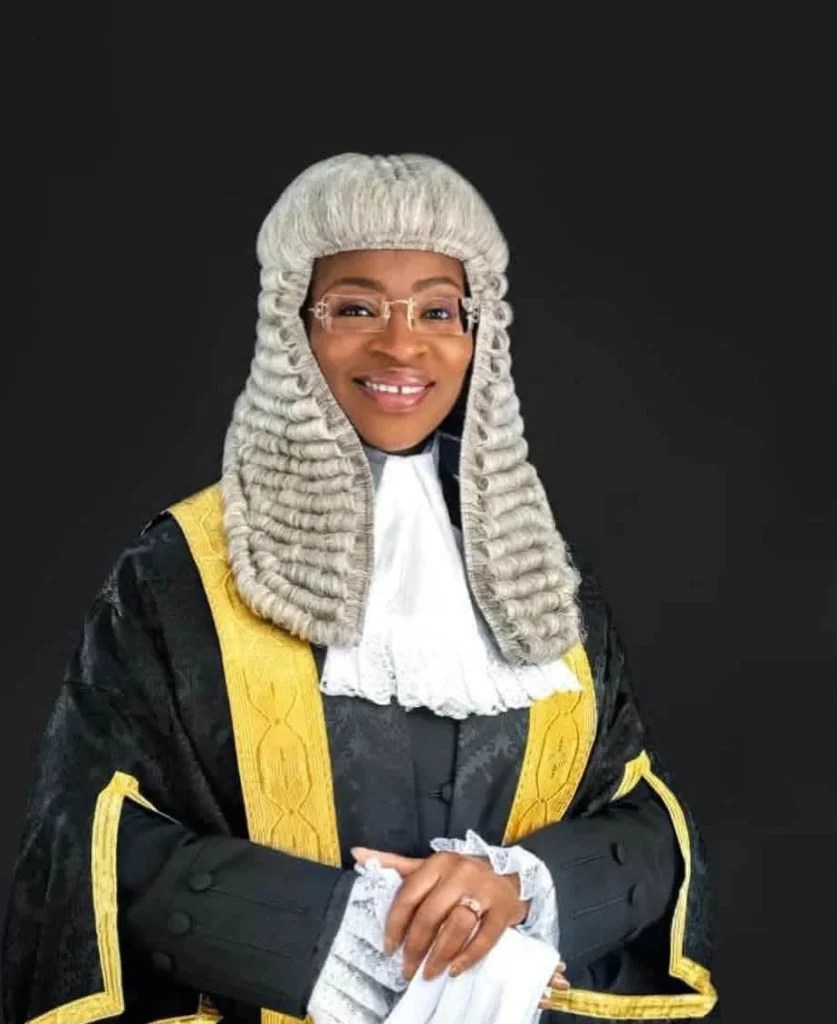
Much has been eloquently said or written about the precociousness of the Bar’s new helmsman, Mrs Badejo-Okusanya SAN. She has been represented as tailor-made for the leadership of the Bar at this time. Our good wishes and prayers may however not be enough on this her new turf where even angels fear to tread. Her greatest weapons are advised to be a deeply social conscience, an unflagging generous spirit, magnanimity in deed, and an unyielding scourge of official interference or meddling with the Bar’s independence.
Against the background of the dominance of the male folk in her office these many decades, we conclude this essay with a note of admonition for Mrs Badejo-Okusanya from Charlotte Whitton (1896-1975) a former Mayor of Ottawa who insightfully said: “Whatever women do they must do twice as well as the men to be thought half as good. Luckily, this is not difficult.”
It will appear not to be difficult for Mrs Badejo-Okusanya. In spite of all the condescension and wry wit of the men over the ages, the women’s time may have arrived unobtrusively.
Rotimi-John, a lawyer and commentator on public affairs, is the Deputy Secretary-General of Afenifere Iawgravitas@gmail.com
In this article