
By Baba Dantiye
Leadership is never truly tested in moments of comfort. It is tested when difficult decisions must be taken, competing interests reconciled and the hopes of millions balanced against harsh economic and political realities. It is in such moments that history begins to distinguish between those who merely occupy public office and those who genuinely lead.
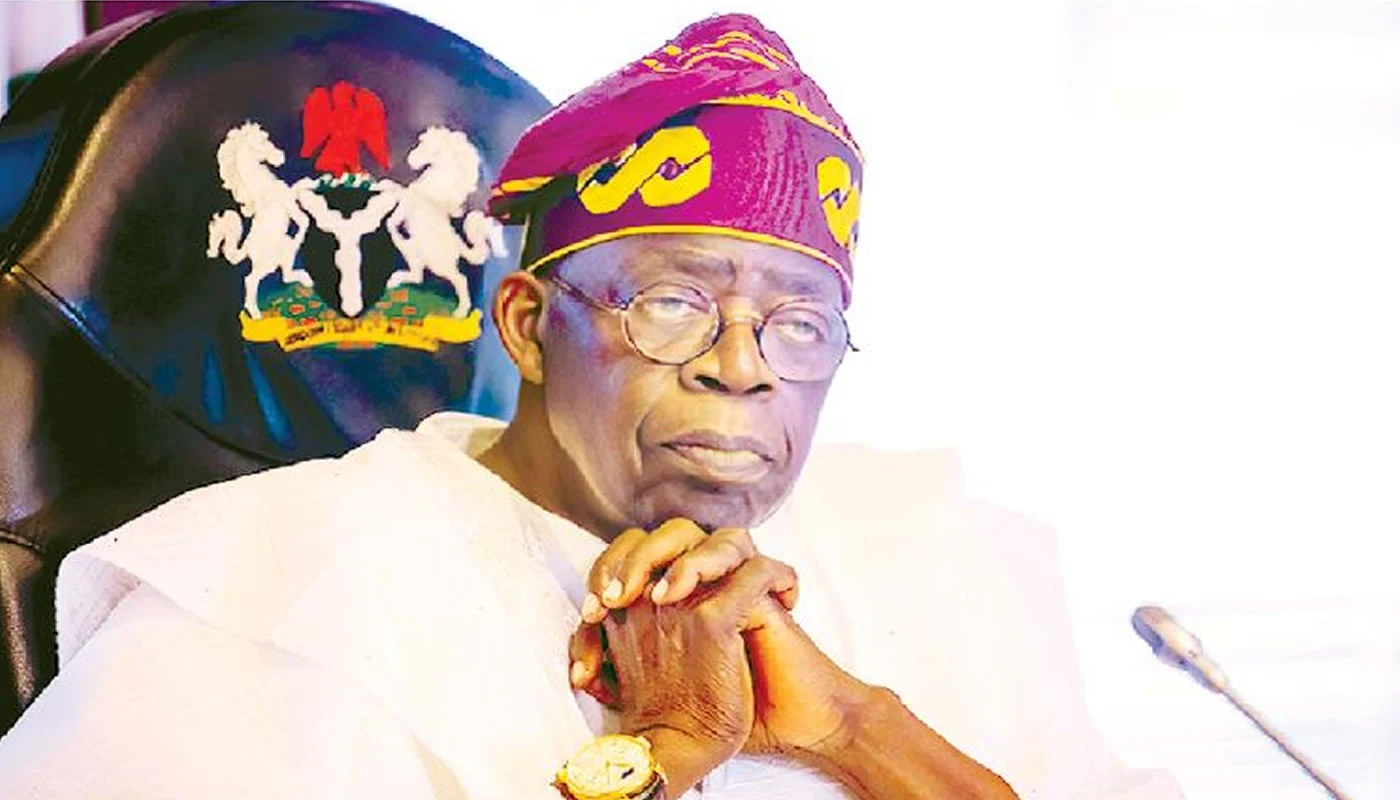
President Bola Ahmed Tinubu’s administration finds itself at precisely such a defining moment. Since assuming office on May 29, 2023, his government has pursued bold economic reforms that have generated both commendation and criticism. While many analysts argue that the reforms were long overdue, millions of Nigerians continue to grapple with the immediate consequences of rising inflation, high transportation costs, declining purchasing power and growing economic uncertainty. The debate, therefore, is no longer about whether difficult decisions were necessary; it is about whether those decisions are producing the desired outcomes and whether government is responding adequately to the hardships they have imposed on ordinary citizens.
As political attention gradually shifts towards the 2027 general elections, it is perhaps an appropriate time to reflect on President Tinubu’s political journey, the realities of his administration and the lessons that experience should inevitably bring to leadership. Such reflection should neither descend into partisan cheerleading nor indiscriminate criticism. Rather, it should provide an objective assessment of where the country stands today and what Nigerians should reasonably expect in the years ahead.
No serious assessment of President Tinubu can begin without acknowledging the extraordinary political journey that brought him to the Presidency. Few politicians in contemporary Nigeria have exercised as much influence over the country’s democratic evolution. From his participation in the pro-democracy struggle during the military era to his emergence as Governor of Lagos State in 1999, Tinubu steadily built a reputation as a strategic thinker, an astute organiser and an exceptional political mobiliser.
His eight years as Governor of Lagos remain one of the most frequently cited chapters of his public career. Lagos at the dawn of the Fourth Republic was confronted by enormous infrastructural, financial and administrative challenges. Through institutional reforms, aggressive revenue mobilisation and the recruitment of capable professionals into government, the state gradually laid the foundation for the remarkable economic transformation that has continued under successive administrations. Whether one agrees with every policy adopted during that period or not, there is broad recognition that the Lagos experience shaped Tinubu’s understanding of governance and demonstrated his preference for institution-building over short-term political expediency.
Equally significant was his contribution to the emergence of a competitive multi-party democracy. At a time when the then ruling People’s Democratic Party (PDP) appeared politically unassailable, Tinubu became one of the principal architects of the political coalition that eventually gave birth to the All Progressives Congress (APC). The successful merger of opposition parties culminating in the historic 2015 presidential election altered Nigeria’s democratic landscape and proved that political change through the ballot box was indeed possible. It was a landmark achievement that required patience, negotiation, strategic thinking and an uncommon capacity to build consensus across regional and ideological divides.
Perhaps no quality has defined Bola Ahmed Tinubu’s political career more than his ability to identify, nurture and mentor future leaders. Across the country, many governors, ministers, legislators and other senior public officials owe part of their political development to opportunities created within his political structure. His choice of Senator Kashim Shettima as his running mate in the 2023 presidential election further reinforced his long-established reputation for recognising competence and preparing individuals for higher responsibilities. Leadership, after all, is measured not only by personal achievements but also by the quality of those one prepares to carry the torch.
Yet governing Nigeria presents challenges of an entirely different magnitude. Running a state, however complex, differs fundamentally from leading Africa’s most populous nation. The Presidency demands the management of enormous economic pressures, diverse political interests, serious security concerns and the expectations of over 200 million citizens. Every President soon discovers that campaign promises are easier to make than they are to implement.
President Tinubu assumed office at a particularly difficult period in Nigeria’s history. The economy required urgent structural reforms. Public debt was rising, government finances were under strain, foreign exchange distortions had become increasingly unsustainable and insecurity continued to threaten lives, livelihoods and investment across several parts of the country. These were not challenges created overnight, nor could they be resolved by simple policy declarations.
Faced with these realities, the administration chose the path of bold reforms rather than postponing difficult decisions. The removal of fuel subsidy and the unification of the foreign exchange market remain among the most consequential policy decisions taken by the government. Supporters argue that these measures were inevitable if Nigeria was to escape decades of fiscal distortions and build a more sustainable economy. Critics, however, contend that while the reforms may have been necessary, the pace of implementation and the inadequacy of social protection mechanisms significantly increased the burden on ordinary Nigerians.
There is merit in both perspectives. Indeed, the true test of leadership is not simply the willingness to take difficult decisions but the capacity to manage their consequences effectively. Economic reforms must ultimately be judged not by their theoretical elegance but by their practical impact on people’s lives.
Today, millions of Nigerian families continue to struggle with the realities of rising food prices, increasing transportation costs and declining household incomes. Small and medium-scale enterprises face mounting operational expenses, while many young Nigerians remain anxious about employment opportunities and their future. These concerns are genuine and deserve thoughtful responses rather than political slogans.
Beyond economic reforms, security remains perhaps the most critical measure of any government’s performance. Although the armed forces and other security agencies have recorded commendable successes in several theatres of operation, incidents of terrorism, banditry, kidnapping and communal conflicts continue to challenge national stability. Economic development cannot flourish where citizens live in fear, just as investors are unlikely to commit resources where insecurity persists.
Another issue that deserves greater attention is the coordination of governance itself. Public perception is shaped not only by the quality of policies but also by the efficiency with which they are implemented. One recurring criticism of the administration has been the apparent lack of effective coordination among ministries, departments and agencies. Even the most well-conceived policies can lose public confidence when implementation is slow, fragmented or poorly communicated.
Government is most effective when its institutions work in harmony, when responsibilities are clearly defined and when communication inspires public confidence. Strengthening policy coordination, improving institutional efficiency and ensuring greater synergy across government should therefore remain important priorities as the administration enters the second half of its first term.
The challenges confronting Nigeria, however, cannot be addressed by government alone. Nation-building has always been a shared responsibility. Political leaders, public servants, the organised private sector, civil society organisations, traditional institutions, religious leaders, professional associations, the media and ordinary citizens all have important roles to play in advancing national development. Democracies thrive not simply because governments govern well but because citizens actively participate in the search for solutions.
The responsibility of leadership also requires humility and the willingness to recognise that policies, however well-intentioned, may require adjustment. No responsible leader deliberately introduces measures simply to cause hardship to the people. Governments make decisions based on their understanding of national circumstances, available options and long-term objectives. However, good leadership demands continuous evaluation, listening to citizens and making corrections where necessary.
This is where experience becomes perhaps the greatest asset of President Tinubu as he approaches the 2027 election cycle.
There is an old saying that experience is the best teacher. Few Nigerian political leaders have accumulated the breadth of political and administrative experience that President Tinubu has acquired over several decades. From his years as a pro-democracy activist, a senator in the third republic, to his tenure as Governor of Lagos State, his role in opposition politics, his contribution to building a ruling coalition and now his experience as President, he has encountered almost every dimension of democratic leadership.
The Presidency itself, however, provides lessons that no previous position can fully offer.
The complexities of managing Nigeria’s economy, responding to national security threats, balancing competing regional interests and meeting the expectations of millions of citizens provide a unique education in governance. By 2027, President Tinubu would have gained four years of direct experience at the highest level of national responsibility. The question, therefore, is how effectively that experience will be translated into improved governance.
Experience should produce refinement, not rigidity. It should encourage a willingness to adjust policies where necessary, strengthen institutions, improve communication and ensure that government decisions are more closely connected to the realities of ordinary Nigerians.
As President Tinubu is seeking a second term, Nigerians will naturally demand more than continuity. They will expect a government that has learnt from its first term, corrected weaknesses and developed a clearer understanding of what works and what requires improvement. The value of experience is not simply in the number of years spent in office; it is in the ability to transform those years into better judgement and more effective leadership.
One area where the President’s political strength can continue to serve the nation is in his ability to identify and empower capable people. The same talent for recognising leadership potential that defined his political career must now be fully deployed in strengthening public administration. Effective governance depends not only on policies but also on the quality, competence and commitment of those entrusted with implementing them.
The coming years will therefore test whether the administration can convert political experience into administrative excellence. Nigerians will be watching to see whether government becomes more coordinated, whether institutions become more efficient, whether security improves and whether economic reforms begin to translate into visible improvements in the lives of ordinary citizens.
As 2027 approaches, Nigerians are unlikely to judge the Tinubu administration solely by the boldness of its reforms or the courage required to introduce them. Their assessment will ultimately be based on the realities they experience every day. They will want to know whether families can afford basic necessities, whether young people have better opportunities, whether businesses can thrive, whether communities feel safer and whether government institutions are working more effectively. These are the practical standards by which every democratic government is ultimately measured—not only by the intentions behind its policies but by the difference those policies make in the lives of the people.
The journey from yesterday to 2027 is therefore not merely about political calculations or electoral strategies. It is about the evolution of leadership under the weight of national responsibility. President Tinubu came into office with decades of political experience, but the Presidency has presented new challenges and lessons that only direct governance can provide. Those lessons should now become the foundation for a more responsive, coordinated and people-centred administration.
History is rarely kind to leaders who merely occupy office. It remembers those who learn, adapt and leave their nations stronger than they found them. The ultimate measure of President Tinubu’s leadership will not only be the difficult decisions he took, but whether those decisions eventually produced greater economic opportunity, improved security, stronger institutions and a better quality of life for Nigerians.
As the nation moves towards 2027 with President Tinubu seeking reelection, the central and more important question is whether the experience gained from his first term will translate into a second phase of governance marked by greater effectiveness, deeper public trust and a stronger connection with the aspirations of the Nigerian people.
If “experience is,” indeed “the best teacher,” then the years between yesterday and 2027 should become a period of learning, adjustment and renewal. For ultimately, leadership is not judged by the difficulty of the choices made alone, but by the ability to turn those choices into lasting progress for the people.
Read the remaining part of this article on www.guardian.ng
Dantiye is former Commissioner for Information and Internal Affairs, Kano State, and former President, Nigerian Guild of Editors (2003–2008).
In this article