
*I voted, but my name is missing from the voters’ list
*Explains the cyberattack, and rejects claim this was the worst NBA election ever
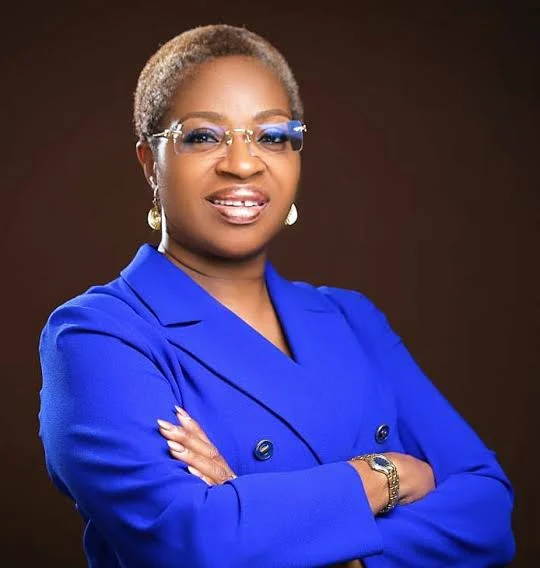
The President-elect of the Nigerian Bar Association, Oyinkansola Badejo-Okusanya, SAN, the first woman elected by direct vote to lead the association in its 93-year history, has committed to subjecting the electoral process that produced her to a post-election audit and to resigning immediately if it emerges that she would not have won but for manipulation, while insisting that the election came under “the greatest scrutiny that any of our elections have come under since we started universal suffrage and electronic voting” and that none of the classic red flags of rigging appeared.
She also disclosed the extraordinary detail that although she voted and pressed submit in the presence of witnesses, her name does not appear on the voters list, a fact she discovered only after one of her opponents publicly claimed she had been unable to vote.
Badejo-Okusanya spoke during an extensive interview on TVC News’ flagship programme Beyond the Headlines, addressing her historic victory, the contested electoral process, the alleged cyberattack, her relationship with the outgoing NBA President, her family’s connection to the Federal Government, and her priorities for the next two years.
She polled 12,317 votes in the July 2026 election, in which approximately 26,100 lawyers voted out of more than 82,000 registered voters, a participation rate of roughly 31.9 per cent.
The President-elect’s most significant commitment was her promise to audit the process that brought her to power and to step down if it is found to have been compromised.
“I had no desire to be a president whose electoral process, the process that brought me to power, was being questioned. I told my co-contestants in public that if there was any indication or allegation that the process that brought me to power was flawed, I wouldn’t even discuss it with anyone before I resigned. That still remains my goal,” Badejo-Okusanya stated.
“Electoral reform will happen. I will subject this electoral process to a post-election audit. And in the very unlikely event, because I know there was no rigging, but in the very unlikely event that it is discovered that I would not have won but for some manipulation, I will resign immediately,” she declared.
“Not only will I resign immediately, I will join in ensuring the electoral reforms that I plan to embark on as president. For me, it’s about the association. It’s about us growing and fulfilling our obligation to society,” she added.
The commitment was made in response to a comparison drawn by Dr Monday Ubani, SAN, who reminded Nigerians that former President Umaru Musa Yar’Adua had acknowledged that the election that brought him to power was flawed, and suggested that Badejo-Okusanya should show similar courage.
In one of the most remarkable disclosures of the interview, Badejo-Okusanya revealed that she cast her vote but cannot find her name among the recorded voters.
“Do you know, I actually voted. I actually pressed submit. It was when my opponent said that I wasn’t able to vote that I realised, and I checked the voters list. I didn’t find my name,” she stated.
Asked whether her vote was among the 12,317 that elected her, she responded: “Apparently, because I actually voted. And luckily for me, I did it with people around me. So I was surprised, and I’m hoping that perhaps the fact of getting an OTP and all that would have left a footprint.”
The disclosure is significant because it means the President-elect herself has personal experience of the very anomaly, votes cast but not recorded, that formed the basis of complaints from thousands of lawyers who said they were disenfranchised.
Badejo-Okusanya gave a detailed account of what she said happened on election day.
She explained the sequence: her co-contestants had insisted that the original system was “not robust enough to withstand any rigging” and demanded the use of telephone numbers to transmit OTPs to voters rather than emails, “because the emails are subject to manipulation.”
“By Wednesday last week, the ECNBA conceded to them and said we would use the telephones. They wanted the election to be postponed and the ECNBA said they were happy to go on, that Saturday they would be ready. If the ECNBA said they would be ready, then there was no reason for the elections to be postponed. And so the elections were not postponed,” she stated.
“Now, unfortunately, the system came under tremendous attack, a cyberattack that was designed to ensure that it didn’t work. Who did what, I have no idea and I don’t speculate, but the system was disabled,” Badejo-Okusanya stated.
She described the recovery: “It took the mercy of God. It took a miracle for another server to be designed. That happened, I understand, within three hours. A completely different platform was built that had no time to be tested, that started running at 7:35 AM.”
Asked directly whether there was sabotage, she responded: “Oh yes, there was. That’s the reason why the President of the NBA has come out publicly and said so. It was hacked, and there was nothing that the service providers didn’t do to try and get it up and running. At the end of the day, they got the wisdom to build a fresh one, and what is unprecedented, they were able to build one within three or four hours.”
“There were glitches here and there, but it largely withstood the pressure of so many lawyers trying to vote, and it lasted for the entire 24 hours,” she stated.
Asked whether the election met the standard the NBA should be setting for the rest of Nigeria, Badejo-Okusanya gave a nuanced answer.
“No, but not for the reasons that they use,” she stated.
She offered a general caveat: “I’m not sure there’s any election that’s without its difficulties. This one had its difficulties. But my opponents would be less than truthful if they didn’t acknowledge that we all knew the reasons why those things happened.”
She noted a shift in the nature of the allegations: “Thankfully, they are saying less of electoral fraud and more of disenfranchisement, which affected us all. In the past there have been allegations of electoral fraud and rigging that nobody has ever been able to establish. Nobody has ever really been able to pinpoint. They say people voted for other people. Nobody has ever come forward to say I wasn’t able to vote because they said I’d voted already.”
However, she firmly rejected the characterisation of the election as the worst in NBA history: “When people say that the election was the worst that we’ve ever had, no, I completely disagree. We all know the reasons why the election went the way it did.”
Badejo-Okusanya set out four specific arguments against the rigging allegations.
First, the level of scrutiny: “This electoral process has come under the greatest scrutiny that any of our elections have come under since we started universal suffrage and electronic voting. Even the people that maintain that this election was rigged know very well that the level of scrutiny that this election came under would have been very difficult for anybody to rig.”
Second, the consistency of her lead: “From the time that I led, I led the election throughout consistently. There was never a time that I dropped down. There was never a time that any of my opponents passed me. I led consistently and the gap kept widening.”
Third, the organic pattern of voting: “The votes were trickling in organically. There was no evidence of dumping, which is what they say happens when there’s rigging going on. You didn’t suddenly see 20, 30, 50 votes coming.”
Fourth, the visibility of the process: “This election was the most watched. We have a system that refreshes every 10 seconds. People were watching and reposting. It was clear that there was no rigging.”
On the widely publicised claim that she was outgoing NBA President Afam Osigwe SAN’s preferred candidate, Badejo-Okusanya was categorical.
“I wonder where that widely publicised view came from, because nobody ever heard it directly from me or from him,” she stated.
“As a matter of fact, if he said it to anyone else, he never said it to me. I don’t know whether the cordiality and civility that he showed to me, whether he wasn’t showing it to anyone else,” she added.
She then pointed to evidence suggesting other candidates enjoyed similar or greater visibility with the President: “One of my co-contestants, I remember, donated some gifts to a NEC meeting and he publicly acknowledged him and thanked him at the NBA AGC last year. One of my opponents had a huge banner with his face and the President’s face on it throughout the conference. People were asking me, ‘Oh, is the President supporting this person?’ I said, ‘I have no idea. I’m just concentrating on my campaign.’”
On the President’s controversial “I cannot be neutral” statement, she offered context: “Those words were taken out of context, but I guess the meaning was clear. He said he was only entitled to one vote and that one vote he would exercise, and that he wasn’t supervising the ECNBA, which was an independent body, and that he didn’t have any desire, intention or ability to rig the elections in anyone’s favour.”
Addressing suggestions that her family ties, her younger sister is Dr Jumoke Oduwole, Minister of Industry, Trade and Investment, would compromise the NBA’s independence, Badejo-Okusanya was dismissive.
“How can I be the candidate of the Tinubu administration when the Tinubu administration is not a member of the NBA?” she asked.
Pressed on whether the government might expect a “soft landing” from her NBA, she responded: “The constitution of the NBA is very clear. I read it very closely before I offered myself to serve. I’m well aware of the responsibilities of the President of the NBA, and I have the mandate of members of the NBA to lead them. My obligation is to them.”
Badejo-Okusanya disclosed the outcome of her attempts to reach out to her two opponents since the election.
“I reached out to one of them and visited him in his office, and he politely asked me to leave,” she revealed.
“The other opponent, I called. He didn’t pick up and he hasn’t returned the call since. This was after he said that he had called me twice and I hadn’t replied. But that wasn’t true. He called me once, when I was receiving my certificate of return,” she stated.
“I returned the call after I watched him on TV saying that he had called me twice. The first thing I was going to tell him was that you shouldn’t have gone on TV to say you called me twice when you only called me once. But I’ve called him and he didn’t pick up and he hasn’t returned the call ever since. But I plan to call him,” she added.
She then addressed what she called “the question you’re not asking”: “I have every intention of being gracious and magnanimous. I have no choice. God has been good to me. Many people didn’t give me a chance. I worked very, very hard and God crowned my efforts. I have no reason to gloat. I’m just happy that the outcome is the one that I had prayed for, and I’m mindful of the responsibility that I have, not just to the people who see me as an inspirational figure, but to the members that are expecting a lot from me.”
On whether she genuinely believed from day one that she could win, Badejo-Okusanya was candid.
“Yes, I did. And perhaps ignorance is bliss,” she stated. “But I had a conviction, and that’s why my campaign mantra was always ‘Be bold.’ My campaign slogan is ‘Build a bolder Bar that works for everyone.’ It typified exactly what I understood from the beginning, that it was a bold endeavour, a bold aspiration.”
She recalled setting herself a target ahead of the Enugu AGC: “I’d set myself a mandate that by the time the conference was over, everybody across the country would know that Mrs Badejo-Okusanya was running. And we achieved that. The word after the conference was that ‘you are just everywhere.’ I said, ‘Yeah, like MTN.’”
“Funny enough, I didn’t realise that before the conference I was really lagging behind in people’s perception. So I think that ignorance was really bliss. I kept going because I had a belief that I was going to get there,” she stated.
Badejo-Okusanya, the second woman to lead the NBA after Dame Priscilla Kuye, who assumed office through succession in 1991, reflected on the significance of her victory.
“It means that the opportunities that exist are difficult to exploit, and that people have not exploited them not because they don’t have the capacity, but because those barriers are there,” she stated.
“That’s why it means that much to me, because I’ve heard so many female lawyers and female professionals generally come up to me and say, ‘You inspire me. Because you’re doing this, I can do anything.’ Since I’ve won the election, I’ve had even more people say, ‘We’re so proud of you and thank you for showing us that it can be done,’” she added.
Badejo-Okusanya described a family of high achievers: her father was a renowned soldier and pioneer Vice-Chancellor of Lagos State University; her mother was the first female Registrar of the University of Lagos; her younger sister is Dr Jumoke Oduwole, Minister of Industry, Trade and Investment; she also has a brother in the United States and a sister who is a dentist in the UK.
“No pressure. It was almost like we took it for granted that we had to excel at everything we did. We grew up in an intellectually stimulating environment on the University of Lagos campus. Both my parents come from very solid pedigrees, families that treasure integrity and a good name over everything else, and hard work,” she stated.
“My mom, for instance, would have a cold and take a tablet and go to work. My father, I always saw him push himself to be the best that he could. Those were the examples we grew up seeing,” she recalled.
Responding to the argument that the NBA has lost the moral authority to criticise Nigeria’s elections after failing to conduct its own credibly, Badejo-Okusanya acknowledged the principle but rejected the conclusion.
“I understand the argument about not having the moral justification to criticise elections when we can’t get our house in order. The issues are not exactly apples for apples, but I understand that the principle is the same,” she stated.
“Nothing will take away our moral justification to be the watchdog of society, and we’ll continue to improve on that. We will also continue to improve on our own internal systems. Once we have the determination to ensure that our systems work and are acceptable to the vast majority of our members, then we would have achieved success, and that won’t prevent us from criticising elections,” she stated.
Asked to identify her top priorities for the next two years, Badejo-Okusanya named uniting a divided Bar as the first.
“It’s a very divided Bar right now and many members are dissatisfied. This is something that I came across throughout my travels to all the 36 states. ‘What is the NBA doing for me?’ People are dissatisfied,” she stated.
“My members-first principle in my manifesto is certainly on the top corner. Anything and everything that puts members first, ensures their welfare, ensures that they thrive professionally, ensures that lawyers can earn better, live better, practice better will be my priority. That’s the big deal for me,” she declared.
On the state of the profession and judiciary, she stated: “The NBA has a greater role to play in protecting the image of the profession, and the profession is both the legal profession and the judiciary. Under my watch it’s certainly going to be a priority, because we can’t go on like this, not meeting the expectations of the public, not ensuring that justice is accessible, not ensuring that the institution of the judiciary is respected. Those are priorities and they will be dealt with decisively, boldly.”
Asked what she wants to be remembered for, Badejo-Okusanya offered a two-part answer.
“For the members, I want them to remember my presidency as one that made the NBA more relevant to them professionally. For Nigerians, I want them to remember the NBA as one that took its responsibility to protect and promote the rule of law, to be the watchdog of society, and to be the defender of those who are less able to speak for themselves very, very seriously. A voice for the voiceless. That’s what I’d like to be remembered for,” she stated.
The interview came amid sustained controversy over the July 2026 election.
First runner-up Lateef Akangbe, SAN, rejected the outcome, describing the exercise as “shambolic” and stating: “We’ve become a laughing stock to the entire Nigeria. Politicians are looking at us, other professionals are looking at us and saying, ‘Look at these lawyers, they can’t even organise themselves. They can’t even conduct a credible election.’” He argued that the NBA had lost the moral authority to criticise Nigeria’s electoral process.
Olumuyiwa Akinboro, SAN, also rejected the process, describing it as the worst election in the association’s history. He said the voting portal crashed within 30 minutes of commencement and that his personal details appeared incorrectly on the platform when he attempted to vote. He questioned the cyberattack explanation, arguing that the anomalies indicated pre-existing problems with the electoral system.
Lagos-based practitioner Maduka Onwukeme and several other lawyers alleged that many eligible voters were unable to obtain the one-time passwords required to access the electronic voting platform, leading to widespread disenfranchisement.
Chief J.S. Okutepa, SAN, alleged that the election had been manipulated to produce a predetermined outcome, while acknowledging that similar allegations in previous NBA elections had not been proved in court.
The interview was broadcast on TVC News’ Beyond the Headlines programme. Oyinkansola Badejo-Okusanya, SAN, will be inaugurated as the 33rd President of the Nigerian Bar Association and the first woman elected to the office by direct vote.
In this article