
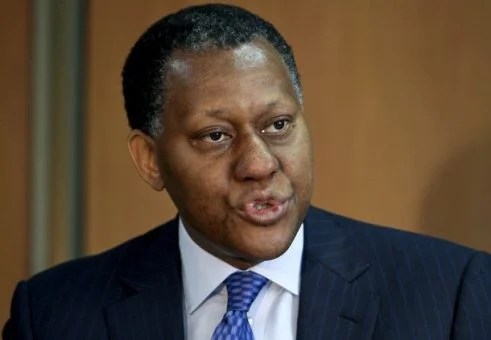
Former Minister of Petroleum and Foreign Affairs, Henry Odein Ajumogobia (SAN), has called for stricter penalties for gas flaring and stronger enforcement of environmental laws in the Niger Delta, arguing that the region’s challenges stem not from a lack of legislation but from weak legal governance.
Ajumogobia made the call on Wednesday at the NDDC Law and Development Summit 2026 in Port Harcourt, Rivers State. The summit, themed “The Role of Law in Driving Sustainable Development in the Niger Delta Region,” brought together legal practitioners, policymakers, development experts, public officials and other stakeholders to examine how law can support sustainable development, environmental protection, institutional accountability and economic transformation in the region.
According to Ajumogobia, poor enforcement of existing laws, weak accountability mechanisms and the over-centralisation of resource governance have contributed to persistent environmental degradation, underdevelopment and mistrust across the Niger Delta.
He said effective implementation of existing laws, tougher sanctions and greater community participation in petroleum operations are essential to addressing gas flaring, pollution and other developmental challenges.
“The Niger Delta is not suffering from a lack of law. It is suffering from a failure of legal governance,” he said.
Ajumogobia stressed that host communities should no longer be treated as passive observers in petroleum operations but as genuine stakeholders with enforceable participation rights, fair revenue-sharing arrangements and meaningful involvement in decision-making processes.
He also advocated stronger environmental laws, including strict liability for pollution, mandatory cleanup obligations and clearly defined remediation timelines. He further proposed the establishment of environmental courts across Niger Delta states to handle disputes arising from oil exploration, pollution and environmental degradation.
“We need environmental courts with real authority, because without consequences, there is no compliance,” he said.
On gas flaring, Ajumogobia called for a complete ban on routine flaring backed by stringent penalties capable of deterring offenders.
“Gas flaring must end, not in rhetoric, but in law. It should be prohibited absolutely with stringent penalties that deter violation, not tolerated,” he said.
The former minister also argued that resource governance should be decentralised, saying excessive centralisation has alienated communities from their natural resources and contributed to conflict, mistrust and underdevelopment.
He further emphasised the need for transparency in petroleum revenues, contracts and community funds, warning that secrecy fuels corruption.
Ajumogobia urged the region to diversify its economy beyond oil by developing sectors such as agriculture, fisheries, aquaculture, tourism and the blue economy through appropriate legal and policy frameworks.
Speaking at the summit, Managing Director and Chief Executive Officer of the Niger Delta Development Commission (NDDC), Dr Samuel Ogbuku, said the commission has a statutory responsibility to promote sustainable development across the region.
Ogbuku noted that sustainable development should go beyond infrastructure provision to include economic growth, social inclusion and environmental protection. He said the current board and management have undertaken reforms aimed at transforming the commission and improving operational efficiency.
According to him, the NDDC has digitised nearly 90 per cent of its processes, enabling contractors and stakeholders to execute contract agreements electronically with minimal physical interaction.
He said the digitalisation initiative forms part of broader reforms designed to enhance transparency, efficiency and service delivery.
Chairman of the 7th Governing Board of the NDDC, Chiedu Ebie, said the Niger Delta requires a bold and responsive legal framework to ensure communities benefit meaningfully from the resources within their environment.
Ebie explained that the summit was organised to provide a platform for legal experts and development practitioners to explore ways law can be reformed and applied to accelerate sustainable development in the region.
He described the gap between the Niger Delta’s vast natural wealth and the poverty experienced by many of its communities as an urgent reality requiring immediate attention.
“The aspirations of our people demand nothing less than a legal architecture that is bold, responsive, and fit for purpose,” he said.
Ebie also raised concerns about the structure of the NDDC’s annual appropriations, saying funding constraints, regulatory bottlenecks, inflationary pressures and abandoned projects have hindered development efforts.
He noted that procedural challenges linked to annual budgeting and regulatory compliance requirements have often slowed the pace of project delivery.
According to him, some projects have suffered setbacks due to inadequate funding, inflation and abandonment, outcomes he described as unacceptable.
“These outcomes are unacceptable, and they call upon us to think creatively, to act boldly, and to engage the law not as an obstacle, but as a tool,” Ebie said.
He added that the summit’s theme was timely and transformative, providing an opportunity to review existing legal frameworks, examine environmental, social and governance principles, and chart a new path for sustainable development in the Niger Delta.
In this article