
On Friday, May 15, armed men stormed Esiele community in Oriire Local Government Area of Oyo State and abducted staff, students, and pupils from Community Grammar School, Baptist Nursery and Primary School, and L.A. Primary School.
By the weekend, one of the kidnapped teachers had been killed, not just killed, but beheaded on camera.
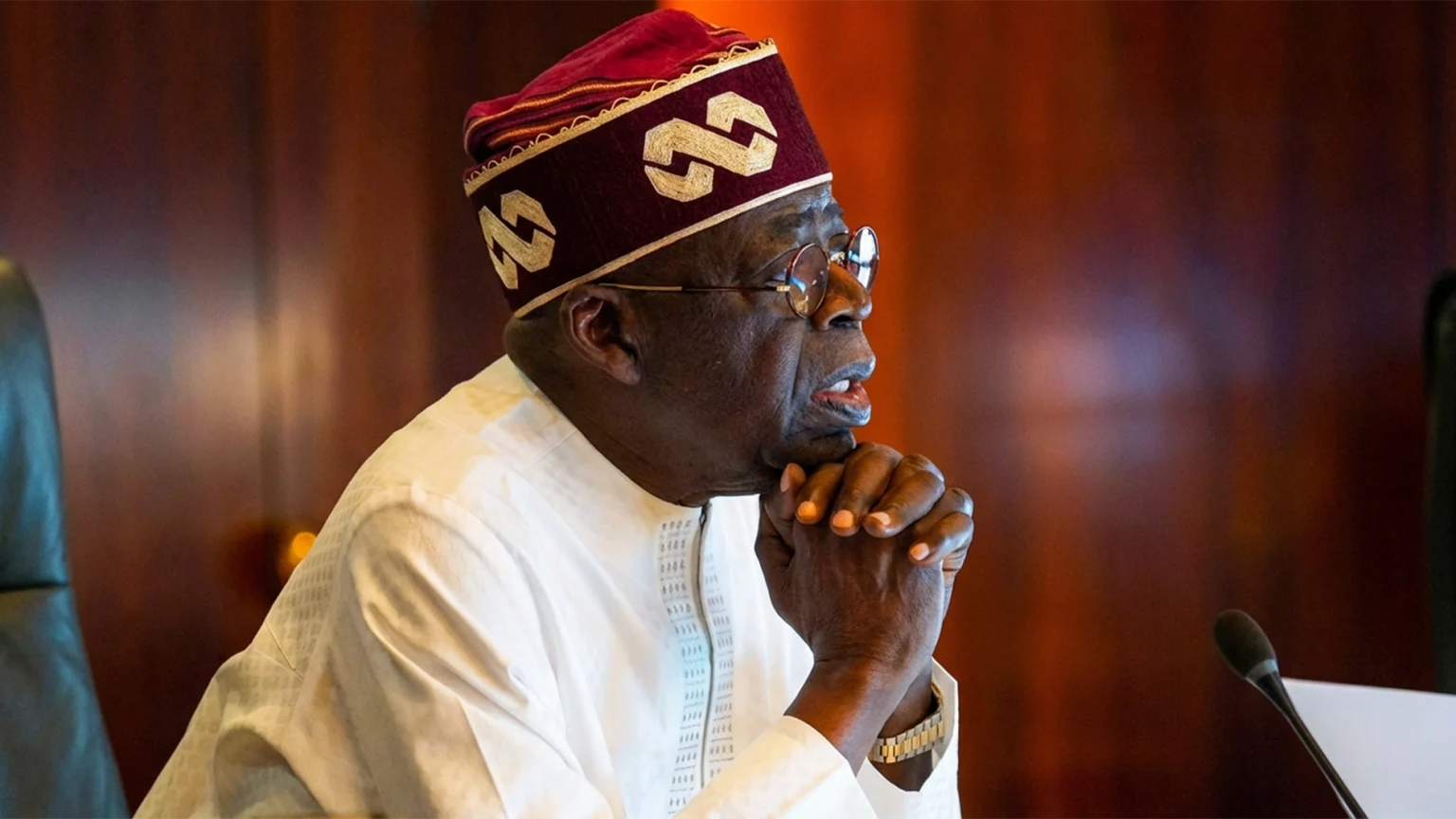
On Monday, the Presidency issued a statement in which President Bola Tinubu sympathised with the people of Oyo State and Governor Seyi Makinde.
He also gave a promise Nigerians have become familiar with since such killings became a recurring feature in the news, “The bandits and all their local collaborators will be fished out and made to face the full wrath of the law.”
Strong, stern words. But that is hardly the first time such assurances have been made.
On January 4 this year, after terrorists killed more than 30 people at Kasuwan Daji market in Niger State, the President personally directed the Minister of Defence, the Chief of Defence Staff, the Service Chiefs, the Inspector-General of Police, and the DSS Director-General to track down the attackers.
“They must face the full consequences of their criminal actions. No matter who they are or what their intent is, they must be hunted down,” he said.
A month later, after the killing of 162 villagers in Woro and Nuku in Kwara State, the President described the attackers as “cowardly and beastly” and warned that they “won’t go scot-free.”
In March 2026, after the Palm Sunday massacre in Angwan Rukuba and the Kahir village wedding abductions in Kaduna, he again instructed security agencies to “intensify all efforts to pursue the perpetrators.”
In September 2024, after the Mafa attack in Yobe, the perpetrators were said to be heading for justice.
In March 2024, after 17 soldiers were killed in Okuama, Delta State, the President said the “cowardly offenders responsible for this heinous crime will not go unpunished.”
Understandably, Nigerians look to the Villa’s body language whenever such tragedies occur. And, equally, the Villa responds with tough rhetoric, either through presidential condemnation or promises of retribution.
This pattern predates the current administration. President Muhammadu Buhari spent eight years promising that the abductors of the Chibok and Dapchi girls, the Tudun Biri victims, and the bombers and escapees from Kuje Prison would face the full wrath of the law.
Some did. Many did not. It is a pattern of strong rhetoric followed by quiet or partial follow-through that has endured.
Now, one might ask: do security agencies really need an extra push from the Commander-in-Chief to pursue men who have just kidnapped schoolchildren, slaughtered a teacher, and torched villages?
Would that not be their statutory duty? Perhaps the President’s direct order adds urgency and gravitas. Fair enough. But if such orders are publicly issued, should the public not also be shown open, visible proof of success when these “cowards and barbarians” are eventually caught?
To be fair, the administration has recorded pockets of wins worth acknowledging. In April 2025, the military killed bandit kingpin Gwaska Dankarami, reported second-in-command to an ISWAP-linked leader, along with about 100 of his foot soldiers in the Munumu Forest, Katsina State.
In January 2025, troops of Operation Fansan Yamma neutralised Aminu Kanawa, Bello Turji’s deputy, along with several of Turji’s senior commanders.
In December 2025, in Sokoto, the Army’s 8 Division reportedly eliminated bandit kingpin Kalamu and his cousin, Kachalla Na’Allah, in successive operations. Between December 8 and 21, 2025, the Office of the National Security Adviser coordinated the release of all 230 St. Mary’s Catholic School pupils and staff abducted from Papiri, Niger State, the largest school kidnapping in that state’s history. And days ago, a joint operation involving the Nigerian and U.S. military eliminated ISWAP commander Abu-Bilal al-Manuki.
These are the kinds of outcomes citizens want to see more often. Even so, what they really desire is a country where such presidential statements are no longer needed in response to recurring bloodshed.
True, the killers and kidnappers fit the President’s description of “cowards and barbarians,” and yes, they should face the “full wrath of the law.” But as Nigerians continue to hear these statements alongside fresh atrocities, tough talk risks becoming routine.
The real task is not to reduce promises, but to reduce the frequency of events that trigger them and to provide more consistent, public proof of victory over violent criminals.
So help you God, Mr President.
Earlier in the week, Tinubu praised the NDLEA and its chairman, Brig. Gen. Buba Marwa (retd.), for busting a Nigerian–Mexican drug syndicate and seizing chemicals and illicit drugs valued at over $360m.
He described the operation as a display of “exceptional professionalism, courage, and unwavering commitment.”
The President also continued his preference for young, qualified professionals in his administration.
He appointed Professor Segun Aina, a 39-year-old Computer Engineering lecturer and systems expert from Obafemi Awolowo University, as the new Registrar of the Joint Admissions and Matriculation Board.
Aina, who turns 40 in July, will become JAMB’s youngest registrar when he succeeds Professor Is-haq Oloyede on July 31.
For now, the Esiele teachers and pupils remain in captivity.
In this article