
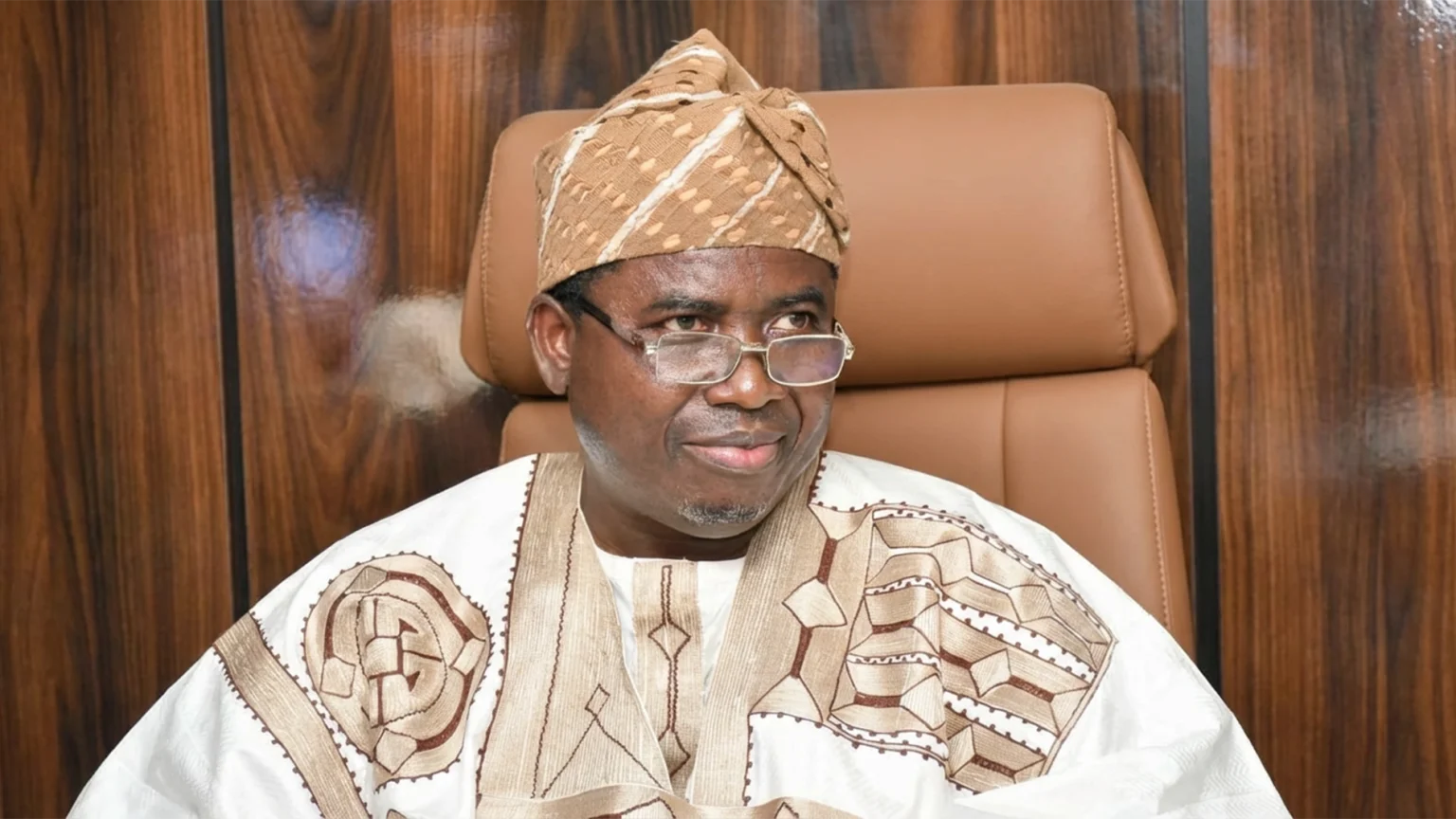
By Ralph Omololu Agbana
In moments of national political tension, the easiest target is often the umpire. Nigeria’s electoral history proves this. Yet a dispassionate review of law, precedent, and public record shows that Prof. Joash Ojo Amupitan, SAN, current Chairman of the Independent National Electoral Commission, cannot reasonably be held complicit in partisan schemes to undermine opposition parties or compromise the 2027 electoral cycle. His training, temperament, and track record point instead to a technocratic legal mind uniquely equipped to anchor INEC’s constitutional mandate.
Talking pedigree, his is a career built on law, not politics. Prof. Amupitan’s biography is a public record. Born 25 April 1967 in Ayetoro Gbede, Kogi State, he rose through the academy and the bar without a partisan footprint.
He bagged LL.B. from University of Jos, 1988; called to the Nigerian Bar same year; http://M.Sc. and PhD in Law, University of Jos, 2007. He lectured for decades, eventually becoming Professor of Law and Deputy Vice-Chancellor, Administration, at UNIJOS and conferred Senior Advocate of Nigeria in 2014. The rank of SAN is reserved for advocates of unassailable learning and ethical standing. It is awarded by the Legal Practitioners’ Privileges Committee after rigorous vetting of courtroom competence and character.
His scholarship cuts across Company Law, Law of Evidence, Corporate Governance, and Privatisation Law. These are fields that demand fidelity to procedure, due process, and documented compliance — the exact skill set required to run a rules-based institution like INEC.
A man whose entire adult life has been subject to the scrutiny of faculty boards, the Body of Benchers, and the SAN Privileges Committee is ill-suited for covert partisan operation The incentives run the other way: his professional legacy depends on verifiable neutrality.
The Constitutional Design of INEC Protects Against Personal Complicity
Even if one were to assume personal bias, the architecture of INEC makes unilateral “complicity” structurally implausible:
Talking about collegiate decision-making and oversight, the INEC acts by Commission. The Chairman is one of 13 National Commissioners, plus 37 Resident Electoral Commissioners. Policy, de-registration of parties, election timetables, and logistics are commission decisions, not personal decrees. Yet, every major INEC action is reviewable. The de-listing of ADC officials that critics cite was, by INEC’s statement, “in compliance with an Appeal Court order directing the commission to maintain the _status quo_ pending determination of a suit”. When the Supreme Court ruled on April 30, 2026 affirming the David Mark-led ADC, INEC became bound to obey that superior order. Obedience to courts is not complicity; it is the definition of a law-abiding body.
Talking about statutory timelines, the 2027 Election Notice and Timetable released 13 February 2026 was issued under Section 28 of the Electoral Act 2022. The dates, procedures, and CVR deadline of 30 August 2026 are statutory, not discretionary.
Thus, the charge of “strangulating the opposition” collapses against the reality that INEC’s most controversial acts under Amupitan have been tethered to court orders and statutory deadlines.
The “APC Sympathy” Allegation vs. Evidence
Three claims have been advanced to suggest partisanship: Appointment by President Tinubu, alleged social media post, and ADC de’recognition.
To begin with, all INEC chairmen are appointed by the president, subject to Senate confirmation. That is the constitutional method. President Tinubu described Amupitan as “apolitical”. The Senate confirmed him on 16th October 2025 after screening. If appointment alone equalled complicity, no INEC chair in the Fourth Republic would be legitimate. Secondly, INEC has stated that Amupitan “does not own or operate any personal account on X” and “has at no time engaged in partisan commentary”. In law, he who alleges must prove. No forensic evidence linking the Chairman to partisan handles has been produced.
Thirdly, the Commission’s action flowed from an Appeal Court _status quo_ order. Disobeying that order would have been contempt. Following it is not evidence of bias. After the Supreme Court judgment of April 30, 2026, ADC itself acknowledged the ruling “laid to rest contrived disputes”. The judicial process, not the Chairman, resolved the leadership question.
Why is a SAN uniquely prepared for INEC?
The job of INEC Chairman is, at bottom, legal and administrative, considering also the interpretation of the Electoral Act 2022– a 132-section statute with 50+ schedules, litigation management, procedural integrity and insulation from patronage. A SAN trained in Law of Evidence and Corporate Governance is better placed than a career politician to apply it consistently. INEC faces hundreds of pre- and post-election suits. Amupitan’s 30+ years at the Bar mean he understands the burden of proof, _stare decisis_, and the consequences of flouting judgments. That reduces institutional liability. The same discipline that sustains a SAN’s courtroom credibility — filings on time, service of processes, respect for _sub judice_ — is what INEC needs to publish voter registers, audit party primaries, and transmit results without procedural nullification. A Professor and SAN has alternative career lines. He does not need INEC as a stepping stone. That economic independence is a guardrail against inducement.
Delivering Credible Elections: The Test Ahead
Amupitan’s INEC has already set objective benchmarks:
June 20, 2026: Ekiti Governorship and 6 bye-elections. These are the first real-field tests of BVAS, IReV, and logistics under his watch. Continuous Voter Registration (CVR) to 30 August 2026. Compliance will show whether the register is cleaned and inclusive.2027 General Elections: The Timetable is out. Credibility will be measured by timely release of guidelines, transparent accreditation of observers, and real-time result upload.
The structure is in place. The law is clear. The Chairman’s pedigree suggests he understands that his name will be tied to these outcomes forever. For a SAN, professional reputation is capital. Squandering it for partisan gain would be irrational.
Conclusion: Judgment Must Rest on Evidence, Not Suspicion
Nigeria’s democracy is noisy. Allegations are cheap. But complicity is a legal and factual conclusion that requires proof of act, intent, and opportunity. On all three, the public record thus far exonerates Prof. Amupitan. He is a scholar of law, not a creature of politics. He chairs a commission bound by statute and court orders, not personal whim. And he carries the professional burden of a Senior Advocate of Nigeria — a title that means, literally, that the law is his first client.
If Nigeria wants a law-abiding electoral body, it should want it led by a man whose life’s work is the law. On that measure, Prof. Joash Ojo Amupitan, SAN, is not the problem. He is the profile of the solution.
In this article