
By Adekeye Adebajo
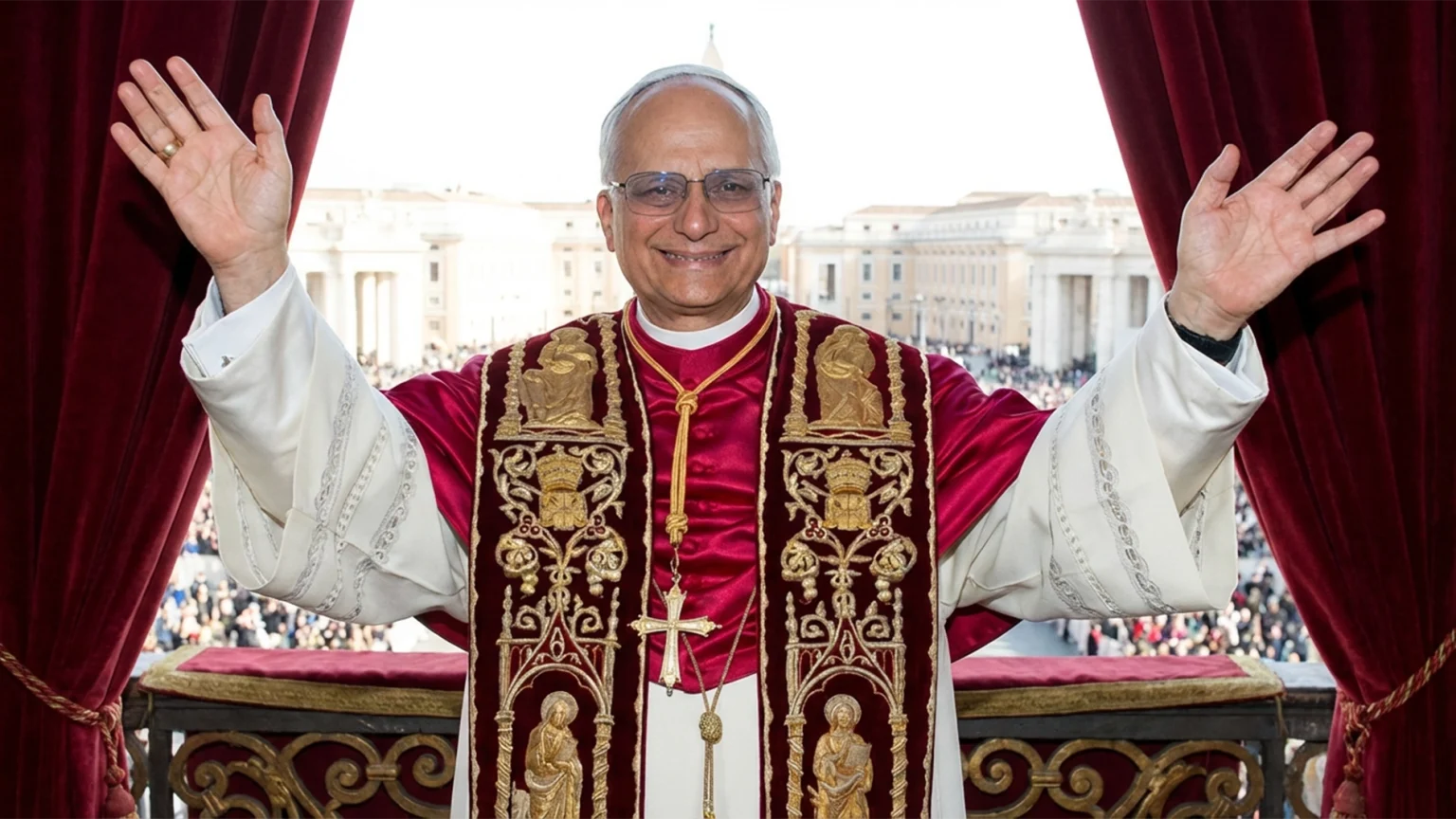
The war of words between Pope Leo XIV and U.S. President Donald Trump has revived the age-old clash between the sacred and the secular. But Trump has severely misjudged the “soft power” of the world’s preeminent religious leader, and attacking a popular pontiff will likely come at a high political cost.
It seems that, for the first time in living memory, God and the devil are represented on Earth by two Americans. In fact, the acrimonious spat between Pope Leo XIV and the U.S. President Donald Trump has revived the age-old clash between the sacred and the secular, albeit in a new and at times crude way.
The two men could not be more different. Pope Leo XIV—the first American to hold the office—preaches peace, multilateralism, and the need to uphold international law, while Trump spouts racist, xenophobic, and misogynist rhetoric and advocates for war.
The mild-mannered Pope insists on kindness, mercy, and justice, embodying spiritual power and espousing reconciliation. But the swaggering Trump, like a tyrannical Roman emperor, relies on violence, representing military power without moral legitimacy.
Trump’s actions speak for themselves. Despite his absurd claim to have ended ten wars, he is waging an illegal war against Iran and has used force unilaterally in several other countries, all while enabling Israel’s bloody campaign in Gaza, the West Bank, and Lebanon. At home, Trump has launched a draconian mass-deportation campaign against immigrants of colour, often from places he calls “shithole countries.” As part of his illusory bid to revive a white Christian America, Trump has also fuelled Islamophobia.
Ironically, his government’s massive cuts to social programmes have hit poor white Americans—an important part of his base—particularly hard.
Leo XIV, who was elected to the papacy in May 2025, initially avoided wading into the U.S. politics, despite being an obvious counterweight to Trump. But that began to change late last year, when the Pope urged the U.S. Catholic bishops to support immigrants and backed their statement criticising the Trump administration’s draconian mass deportations. In January, the pontiff went further, calling for “the strengthening of supranational institutions, not their delegitimisation”; stressing that the rule of law is “the foundation of all peaceful civil coexistence”; and bemoaning the ascendance of a “diplomacy based on force.”
The unprovoked U.S.-Israeli attack on Iran brought the issue to a head. In an apparent rebuke of the U.S. Secretary of Defence, Pete Hegseth, who portrayed the conflict as a Christian crusade, Pope Leo XIV declared that “[God] does not listen to the prayers of those who wage war, but rejects them.” Soon after, he described threats to wipe out the Iranian civilisation as “truly unacceptable” and attacks on civilian infrastructure as “against international law,” while urging Americans to press their political leaders to choose peace over war. In posts on X, the pontiff said that a disciple of Christ is never on the side of those who “drop bombs” and condemned “the absurd and inhuman violence.”
Following these increasingly pointed criticisms, Trump attacked the Pope directly, accusing him of being “WEAK on Crime,” “catering to the Radical Left,” and thinking “it’s OK for Iran to have a Nuclear Weapon.” The pontiff, on an African tour, confidently retorted: “I have no fear, neither of the Trump administration, nor of speaking out loudly about the message of the Gospel.”
Pope Leo XIV, who worked and travelled for decades in Latin America and Africa, understands as well as anyone the global revulsion for Trump’s war and vile words.
Crucially, after Trump lashed out at the pontiff, a similar sense of distaste is spreading among conservative Christians in the U.S. Trump’s decision to post a blasphemous image depicting himself as a Christ-like figure healing the sick did not help matters. It was a step too far even for his white evangelical base, many of whom view him as an anointed leader sent by God to save America from what they see as the evils of liberalism and multiculturalism.
A high-profile spat with the leader of the Catholic Church has only served to underscore the chasm between Trump’s policies and Christ’s teachings, from the importance of loving one’s neighbour and welcoming the stranger to the idea that the meek will inherit the earth. Trump’s massive tax cuts for the rich are a far cry from Jesus’s embrace of the poor.
Nowhere is this more visible than in the domain of war and peace. Pope Leo XIV’s patron saint is the North African-born Saint Augustine, often credited with originating just-war theory. The theory advocates force as a last resort for achieving peace, in which case conflict must be conducted by a properly constituted authority that follows the principle of proportionality and does not target civilians—by which measure, Trump’s war on Iran is hardly just. The United Nations’ founders had sought to embed this Christian concept in the UN Charter. But Trump sees no need for international law; the only constraint on his power, he insists, is his “own morality.”
Soviet leader Joseph Stalin once reportedly quipped: “But how many divisions does the Roman Pope have?” But such dismissiveness reflects a fundamental misunderstanding of spiritual authority. Trump has made a similar mistake by attacking a popular pontiff (Pope Leo XIV has an 84% favourability rating among American Catholics). It seems likely that he underestimated the “soft power” of the world’s preeminent religious leader at his peril.
A 2013 survey found that one in four Americans believed that U.S. President Barack Obama may be the anti-Christ. Such conspiratorial delusions, partly stemming from Trump’s vile accusation that Obama was not born in the U.S., have helped bring to power a doomsday prophet who is systematically leading the world into war and economic ruin. Pope Leo XIV is right not to render unto this vacuous, violent, and vulgar Caesar the things that have never been Caesar’s.
Prof. Adebajo is a senior research fellow at the University of Pretoria’s Centre for the Advancement of Scholarship in South Africa.
Courtesy: Project Syndicate
In this article