
By Kennedy Elaigwu Awodi
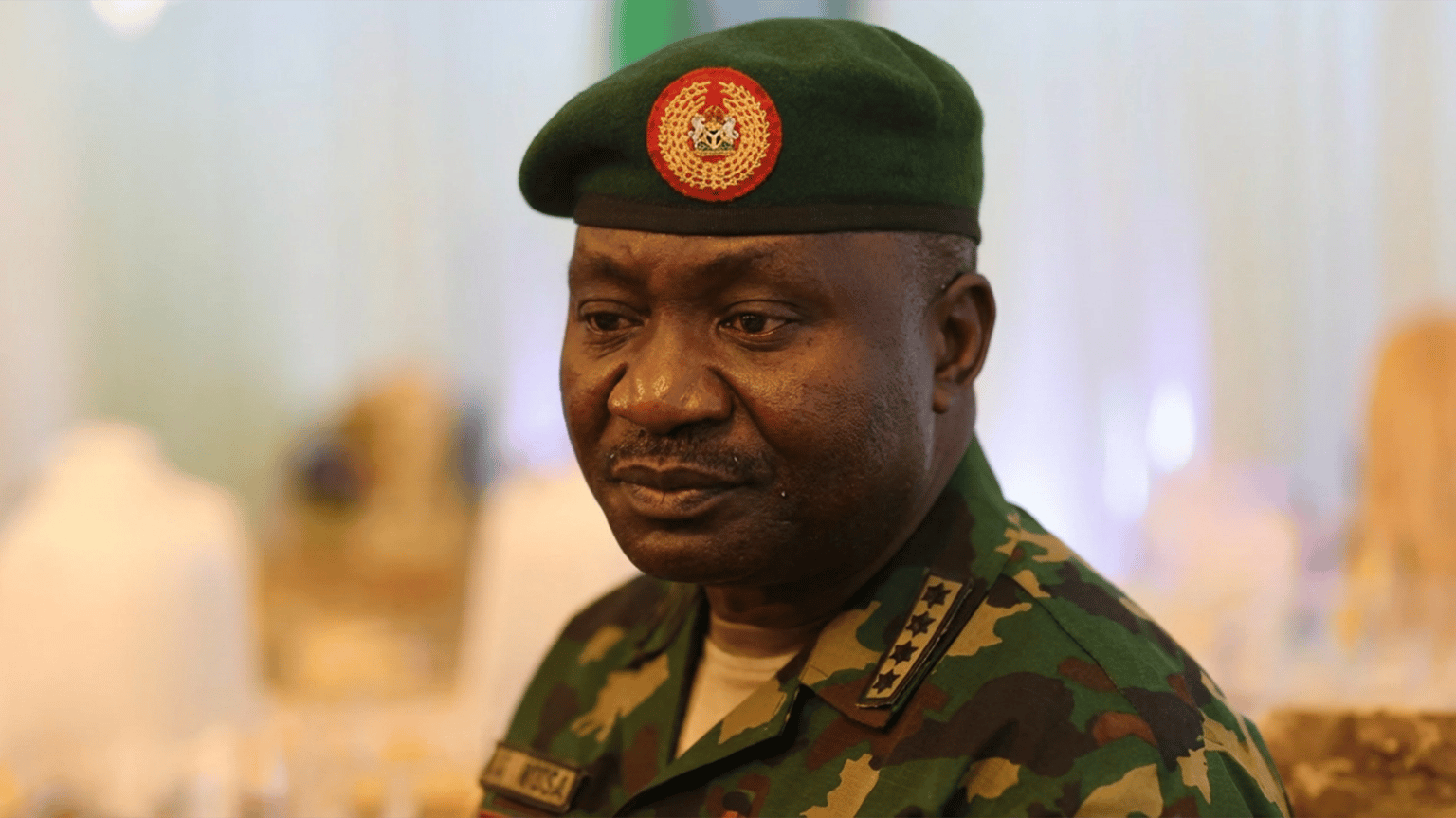
For over a decade, Nigeria’s security landscape has been a complex tapestry of asymmetric warfare, ranging from the resilient insurgency in the Northeast to the sophisticated banditry in the Northwest and the maritime vulnerabilities of the Gulf of Guinea. Previous administrations have employed various strategies, some purely kinetic, others more conciliatory, yet the “monster” of insecurity remained stubbornly alive. However, the current synergy between President Bola Ahmed Tinubu and the Minister of Defence, General Christopher Gwabin Musa, represents a fundamental shift in philosophy.
This isn’t just about buying hardware; it is about a systemic overhaul rooted in strategic internationalism. The recent breakthrough at the Antalya Diplomacy Forum 2026 and the subsequent IDEF 2026 agreements with Türkiye signify more than just a diplomatic handshake. They represent the “Tinubu-Musa Doctrine”: a blend of high-level political will and ground-level tactical expertise designed to achieve self-reliance through strategic partnership.
President Tinubu’s Renewed Hope Agenda recognises that economic prosperity is a pipe dream without a secure environment. By appointing General Christopher Musa, a seasoned commander with deep operational experience in the heart of the insurgency, the President signalled a move away from “armchair defence” toward proactive, intelligence-led warfare.
General Musa’s leadership has been characterised by a refusal to accept the status quo. His recent trip to Türkiye wasn’t a shopping expedition; it was a mission to secure technology transfer and human capital development. Under the Tinubu administration, the Nigerian military is no longer just a consumer of foreign arms; it is becoming a partner in defense production. This shift is critical because the greatest challenge to Nigeria’s security has often been the “veto power” of Western nations over arms sales and the lack of indigenous maintenance capacity.
The collaborative model Nigeria is now pursuing with Türkiye is not an experiment; it is a proven roadmap. History shows that when a nation facing internal strife pairs its local knowledge with a technologically superior ally willing to share “know-how,” the results are transformative.
For example, in the late 1990s, Colombia was on the brink of becoming a failed state due to narco-terrorism and the FARC insurgency. Through a deep-seated collaboration with the U.S., Colombia didn’t just receive aid; they received specialised training and intelligence-sharing frameworks. This collaboration led to a 600 per cent increase in the capture of insurgent leaders and eventually forced the FARC to the negotiating table, resulting in the 2016 Peace Agreement.
In South Korea and the United States
Following the Korean War, South Korea was a devastated land. Their defense collaboration with the U.S. focused heavily on technology transfer and local manufacturing. Today, South Korea is not only secure but is one of the world’s leading exporters of high-tech defense equipment (like the K2 Black Panther tank). This mirrors what Tinubu and Musa are attempting by establishing a military training hub and joint production lines with Türkiye.
Furthermore, the choice of Türkiye as a primary strategic partner is a masterstroke of the Tinubu administration. Unlike many traditional Western allies, Türkiye’s defense industry is built on the philosophy of “no strings attached” technology transfer.
Türkiye has revolutionised modern warfare with its Unmanned Aerial Vehicles (UAVs). The agreement to provide Nigeria with advanced surveillance systems and satellite-enabled monitoring addresses Nigeria’s biggest blind spot: vast, ungoverned spaces. With Turkish drone technology and intelligence integration, the “forest hideouts” of bandits in the North will no longer be safe havens.
The plan to establish a permanent coastal training centre in Nigeria is a visionary move by General Musa. It moves Nigeria away from the “outsourcing” of training. By bringing Turkish expertise to Nigerian soil, the military can train entire battalions in counter-IED operations and special operations within the local context. This ensures that the knowledge stays in the country and trickles down to every rank.
Nigeria’s economy bleeds billions due to oil theft and piracy. The Antalya agreements specifically target maritime platforms and integrated border management. By leveraging Turkish naval engineering and satellite monitoring, Nigeria can finally “lock” its borders, preventing the influx of illegal arms and the exit of stolen crude.
The collaboration between President Tinubu’s political leadership and General Musa’s military strategy, backed by Turkish technical prowess, will likely bring an end to the current security challenges for three reasons:
Sustainability: By focusing on maintenance training and indigenous production, the Nigerian military will no longer be grounded when a foreign spare part is delayed. Operational readiness will remain at 100 per cent.
Precision: The integration of Turkish Intelligence, Surveillance, and Reconnaissance (ISR) tools means fewer “collateral damage” incidents and more surgical strikes against terrorist leadership.
Rehabilitation: The inclusion of disarmament and reintegration (DDR) expertise from Türkiye shows that the Tinubu-Musa team understands that bullets alone don’t end wars.
They are preparing for the “post-war” era by learning how to reintegrate former combatants into society.
The efforts of President Tinubu and General Musa represent a departure from the “fire-brigade” approach of the past. They are building a fortress, not just fighting a fire. By aligning with Türkiye, a nation that understands the value of sovereignty and home-grown defence, Nigeria is finally taking the driver’s seat in its own security narrative.
The road ahead is still rugged, but for the first time in a generation, the light at the end of the tunnel is not an oncoming train, it is the dawn of a more secure, more resilient Nigeria. The “Renewed Hope” for security is no longer just a campaign slogan; in the hands of Musa and the partnership of Türkiye, it is becoming a reality.
Awodi wrote from North Carolina, USA and can be reached via: awodiken@outlook.com
In this article