
By Emman Ozoemena
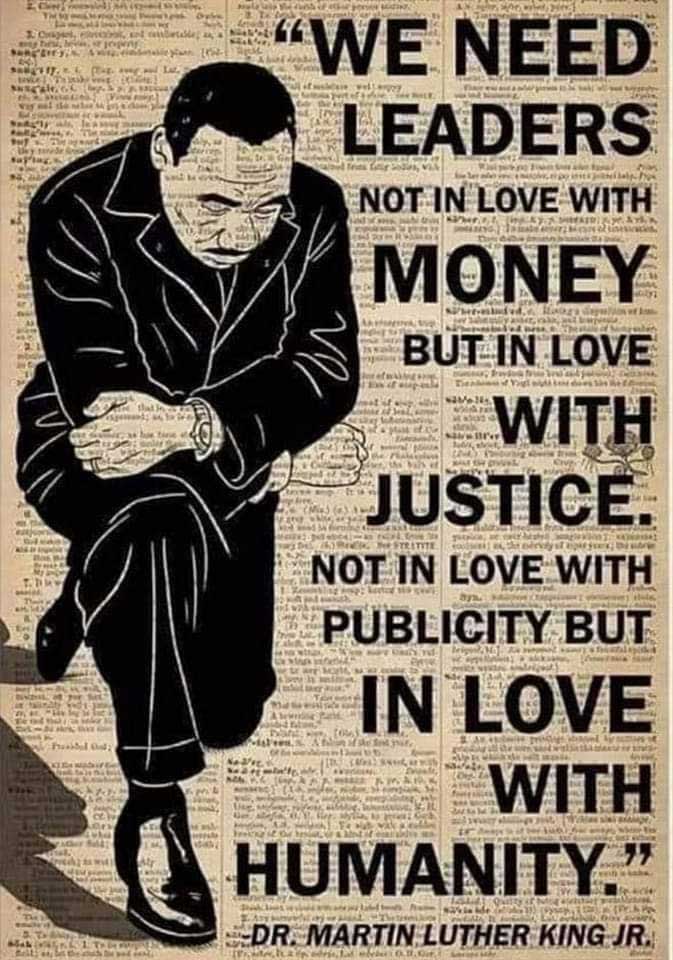
Exactly, 58 years ago, on April 4, 1968, at 6:01 pm in Memphis, Tennessee, an assassin tried to silence the towering dream of Dr. Martin Luther King Jr., civil rights leader and drum major for social justice and Nobel Peace Laureate for his commitment to advancing non-violent civil action.
King, passed on at the age of 39, was shot while standing on the balcony of the Lorraine Motel Memphis, Tennessee, by James Earl Ray, later convicted of the assassination, was in the city to support the sanitation workers’ union pressing for better wages and working condition.
The news of his assassination sparked off reactions, leading to global outrage, and riots in over 100 cities across United States. His passing showed that supporters and admirers of King around the world stood united in honoring a man with a mission to advance the equality of men and women as children of the Almighty.
King was a staunch disciple of non-violence civil action, imbibed philosophical treatise espoused by Mahatma Gandhi, India independent movement leader who developed Ahimsa Sangamaya stepped in doctrine of non-resistance, earlier applied as the engagement tactic during struggle of India independence movement, culminating in freedom from British colonia rule in 1947.
Significantly, on December 1, 1955, out of ashes of segregation in Montgomery, Alabama, United States, what began as a spontaneous incident aboard a city bus, when Ms. Rosa Parks, a wife, mother, and seamstress, refused to comply with the bus conductor’s and driver’s order in protest against the unjust city ordinance enforcing racially segregated seating, captured the attention of a stunned nation and, indeed, the global community, resetting forever the benchmarks for social change advocacy.
The aftermath, and subsequent arrest of Ms. Parks by the Montgomery City Police, arraignment and trial by the court, created a spontaneous movement with leadership mantle resting on King.
Rising from a humble beginning, King, as a 26-years old Baptist pastor of Dexter Avenue Baptist Church, in the city had the lot feel on him to lead a coalition of local civic groups and community associations thus setting him on a pedestal of leadership and national acclaim.
It evolved into a robust platform for amplifying the voices of activists, civic and faith leaders, unions, and student, forming an amalgam of change agents united by pursuit of a new order, equality, and inclusion, breaking down barriers and pushing for access to public facilities in the city without regard to color, creed, or social status.
Ms. Rosa Parks, a citizen and community leader bore for several years of silence of a system that was considered to be the norm did what was considered unusual, when she asked to ‘stand up and go to the back of the bus’, with a measured response, ‘I cannot be moved’, an action then considered violation of city bus ordinance, and liable for public disorder according the city ordinance.
The movement propelled King and his fellow activists into what became a longterm struggle through Montgomery Improvement Association (MIA), which later evolved into various groups and tendencies.
A broadbased civic coalition, cutting across religious denominations, creed, and ethnicity, coalesced across cities and nationally through communitybased civic action, delivering a heavy blow to racial barriers and discrimination long ingrained in the system over centuries.
The 381day Montgomery bus boycott became a historic moment reverberated across the United States and beyond, energized nascent movements and engagements, as well as reforms in the justice system and race relations.
Therefore, for one year, from December 5, 1955, to December 20, 1956, King and his comrades led city-residents on the longest bus boycott in history, resulting in enactment of broad based and inclusive transport policy and social change.
King and his allies, and Ms. Parks through civil rights movement, inspired many as advocates of justice, equity, and equality nationally and globally.
Another pivotal moment that brought King global acclaim was the August 1963 “March on Washington” speech, where he delivered the “I Have a Dream” address; it resonated deeply with his immediate audience and echoed around the world, affirming his clarity of thought, intellectual strength, and stature as a compelling visionary leader of all time.
The speech became a ‘gravitational word’ that inspired movements and civic action across all social groups, creeds, and faiths, having been adopted worldwide as a mantra calling for action. King uncanny talent in public speaking delivery, interspersed with existential realities and aspiration of everyday citizens, evoked desiderium for change, inclusion, and attainment of the beloved community, he envisioned in his life time work and advocacy.
‘I have a dream’ speech, affirmed equality of all men and women as fulcrum of hallowed Declaration of Independence adopted on July 4, 1776, by founding fathers of the United States representing the 12 Colonies that made-up the Union. The document says inter alia, “We hold these truths to be self-evident, that all men are created equal, that they are endowed by their Creator with certain unalienable Rights, that among these are Life, Liberty and the pursuit of Happiness”
For King, the summum bonum of a democratic society is the protection of the dignity and respect of all individuals, who are equal citizens with equal rights and freedoms.
The United States of America Government under President Roland Regan on November 2, 1983, signed into law the Act that recognised the Martin Luther King Jr., Day, (MLK Day), as a federal holiday, observed on third Monday of January each year, to celebrate his legacies and the ideals he lived and died for.
King attained a largerthanlife stature and played a deeply conscientious philosophical role in social engineering, leaving behind an enduring legacy for generations in the United States and around the world.
Concisely, all people of goodwill owe a debt of gratitude to King, for his immense contribution to framing justice, inclusion, and equality being enjoyed today, globally.
After 58 years, it is evident that the assassin’s bullet could not halt Martin Luther King, Jr.’s dream, which is now being carried forward by millions worldwide.
May his memory be a blessing, amen!
Emman Ozoemena, is a policy consultant based in Abuja, Nigeria.
Follow for more on X formerly Twitter: @emman2020
In this article