
By Sly Edaghese
A democracy does not die in darkness.
It dies in broad daylight—
when the umpire tilts the field,
and calls it fairness.
In Nigeria, the office of the INEC Chairman is not just administrative—it is sacred.
It is the thin line between the will of the people and the will of power.
It is the referee in a match where the stakes are nothing less than the soul of a nation.
But what happens when the referee is no longer neutral?
What happens when the guardian of the process begins to shape the outcome?
That is the question now confronting Nigerians.
Because history has taught us something uncomfortable.
Those who occupy this office often arrive with towering credentials—professors, legal luminaries, men of intellect and discipline. They come clothed in excellence.
But somewhere between nomination and confirmation, something shifts.
Quietly. Subtly. Power begins to whisper.
And in that whisper lies a question that is never asked in public, but always answered in private:
How far are you willing to go?
It is not written.
It is not spoken aloud.
But it is understood.
Because power does not take chances.
It secures loyalty first—
and announces appointments later.
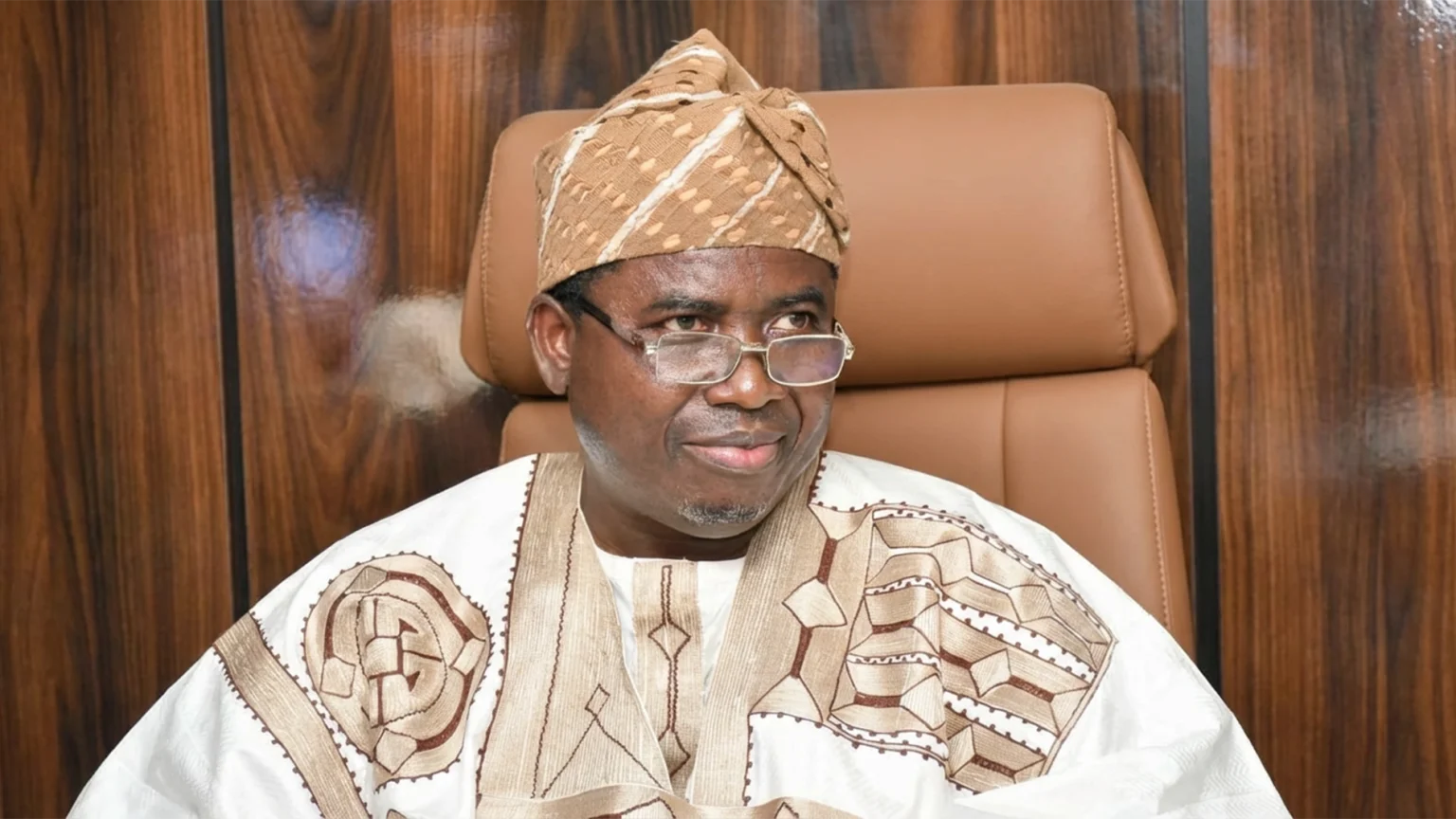
Professor Joash Ojo Amupitan is no ordinary man. His credentials are not in doubt. His achievements are not in question.
But in Nigeria, the test of office is never what a man has done before.
It is what he does when it matters most.
The controversy over the proposed “revalidation” of the Permanent Voter Card exposed something deeper than policy—it exposed intent.
Revalidation.
A simple word. A dangerous implication.
How do you revalidate what is already permanent?
If a voter card is permanent, then requiring citizens to return and validate it again is not reform—it is contradiction.
And in a country already battling voter apathy, it becomes something else entirely: A barrier. An obstacle. A quiet filter. Because the truth is simple. Many Nigerians will not go through that process. Not because they do not care—
but because life is already hard enough.
And when fewer people vote, outcomes become easier to control.
That is not speculation.
That is political reality.
INEC has now stepped back from the exercise.
But retreat does not erase intention.
The question still stands:
Why was it proposed?
And more importantly—why was it not resisted?
Because leadership is not about compliance.
It is about courage.
When pressure comes from above, neutrality is not silence—it is defiance.
Anything less begins to look like cooperation.
And the pattern does not end there.
Across the political space, opposition parties are struggling under the weight of INEC’s demands—tight timelines, shifting requirements, late directives.
Individually, each decision may appear technical.
Collectively, they tell a different story.
A story of a playing field that is no longer level.
Then came the ADC controversy.
In a move that sent shockwaves through the political landscape, INEC removed the names of the party’s National Working Committee from its official portal, citing a court ruling.
Legal? Perhaps.
Neutral? That is the real question.
Because timing in politics is never accidental.
With primaries approaching, the impact is immediate—and damaging.
Structures weaken. Plans stall. Momentum breaks.
And once again, the balance shifts.
When confronted with accusations that these actions appear to favor those in power ahead of 2027, the response from the INEC Chairman failed to reassure.And in that failure, doubt found its footing.
Because Nigerians are no longer just looking at decisions.
They are watching patterns.A pattern where outcomes consistently lean one way.
A pattern where neutrality is spoken—but not felt. A pattern where trust is slowly, quietly, being eroded.This is how democracies decline.
Not with tanks in the streets. Not with loud proclamations of tyranny. But with small decisions.
Administrative adjustments. Technical justifications.
Until one day, the system still exists— But the faith in it is gone.
And when faith is gone, democracy becomes performance.
INEC now stands at a crossroads. t can remain what it was meant to be—a shield for the people’s will. Or it can become something far more dangerous:
An instrument that perfects the illusion of choice. Because here is the truth we must confront:
A nation does not lose its democracy when elections are canceled. t loses it when elections continue— but the outcome no longer depends on the people.
And if that day comes— then the greatest tragedy will not be that power was taken. t will be that it was surrendered… quietly…hrough a process that looked legitimate—but was never truly free.
Edaghese wrote from Wisconsin, USA.
In this article