
By Magnus Onyibe
That question is no longer confined to opposition critics. It is increasingly being asked by concerned Nigerians as reports suggest the country’s position on global insecurity rankings has worsened since the administration assumed office on May 29, 2023.
Data from multiple monitoring agencies paint a grim picture. Violence perpetrated by bandits, insurgents, terrorists, and criminal gangs continues to claim lives at an alarming rate. Casualty figures appear to be rising geometrically rather than incrementally.
In the first half of 2025 alone, at least 2,266 people were reportedly killed—surpassing the total fatalities recorded in 2024. The National Human Rights Commission documented 570 killings and 278 kidnappings in April 2025 alone. Benue State has recorded over 6,896 deaths in two years, one of the highest tolls in the country.
Recent incidents underscore the scale of the crisis: 218 people killed in Benue State in June 2025. 55 killed in Boko Haram attacks in Borno State in September 2025. 1,686 deaths linked to cult and gang violence between January 2020 and March 2025.
Over 2,630 people killed in Plateau State within two years, including a deadly Palm Sunday attack.
In parts of Kaduna State, armed groups reportedly attacked the same community twice within two months, killing and abducting residents with little resistance. Such repeated invasions raise troubling questions about the state’s control over its territory.
Nigeria is not officially at war. Yet the scale of fatalities invites comparison with internationally recognised conflict thresholds. The Uppsala Conflict Data Programme (UCDP) classifies a situation as war when battle-related deaths exceed 1,000 per year. By that benchmark, some parts of Nigeria—based on reported figures—would meet the criteria of a conflict zone.
The concern, therefore, is not merely statistical. It is existential. If insecurity continues at this pace, it risks eclipsing whatever gains the administration may have recorded in economic reform and political restructuring.
There should be no no-go areas in a sovereign nation. Restoring territorial control and public confidence must become the defining priority of governance.
Arising from recent events, it is difficult to avoid the conclusion that non-state actors—terrorists, bandits, and insurgents—appear to be gaining the upper hand over Nigeria’s security agencies, including the Armed Forces, the Directorate of State Services, and the Police.
Any claim to the contrary strains credibility.
In the past month alone, a series of deadly attacks in North-Central and North-West Nigeria—Ungwan Rukuba in Jos (Plateau State), Kahir village in Kaduna State, and Mbalom in Benue State—have left scores of defenceless citizens dead. The attack in Ungwan Rukuba reportedly claimed 28 lives and left many others injured.
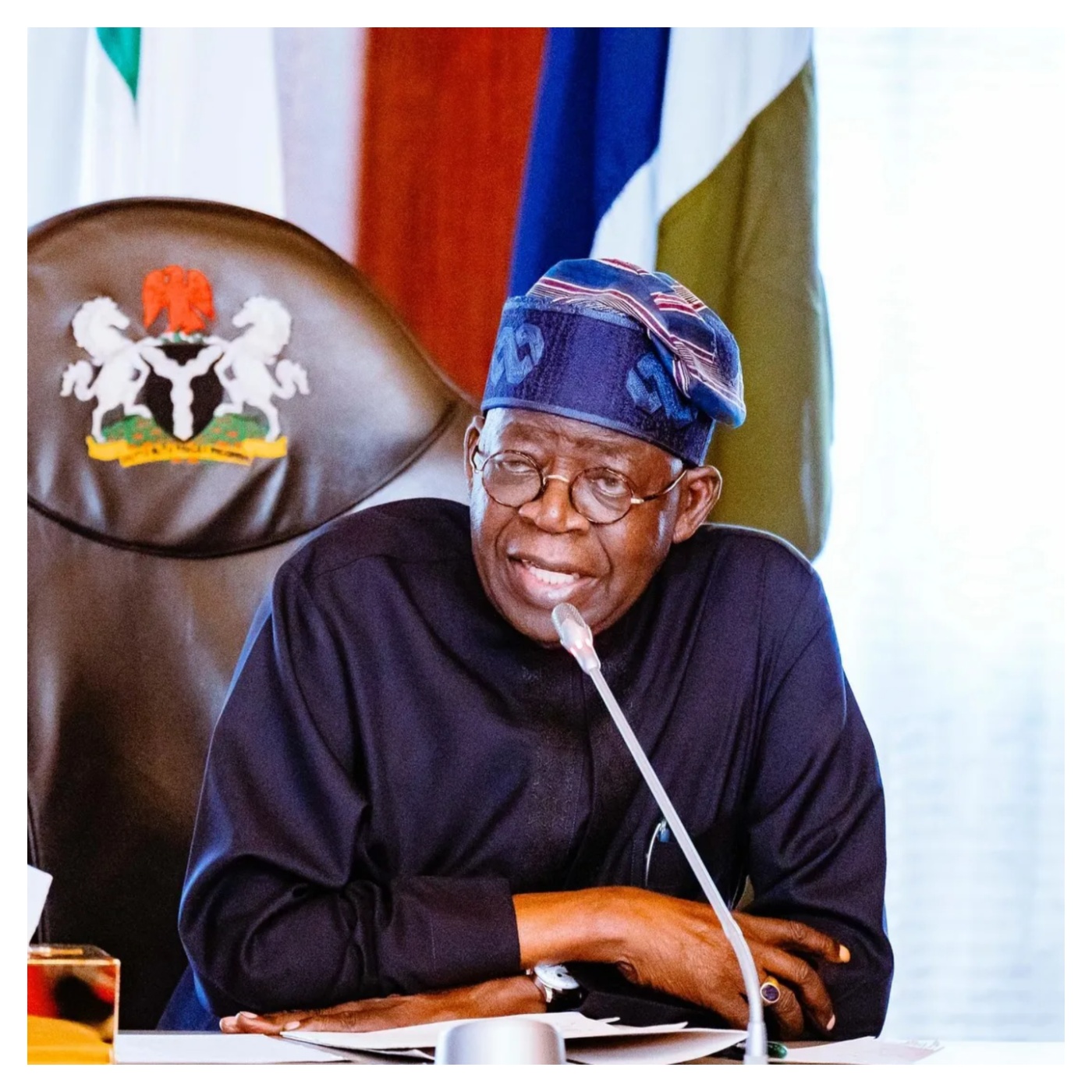
The tragedy prompted President Bola Tinubu to suspend a planned four-state tour and prioritise a condolence visit to Jos. On the surface, that was the right decision. However, poor coordination and weak messaging turned what should have been a moment of national solidarity into a public relations setback. The visit ended at the airport rather than at the affected community, generating criticism and damaging optics.
The backlash is particularly striking given the President’s recent symbolic gesture: on his 74th birthday, he directed that his remuneration since assuming office on 29 May 2023 be channelled into a support fund for families of fallen service personnel. It was a commendable move, especially as security operatives themselves have increasingly become targets of violent attacks.
Yet the goodwill from that gesture has been diluted by poor political management. In a climate where critics are quick to capitalise on missteps, especially in a politically sensitive season, symbolism without strategic execution carries risks.
Compounding matters is the perception problem. President Tinubu had earlier faced criticism for not postponing a UK visit following an attack in Maiduguri. In the Jos case, his delayed arrival—reportedly due to a prior engagement with Chad’s President Idriss Déby on regional security—meant security concerns confined him to the airport. Images of victims being brought there to meet him have since been framed by opponents as insensitive.
Nigeria is not formally at war. Yet the scale and frequency of killings tell a different story. As Pope Leo remarked during his Easter homily, “We are getting accustomed to violence.”
The observation resonates locally: 28 lives lost in Jos and 17 in Kajuru on the same day and nine on Easter Sunday in Benue state underscore a nation in distress.
In matters of insecurity, there should be no no-go areas for a Commander-in-Chief. When a president appears restricted within his own territory—even for security reasons—the symbolism is powerful and troubling.
The challenge now is clear: unless insecurity is decisively confronted, it risks eclipsing whatever gains have been made in economic reform and political restructuring.
Clearly , based on the UPDC classification, Jos , Plateau state that President Tinubu was confined to the airport for safety purpose and not the advertised lack of time can easily be said to be a war zone. So, it would have been reckless for the security agents to expose the president of Nigeria to being harmed in any shape or form by the rampaging outlaws.
But the president’s communication team that should have been transparent by coming clean with the risk of allowing president Tinubu face the real and present danger from the unhinged violent criminals on the plateau, was not forthcoming thus enabling critics to lambast the president unduly.
The use of the tool of misinformation and disinformation can be seen in the ungoing lsrael and U.S. attack on Iran for alledged enrichment of nuclear up to a bomb grade.
To be continued tomorrow.
Onyibe, an entrepreneur, public policy analyst, author, democracy advocate, development strategist, an alumnus of the Fletcher School of Law and Diplomacy, Tufts University, Massachusetts, USA, a Commonwealth Institute scholar, and a former commissioner in the Delta State government, sent this piece from Lagos.
In this article