
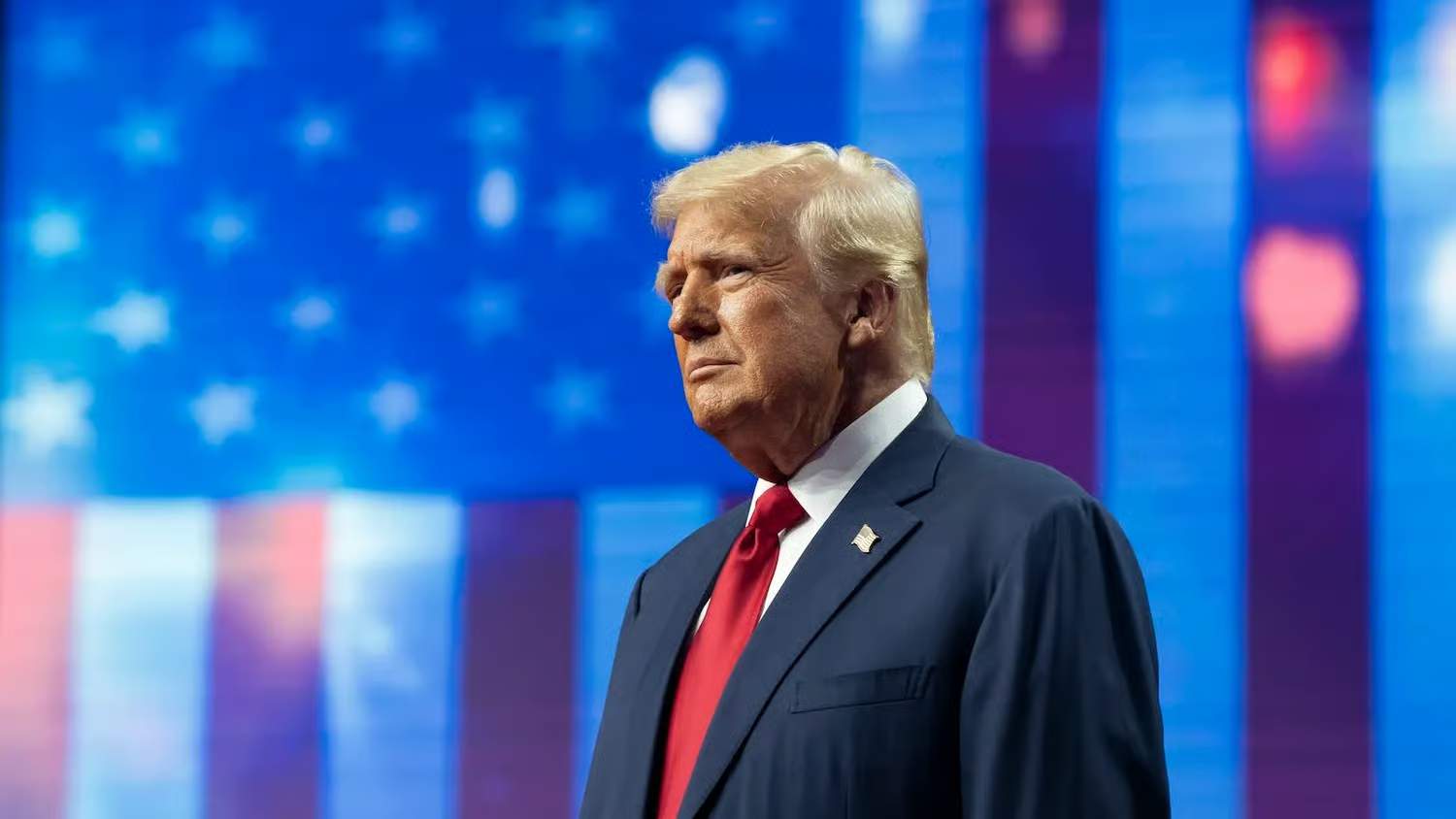
The President of the United States, Donald Trump, has set Tuesday, 8:00 p.m. Eastern Time as a deadline for Iran to reopen the Strait of Hormuz or face potential military action targeting its energy infrastructure.
Earliar the Guardian reported that the ultimatum, issued via Truth Social on Saturday, gives Tehran 48 hours to comply. Trump warned that the United States would “hit and obliterate” Iranian power facilities, “starting with the biggest,” if the strategic waterway remains restricted.
The warning marks a sharp escalation after earlier signals from Washington suggested a possible de-escalation following three weeks of hostilities.
Iran’s Foreign Minister, Abbas Araghchi, said Tehran’s measures were limited, insisting restrictions applied only to vessels linked to countries involved in attacks on Iran. He added that neutral nations would continue to enjoy safe passage.
However, Iran’s military issued a counter-warning, threatening retaliatory strikes against US and allied energy and desalination facilities across the region if further action is taken.
The developments come hours after Iranian missile strikes hit southern Israel, injuring more than 100 people in what authorities describe as the deadliest हमला since the conflict began. Israel’s Prime Minister, Benjamin Netanyahu, vowed a forceful response “on all fronts.”
At the centre of the crisis is the Strait of Hormuz, a critical global oil transit route through which roughly one-fifth of the world’s petroleum supply flows. Iran’s effective disruption of the channel has rattled global markets.
Brent crude prices have surged above $105 per barrel, fuelling concerns of a prolonged energy shock and wider economic consequences.
In a joint statement, leaders from the United Kingdom, France, Germany, Italy, South Korea, Australia, the United Arab Emirates and Bahrain condemned what they described as Iran’s “de facto closure” of the strait, pledging coordinated efforts to ensure maritime security.
In this article