
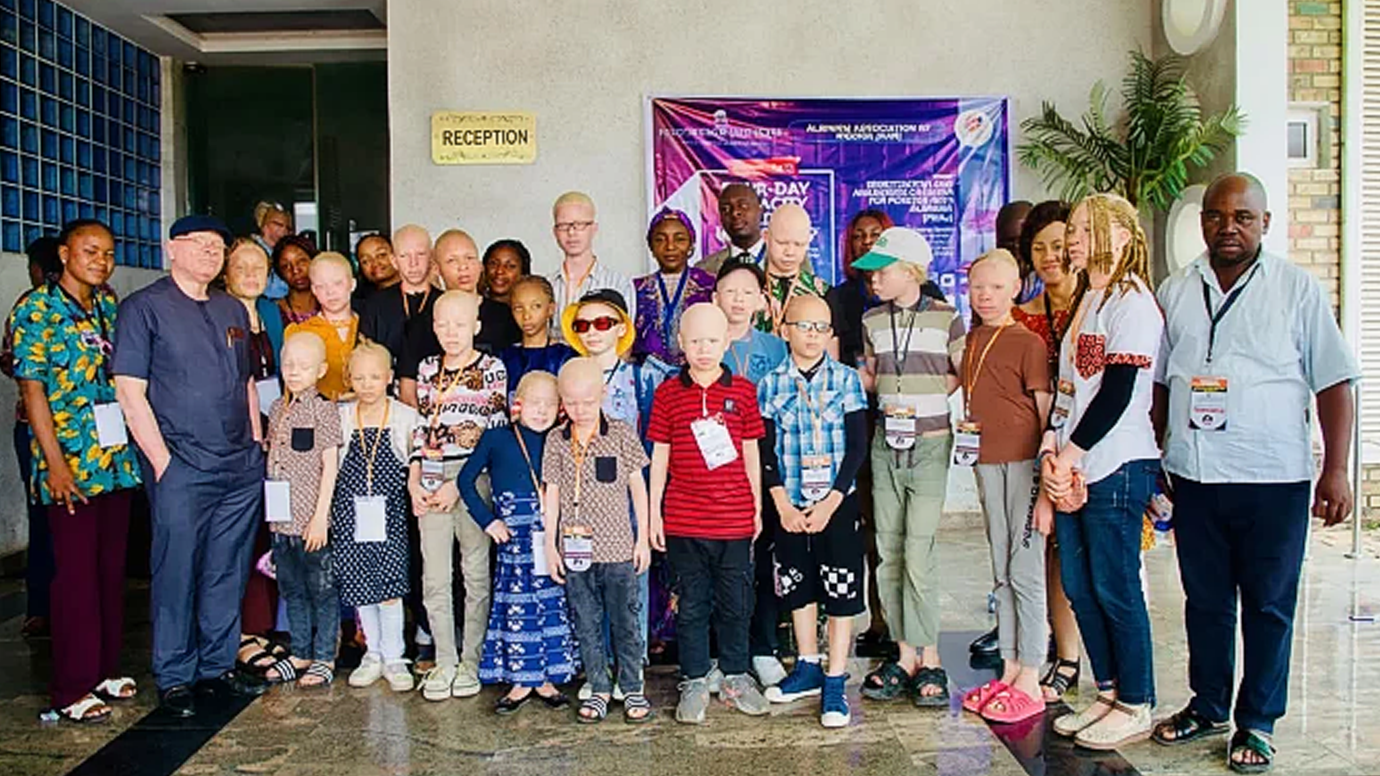
Beneficiaries and Albinism Association of Nigeria members gather during a free medical outreach. Photo: AAN
The National President of the Albinism Association of Nigeria (AAN), Dr Mrs Bisi Bamishe, has called for stronger and more inclusive policies to address challenges affecting women and girls with disabilities in Nigeria.
The call was made on Saturday during activities marking International Women’s Day in Lagos, where Bamishe addressed journalists on the realities many Nigerian women face.
According to her, women continue to carry heavy social and economic responsibilities in society as mothers, caregivers and contributors to national development, yet many still face discrimination and limited opportunities.
She said addressing women’s issues in the country requires a broader and more inclusive strategy that takes into account the experiences of vulnerable groups, especially women living with disabilities.
“In addressing women’s issues in Nigeria, there must be a deliberate and comprehensive multi-faceted approach, particularly when it concerns disability clusters,” she said.
“Women with disabilities are often more exposed to neglect, discrimination, poverty, and various forms of abuse. It is therefore important for us to stand united and draw attention to these realities so that government and society can better understand our challenges and put appropriate measures in place to address them.”
Bamishe also drew attention to the difficulties faced by women and girls living with albinism, noting that many still deal with stigma, stereotypes and barriers to essential services.
“As a woman and a person with albinism, I understand firsthand the challenges that come with navigating society under these circumstances. Many women and girls with albinism face discrimination, health risks associated with sun exposure, and limited access to healthcare, education, and economic opportunities,” she said.
She urged government agencies, civil society organisations and development partners to strengthen policies and programmes that protect and empower women and girls with albinism.
According to her, awareness campaigns are needed to challenge myths about albinism while improving access to dermatological care, sun protection products, education and economic opportunities.
Bamishe added that promoting empathy, equality and inclusion remains essential for national development.
“If we truly want a just and equitable society, then the voices and rights of women and girls with albinism must be heard, respected, and protected,” she said.
In this article