
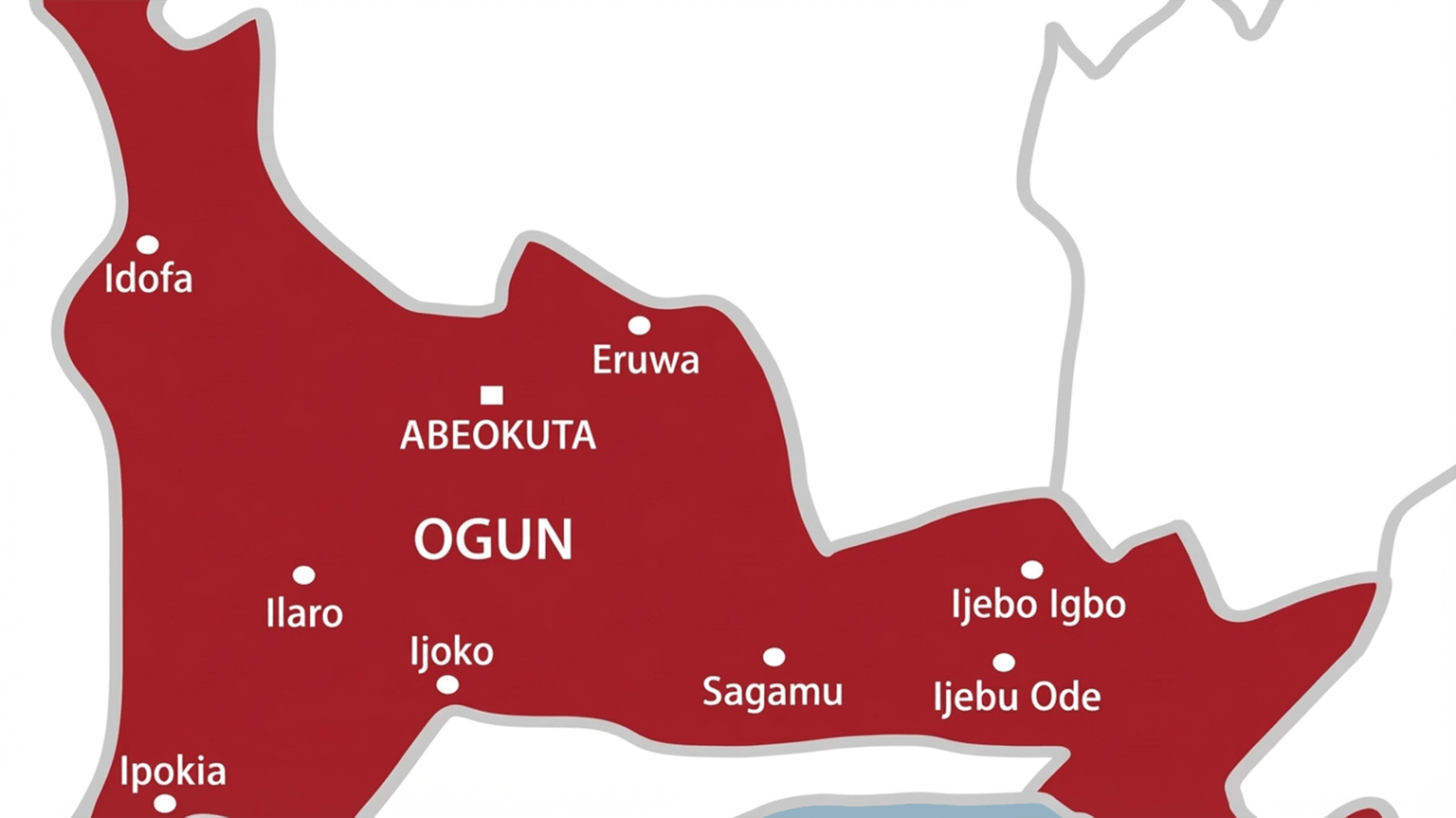
The controversy over the ownership of the oil-rich Eba Island has deepened, with leaders in Ogun State and officials of Ondo State’s oil commission trading claims and counter-claims over the disputed territory.
Some leaders from Ogun Waterside Local Government Area of Ogun State, led by the traditional ruler of Abigi, Oba Segun Ogunye, and former Vice Chancellor of Tai Solarin University of Education, Prof Segun Awonusi, on Sunday, insisted that the larger Eba Island, where commercial oil drilling was recently approved, is “unarguably” within Ogun State.
Other traditional rulers at the briefing included the Osobia of Makun Omi, Oba Kazeem Adeshina Salami; Oba Adekunle Hassan, Lenuwa of Ode Omi; Oba Bola Raimi, Alarige of Ibiade; Oba Obikoya Abidakun; Oloni of Oni, Oba Abimbola Mafe; Onisin of Ilusin, Oba Buari Balogun; Oniroku of Iroku, as well as Prof. Jumoke Bilesanmi-Awoderu, Iyalode of Ilusin, among others.
Addressing journalists in Abeokuta, Awonusi dismissed claims from neighbouring Ilaje Local Government Area of Ondo State, describing them as “spurious” and capable of causing communal unrest between the Ijebu and Ilaje people.
He explained that claims that the Eba Island oil field belongs to Ondo State are “outright falsehoods that cannot bear the weight of history and statutory documents which undisputedly and clearly establish that the island belongs to the people of Ogun Waterside Local Government.”
He added, “Our Ilaje neighbours have also embarked on a campaign of calumny and dished out outright falsehoods to the public, the latest being the threat by so-called ‘ex-militant generals’ in Ilaje LGA to attack major sources of the economy of the country if the oil well is not given to Ondo State within 14 days.
“What an affront to our collective sensibilities! We therefore call on security agencies to take appropriate action to check the shenanigans by Ilaje people and their threat to our national economy and security.”
It will be recalled that since last month, when Governor Dapo Abiodun announced the approval by President Bola Ahmed Tinubu for the commencement of commercial oil drilling at Eba in Ogun Waterside LG, some residents of neighbouring Ondo State communities have also laid claim to the oil-rich island.
Awonusi said there are two separate “Eba Islands,” but that the larger Eba Island, which hosts the oil field recently approved by President Tinubu for exploration, is in Ogun State, while a smaller Eba is located near the Ondo State forest reserve boundary.
“There are lease agreements, historical community records and survey documents, including the Olokola Free Trade Zone survey plan, that establish and confirm that Eba Island is part of Ogun State,” Awonusi said.
He stated that the state government had also conducted independent verification of the well’s coordinates using geospatial and cartographic technology, confirming that the wells are within its boundaries.
However, the Ondo State Oil Producing Areas Development Commission countered Ogun’s position, declaring that Eba Island belongs to Ondo State.
In a statement issued in Akure, OSOPADEC Chairman, Olabiyi Poroye, said a review of historical records, traditional authority structures and long-standing administrative practices showed that the island forms part of Atijere Kingdom, Mahin Ward 4, in Ilaje Local Government Area of Ondo State.
According to him, the island has been continuously inhabited by Ilaje people and administered under the recognised traditional institutions of the Amapetu of Mahinland and the Molokun of Atijere within the constitutional framework of Ondo State.
“Eba Island falls squarely within the Atijere axis in Ilaje Local Government Area and has neither been ceded nor relinquished under any agreement or administrative adjustment whatsoever,” Poroye said.
Reiterating that Ondo State owns the island, Poroye added that documented evidence supports continuous occupation, established cultural affiliation and decades of administrative governance under Ondo State institutions.
“Ondo State’s ownership and jurisdiction over Eba Island are clear, established and non-negotiable pending any constitutionally recognised resolution of boundary matters. These factors remain fundamental principles in determining territorial legitimacy under constitutional and customary law,” he noted.
The commission promised to ensure peaceful coexistence and continue developmental projects in the area, adding that it welcomed responsible investment aimed at enhancing national oil production and economic growth.
“However, resource discovery must not become a basis for altering historically established boundaries or disregarding lawful administrative control. Boundary matters between states fall within the statutory mandate of the National Boundary Commission and other constitutionally recognised authorities,” the statement added.
In the interest of peace, stability and investor confidence, the commission called for immediate recourse to constitutionally recognised boundary resolution mechanisms, independent and objective verification of territorial boundaries through historical, legal and empirical evidence, and strict observance of due process by all stakeholders.
Further reinforcing Ogun’s claim, Awonusi said a registered polling unit created by the Independent National Electoral Commission at the Local Government Primary School, Eba, falls under Makun/Irokun Ward in Ogun Waterside.
He also faulted a motion reportedly sponsored in the House of Representatives by the lawmaker representing Ilaje Federal Constituency, Donald Ojogo, describing it as “incorrect, misleading, alarming and capable of causing communal crises between the Ijebu and Ilaje people who have over the years coexisted peacefully.”
He explained that while some militants and Ilajes had cited outdated documents such as Government Notices No. 69 of 1919 and No. 114 of 1920, a later colonial document, Government Gazette No. 660 of April 29, 1950, signed by the Acting Chief Secretary to the Colonial Government of Nigeria, H.F. Marshall, clearly delineated the boundaries of Ijebu and Ondo Provinces.
“The document ipso facto declared invalid earlier documents purportedly giving the impression that part of Ijebu Province belonged to Ondo Province,” Awonusi said.
He added that there are recent lease agreements between some Ilaje obas and chiefs and Ijebu landowners, including a lease agreement between Mrs Victoria Talabi of Makun Omi in Ogun Waterside LGA and Mr Bode Orofin of Atijere in Ilaje Ese Odo LGA, as well as an “Iwe Adehun” dated February 27, 1975, in which the Edema family of Atijere sought permission from the Makun Omi community to use the land.
The Ogun leaders advised their Ilaje neighbours to desist from what they described as aggressive media campaigns, distortion of historical facts and threats capable of disrupting the peace of the area.
They also called on the Federal Government and relevant stakeholders to prevent any attempt that could plunge the communities into an avoidable crisis.
In this article