
By GEB
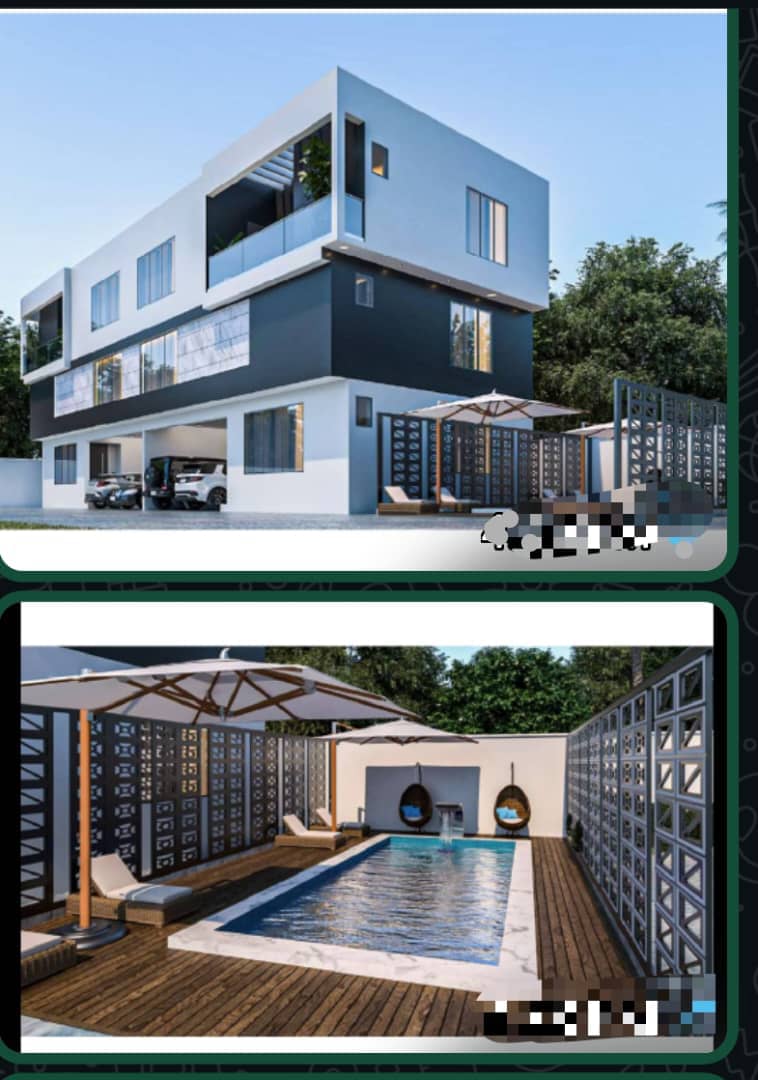
Nigeria’s urban housing landscape in 2026 presents a striking and unsettling contradiction. On one end of the spectrum, luxury real estate continues to expand, buoyed by diaspora remittances, high-net-worth individuals (HNIs), expatriate demand and limited supply of prime properties.
On the other hand, tens of thousands of low-income urban residents face displacement through forced demolitions, inadequate resettlement options and deepening housing insecurity. This widening gap exposes not merely a market imbalance, but a deeper failure of urban governance, planning coherence and social equity, all of which require urgent and concerted government attention.
Despite persistent macroeconomic headwinds, including currency volatility, high construction costs and weak mortgage penetration, Nigeria’s luxury real estate segment is projected to retain growth in 2026. Premium properties in Lagos, Abuja and other select urban centres continue to attract investors seeking capital preservation, rental income and long-term appreciation.
For this market, property functions less as shelter and more as a hedge against inflation, currency risk and regulatory uncertainty. Diaspora remittances, estimated at over $20 billion yearly, remain a major driver. A significant portion of this inflow is directed towards high-end residential developments, particularly in Ikoyi, Victoria Island, Banana Island, Maitama, and Asokoro. For many Nigerians abroad, luxury real estate offers an emotional reconnection with home, relatively attractive pricing compared to global cities, and a perceived sense of safety for capital in an uncertain world.
Nigeria’s growing concentration of wealth in sectors such as energy, finance, technology, telecommunications and international trade has further reinforced demand. Expatriates working with multinational firms, diplomatic missions and international organisations also form a stable base of high-end renters and buyers. In these circles, demand is shaped more by lifestyle expectations, security and exclusivity than by interest rates or mortgage availability.
Lagos remains the epicentre of luxury development. Established neighbourhoods such as Ikoyi and Victoria Island continue to command premium pricing, supported by proximity to commercial hubs, waterfront appeal and comparatively superior infrastructure. With land scarcity tightening supply, vertical development has become the dominant response, reshaping skylines with high-rise luxury apartments and mixed-use towers.
Abuja maintains its position as a strong secondary luxury market, driven by political officeholders, diplomats and senior public servants. Meanwhile, emerging corridors along the Lekki–Epe axis are increasingly viewed as future luxury frontiers, buoyed by large-scale infrastructure projects such as the Lekki Deep Sea Port, the Dangote Refinery and expanding road networks.
Yet even as capital pours into premium enclaves, Nigeria’s broader urban housing reality tells a far more troubling story. Only weeks after the Lagos State government demolished over 250 buildings in Mile 12, thousands of residents of Makoko’s Ilaje Aiyetoro community were displaced following another demolition exercise. Families lost their homes, livelihoods and personal belongings, with many forced to sleep in boats or open canoes. Residents alleged the use of tear gas during the exercise, resulting in casualties, including children.
Makoko, a historic waterfront community, has faced repeated forced evictions over decades, often justified in the name of urban renewal or development control. Yet each demolition deepens poverty, erodes trust and reinforces the perception of a city that plans for capital but not for people.
Civil society organisations estimate that over 80,000 residents across Makoko, Oko Agbon and Sogunro may be affected by ongoing evictions. They argue that the demolitions violate subsisting court orders, constitutional protections and international human rights standards, particularly where evictions occur without adequate notice, compensation or resettlement.
The government’s reliance on demolitions as an urban management tool reflects a persistent failure to integrate informal settlements into city planning frameworks. Communities that have existed for generations are treated as obstacles rather than stakeholders, while no credible, scalable alternative housing solutions are provided.
This contrast between luxury growth and mass displacement exposes the limits of a development model that prioritises asset values over human welfare. While Nigeria celebrates the resilience of its luxury real estate market, millions of urban residents remain locked out of formal housing systems, excluded from mortgage finance and vulnerable to eviction.
The irony is stark. Luxury real estate thrives precisely because it is insulated from Nigeria’s systemic housing failures. High-end developments rely on private power, private water, private security and privately maintained roads, creating islands of efficiency within a sea of infrastructural inadequacy. For the wealthy, governance failures are inconveniences to be bypassed; for the urban poor, they are existential threats.
The housing deficit estimated in the tens of millions continues to widen, driven by rapid urbanisation, population growth and stagnant incomes. Yet policy attention remains skewed toward supply at the top of the market, where returns are highest and risks are lowest for developers.
Market data suggests that annual rents for luxury apartments now range from N25 million to as high as N180 million, while outright sales for premium units stretch into the billions. At the same time, many urban households struggle with rising rents, insecure tenure and deteriorating living conditions.
To be clear, the growth of luxury real estate is not inherently problematic. It reflects legitimate market forces, diaspora confidence and Nigeria’s integration into global capital flows. However, its expansion alongside large-scale forced evictions highlights the absence of a coherent, inclusive urban housing strategy.
Urban development cannot be reduced to aesthetic orderliness or investor appeal alone. Cities are lived spaces, not merely investment portfolios. Without deliberate policies to protect vulnerable residents, regularise informal settlements and expand access to affordable housing, Nigeria risks entrenching a two-tier urban system: one city for capital, another for survival.
Encouragingly, some policy signals point in the right direction. Discussions around land administration reform, title security, building code enforcement and sustainability suggest growing awareness of structural issues. But reforms that raise costs without addressing inclusion risk further marginalise low-income households.
What is needed is a shift from demolition-driven urban renewal to people-centred planning. This includes in-situ upgrading of informal settlements, participatory planning, provision of basic services, and clear resettlement frameworks where relocation is unavoidable. It also requires aligning luxury development with broader urban goals, ensuring that prosperity at the top does not coexist with dispossession at the bottom.
Nigeria’s cities will continue to grow, whether planned or not. The choice before policymakers is whether that growth will be equitable, humane and sustainable or deeply divided. The true test of Nigeria’s urban future will not be how many luxury towers rise along its waterfronts, but how it treats those whose lives and homes lie outside the gates of privilege.
In this article