
By Sylvester Ojenagbon
Baldness – or, to use its more formal name, alopecia – is more than just a physical change; it is an emotional milestone, a cultural phenomenon, and an inevitable reality for millions around the globe. For many, the sight of a widening hairline or a thinning crown is a source of anxiety. For others, it is a non-issue, a transition embraced with confidence and a razor. This article delves into the facts, the causes, and the solutions surrounding the moment your hair decides to pack its bags and leave your head.
The prevalence of hair loss is truly staggering. Globally, male-pattern baldness (androgenetic alopecia) affects about 50% of men over the age of 50, and studies suggest this figure could be as high as 80% by the age of 70. While women are less commonly affected by complete baldness, over 40% of women will experience some form of noticeable hair thinning or female pattern hair loss in their lifetime.
In Nigeria, while large-scale demographic studies are fewer compared to Western nations, the condition is common. However, the cultural perception and presentation can differ. Beyond the hereditary type common everywhere, a notable concern in Nigeria, especially among women and children, is traction alopecia. This type of hair loss is caused by prolonged or repeated tension on the hair roots, often resulting from tight braiding, cornrows, weaves, or the use of harsh chemicals (relaxers).
In fact, the prevalence of traction alopecia in African and African-descended populations is significantly higher than in other groups due to traditional and protective hair styling practices. Regardless of geography, the emotional impact remains: the hair on our heads is often deeply tied to our identity, youth, and perceived attractiveness.
Now, baldness is not a single disease; it is an outcome with several distinct causes, and understanding the “why” is the first step towards intervention. By far the most frequent cause, accounting for around 95% of hair loss in men, is the genetic dictator: androgenetic alopecia. This hereditary condition involves a specific hormone derivative, dihydrotestosterone (DHT). Testosterone, the primary male sex hormone, is converted into DHT by an enzyme called 5-α-reductase. For those genetically predisposed, DHT shrinks the hair follicles, a process called miniaturisation, until hair growth stops entirely. This is why it is referred to as “pattern” baldness—it follows a predictable pattern of receding temples and/or thinning crown.
A second major culprit is hormones, illness, and stress, which often lead to telogen effluvium. This is a temporary condition where excessive hair shedding occurs after a significant shock to the body. Triggers may include sudden weight loss, childbirth, severe emotional stress, starting/stopping certain medications, major surgery, or a high fever. The mechanism involves a high number of hair follicles prematurely shifting from the growing phase into the resting phase, and this leads to noticeable shedding about two to four months after the trigger event.
Then there is the immune system’s mistake, alopecia areata. This autoimmune condition is where the body’s own immune system mistakenly attacks healthy hair follicles, typically resulting in smooth, circular patches of hair loss on the scalp. Finally, as noted earlier, traction alopecia is the result of physical damage caused by tightly pulled hairstyles, repeatedly stressing the hair root until it becomes permanently damaged and scar tissue forms.
The truth is that the key to managing hair loss is early detection; do not wait until the situation is drastic to take action. One sign is noticing significantly more hair than usual in the shower or on your pillow. Much as losing 50–100 strands a day is normal, sudden spikes in shedding are a red flag for telogen effluvium.
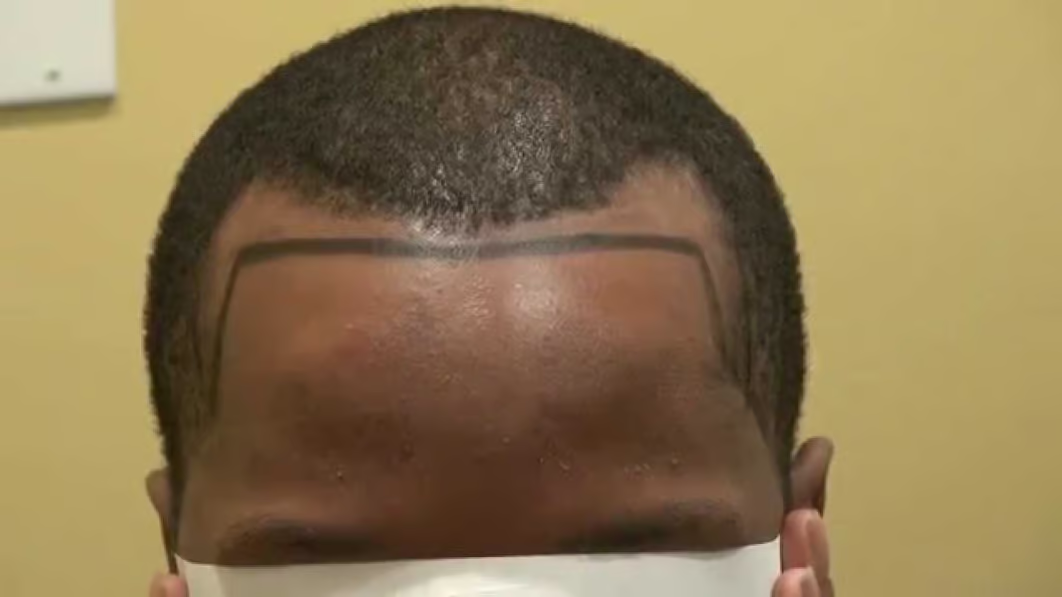
For men, one of the earliest signs of androgenetic alopecia is a gradual retreat of the hairline at the temples, often creating an “M” shape across the forehead. For women, the first indicator is usually a broadening of the central hair part, making the scalp more visible, and the hair overall feels less dense and holds less volume. Finding very fine, wispy, or “baby” hairs falling out is a tell-tale sign of DHT shrinking the follicles. Hair loss accompanied by scalp inflammation or itching can signal a fungal infection or a scarring alopecia that needs immediate medical attention.
While you cannot stop the genetic clock, you can certainly buy yourself time and minimise environmental causes. For traction alopecia, style with care by avoiding pulling hairstyles, heavy extensions, and tight braids, opting instead for looser styles, and giving hair breaks between protective styling.
To fight telogen effluvium, it is vital to maintain a balanced diet, manage stress, ensure adequate sleep, and practise mindfulness, as addressing the root cause will naturally reverse this type of hair loss. For androgenetic alopecia, one can use over-the-counter treatments that can help stimulate hair growth and slow down thinning, though they must often be used indefinitely. Additionally, it is essential to ensure one is not deficient in key nutrients like zinc, iron, and vitamin D, as these are vital for the hair cycle.
For those who want to conceal or reverse their hair loss, there are several medical and cosmetic pathways. Medical interventions include finasteride (Propecia), a prescription pill for men that works by inhibiting the 5-α-reductase enzyme, thereby blocking the conversion of testosterone to DHT. It is highly effective at stopping progression and often causes some regrowth.
For alopecia areata, corticosteroids are used to suppress the immune system’s attack. The most definitive and permanent treatment is the hair transplant. Techniques like follicular unit extraction (FUE) involve surgically harvesting individual hair follicles from the back of the scalp and implanting them into the bald areas. The results are natural and long-lasting because the transplanted follicles retain their resistance to balding. It is, however, vital to consult a qualified medical professional before taking any pill or embracing any medical procedure.
For non-surgical solutions, scalp micropigmentation (SMP) involves tattooing pigment onto the scalp to replicate the look of a closely shaven head of hair and provides a permanent “buzz cut” look, while modern wigs and hair systems offer excellent non-invasive coverage.
For many, the ultimate solution to baldness is acceptance. Confidence and a stylish, clean-shaven head can be a powerful aesthetic choice, turning a source of worry into a source of strength. And understanding that hair loss is a natural biological process affecting most people is the first step to feeling comfortable in your own skin.
Ojenagbon, a health communication expert and certified management trainer and consultant, lives in Lagos.
In this article