
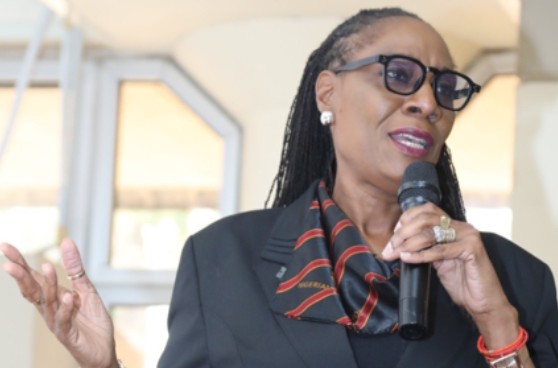
The Director-General of the Nigerian Law School, Dr Olugbemisola Titilayomi Odusote, has warned universities against admitting Law students beyond quotas approved by the Council of Legal Education, saying the practice is contributing significantly to the growing backlog of graduates awaiting admission into the Nigerian Law School.
Odusote also cautioned influential Nigerians against mounting pressure on the Nigerian Law School to accommodate graduates of universities that knowingly exceeded their approved admission capacities merely because their children, relatives or constituents are affected.
She spoke while presenting the report of the Council of Legal Education and the Nigerian Law School at the Annual General Meeting of the Nigerian Bar Association in Port Harcourt, Rivers State.
The Director-General said universities must take responsibility for complying with their approved Law admission quotas, stressing that the Nigerian Law School cannot continuously be expected to absorb numbers substantially above what had been approved for individual institutions.
According to her, the number of Law graduates seeking entry into the professional training programme must be managed against the actual carrying capacity of the Nigerian Law School, including available classrooms, accommodation and other facilities.
She said the Council of Legal Education has authority to sanction institutions that violate approved quotas and was already exercising that regulatory responsibility.
“The Council of Legal Education has the power to sanction, and we are sanctioning,” Odusote said.
She explained that the problem of universities exceeding admission quotas had become widespread and was one of the factors responsible for the backlog experienced by Law graduates seeking admission into the Nigerian Law School.
Odusote said the situation should not subsequently be presented as a failure of the Law School when universities had admitted students substantially beyond the numbers allocated to them.
She also disclosed that proper planning was sometimes complicated by universities failing to provide sufficiently accurate information about the number of students they had graduated and who would consequently be seeking admission into the Law School.
According to her, knowing the actual number of affected graduates is necessary to enable the Nigerian Law School plan effectively for any backlog.
She urged parents and guardians intending to enrol their children to study Law to conduct proper due diligence before accepting admission offers, particularly by confirming that the university is approved to offer Law and determining the admission quota allocated to its Faculty of Law.
Odusote suggested that parents should not wait until their children had completed university education before discovering that the institution had exceeded its approved quota, potentially leaving the graduates waiting for admission into the Nigerian Law School.
She invoked the principle of caveat emptor, stressing the importance of making necessary enquiries before accepting an offer to study Law.
“As responsible parents, we need to make our findings to investigate to be sure that the university you want to send your student, your child to, is accredited by the Nigerian Law School,” she said.
The Director-General further cautioned highly placed individuals against attempting to use their positions or influence to secure Nigerian Law School admission for affected graduates when the underlying university had exceeded its quota.
Her position was that intervention on behalf of affected universities would not address the structural problem created by institutions admitting more Law students than the number authorised by the Council of Legal Education.
The concerns come amid longstanding complaints within the legal profession about universities exceeding the admission quotas prescribed for their Law faculties.
Former NBA President Mazi Afam Osigwe, SAN, had also raised concerns in 2025 about universities admitting Law students substantially beyond their approved quotas, warning that the practice was placing considerable pressure on the Nigerian Law School.
The Council of Legal Education maintains institution-specific admission quotas for accredited Law faculties across the country, with the permitted numbers varying according to staffing, infrastructure and other accreditation requirements.
The Council has also recently demonstrated its willingness to impose sanctions for regulatory breaches. At its August 13, 2026 meeting, the CLE placed Atiba University, Oyo State, under a 10-year moratorium after citing breaches of its regulatory requirements, while approving five other universities to commence Law programmes with an initial quota of 50 students each.
Beyond the admission quota controversy, Odusote told the NBA AGM that the Nigerian Law School was confronting increasing pressure arising from the overall number of Law graduates being produced by Nigerian universities.
Although the institution now operates several campuses across the country, she said limitations in classrooms, accommodation and other facilities continue to constrain capacity.
She maintained that collaboration involving the Council of Legal Education, universities, the NBA and other stakeholders was necessary if Nigeria was to broaden access to legal education without compromising the quality of professional training.
Odusote, who formally assumed office in January 2026 as the 10th and first female Director-General of the Nigerian Law School, said the institution was building on its established traditions while responding to new realities confronting the legal profession. The Nigerian Law School also officially identifies her as its first female Director-General.
She told the meeting that following her appointment, the institution began implementing a programme of action anchored on what she described as the “ARISE mantra.”
“Following my appointment as the 10th Director-General of the Nigerian Law School, we started a programme of action with the ARISE mantra,” she said.
“The essence of the ARISE mantra is to ensure that the Nigerian Law School is a modern institution that sets the highest standards of legal education and vocational training globally.”
According to Odusote, the reform initiative is aimed at producing ethically grounded and professionally competent lawyers capable of responding to challenges both within Nigeria and internationally.
She said the institution would continue reviewing its curriculum as developments in technology and professional practice create new expectations for lawyers.
During discussions on her report, lawyers raised concerns about whether Nigerian Law School training adequately reflects emerging developments such as artificial intelligence and other technologies transforming legal practice.
Odusote responded that curriculum review was continuous but stressed that the Nigerian Law School, whose vocational programme lasts only a limited period, could not single-handedly remedy every deficiency in the education of Law graduates.
She said universities, the Nigerian Law School and practising lawyers must share responsibility for producing lawyers capable of meeting contemporary professional demands.
She also complained that some lawyers undermine professional standards taught at the Law School by telling students, after graduation or during practical training, to disregard aspects of what they were taught.
The Director-General said professional ethics, appropriate dressing, practical competence and other soft skills taught at the Nigerian Law School should instead be reinforced by members of the Bar.
Odusote maintained that the institution remained committed to strengthening Nigerian legal education, preserving the positive traditions established by previous administrations and equipping future lawyers with the ethics, knowledge and practical skills necessary for a rapidly changing legal environment.
But she stressed that addressing the mounting pressure on the Nigerian Law School must begin from the universities themselves — particularly through strict compliance with the Law admission quotas approved by the Council of Legal Education.
She commended NBA President Mazi Afam Osigwe, SAN, members of the National Executive Council and the conference organisers for creating a platform for engagement among institutions and stakeholders concerned with legal education, the legal profession and society.
The Director-General described the conference theme as timely, saying it reflected the responsibility of the Council of Legal Education and the Nigerian Law School to overcome longstanding limitations and strengthen professional legal training.
In this article