
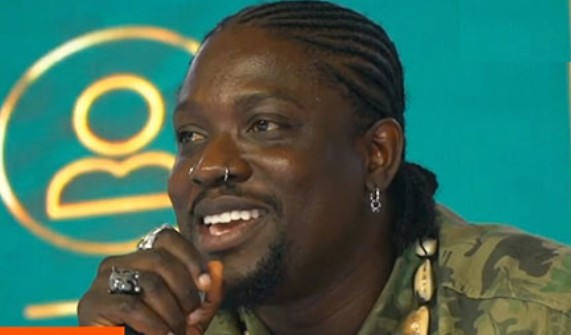
Controversial social media commentator Martins Vincent Otse, popularly known as VeryDarkMan (VDM), has called on the Federal Government to consider making it easier for law-abiding Nigerians to protect themselves, including through legal access to firearms,
arguing that the country’s police and military personnel are too few to adequately protect a population of more than 200 million people.
VDM made the call on Tuesday while speaking as a panellist at the ongoing 66th Annual General Conference of the Nigerian Bar Association (NBA) in Port Harcourt, Rivers State, during discussions on Nigeria’s worsening security challenges.
According to him, the numerical strength of the country’s security agencies makes it unrealistic to expect police and military personnel to be physically available to protect every citizen.
“They need to make provisions for citizens to protect themselves. Make it easy for us to get guns because right now they are understaffed. They can’t protect everybody,” he said.
VDM questioned the capacity of the existing security architecture to effectively police such a large population.
“How many are there? The police and the military are not up to a million protecting over 200 million people,” he said.
While advocating greater capacity for citizens to defend themselves within the law, VDM also acknowledged the importance of the security agencies and argued that improving the welfare of personnel should form a central part of any serious attempt to address insecurity.
“Until we take care of them properly, they will keep on turning on us,” he said.
His remarks came during a broader discussion on security-sector welfare, accountability, institutional weaknesses and the resources available to agencies combating kidnapping, banditry, communal violence and other forms of violent crime.
A police representative on the panel agreed that better welfare could improve morale and motivate officers to perform their duties more effectively.
The officer, however, stressed that increased funding alone would not be sufficient without stronger accountability mechanisms governing how resources allocated to security agencies are spent.
Particular attention was drawn to procurement, with the officer calling for greater transparency in government purchasing processes so that funds meant for equipment, welfare and operational needs reach their intended purposes.
The discussion subsequently turned to the security situation in rural communities and the movement of armed groups across different parts of the country.
VDM spoke about Fulani communities and what he described as their extensive communication networks, arguing that such networks could potentially be harnessed for intelligence gathering and the fight against insecurity.
He claimed that information could travel rapidly across communities and even across national borders through informal networks.
VDM also sought to distinguish between Fulani residents living peacefully in Benue State and individuals he alleged travelled into communities from outside the state to carry out attacks.
“The Fulani in Benue don’t attack the people in Benue. The Fulanis that come to attack are Fulanis from outside,” he said.
He further made allegations concerning the movement of illegal firearms through forest routes across several states.
VDM claimed that persons familiar with bush routes were being used to move weapons and other materials away from formal security checkpoints.
“The guns we are talking about are only with one ethnic group that knows the bushes more than everybody — Fulanis,” he said.
He also alleged that corrupt government officials sometimes facilitated the movement of firearms and money through such routes.
The claims concerning the ethnic identity of persons moving weapons, the origin of alleged attackers and the involvement of government officials were presented by VDM as his own assertions at the conference and were not established as findings of any court or official investigation in the material available.
His comments add to a wider debate over how Nigeria should respond to persistent insecurity, including whether security agencies require increased manpower and funding, whether communities should have greater responsibility for local protection and how authorities can prevent illegal weapons from circulating across the country.
Nigeria continues to face security challenges ranging from kidnapping and banditry to terrorism, communal attacks and other forms of armed violence, placing significant pressure on the police, military and other security institutions.
VDM’s central argument before the lawyers was that improving security personnel welfare and accountability should go hand in hand with reconsidering how ordinary citizens can legally protect themselves where the state is unable to provide immediate protection.
For him, the present security manpower deficit makes the issue unavoidable: “They can’t protect everybody.”
In this article