
By Emmanuel Agherario
Digital lending industry has reached another defining moment. Following the recent judgment of the Federal High Court delivered on Monday, 20 July 2026, by Hon. Justice A. L. Allagoa of the Federal High Court, Lagos in Suit No. FHC/L/CS/760/2026, Wireless Application Service Providers Association of Nigeria Ltd/Gte (WASPAN) v. Federal Competition and
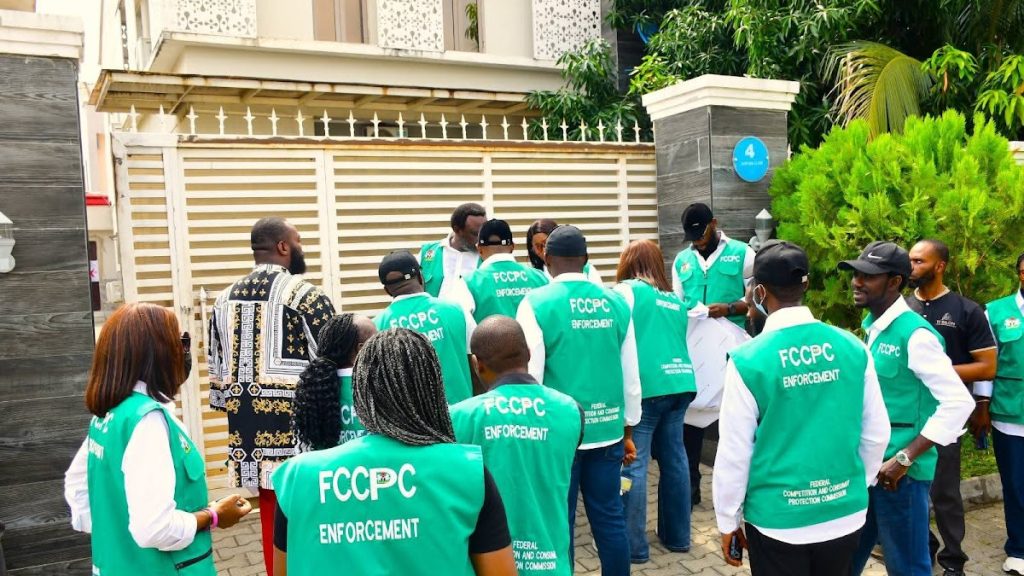
Consumer Protection Commission (FCCPC) affirming the validity of the Digital, Electronic, Online or Non-Traditional Consumer Lending Regulations, 2025 (DEON Regulations), the Federal Competition and Consumer Protection Commission (FCCPC) has announced the immediate resumption of enforcement activities.
For many, the announcement appears to settle the long-running debate over the FCCPC’s authority to regulate digital lenders. Yet, from a legal and commercial perspective, the story may only be entering its next chapter. Within 24 hours of the judgment, the Wireless Application Service Providers Association of Nigeria (WASPAN) filed a Notice of Appeal alongside a Motion for Injunction Pending Appeal, seeking to halt the FCCPC’s regulatory reach over telecommunications-based value-added service providers.
Here is an analysis of how a battle over airtime credit and loan app oversight has morphed into one of the most consequential legal disputes over regulatory jurisdiction in Nigerian commercial history.
The Background
1. Statutory Context: The Rise of DEON Regulations
Over the past decade, Nigeria’s retail credit sector has undergone a massive digital transition. While fintech applications expanded access to micro-credit, the rapid growth brought significant consumer protection risks ranging from predatory interest rates and unauthorized data scraping to aggressive debt-recovery methods.
In response, the FCCPC issued the DEON Regulations 2025 to establish mandatory registration, data privacy compliance, and transparent interest disclosures across all non-traditional credit platforms.
The friction arose because the DEON Regulations explicitly extended to Value-Added Service (VAS) providers who offer Airtime Credit Services (ACS) and emergency data lending. WASPAN whose members operate primarily under licenses granted by the Nigerian Communications Commission (NCC) under the Nigerian Communications Act, 2003 (NCA) argued that credit extended via airtime falls under the exclusive regulatory domain of telecom laws, not general consumer protection rules.
2. The Trial Court Judgment: WASPAN v. FCCPC
In April 2026, WASPAN instituted an action via Originating Summons (Suit No. FHC/L/CS/760/2026) at the Federal High Court in Lagos, challenging the statutory validity of the DEON Regulations. Upon being served with an interim restraining order, the FCCPC suspended enforcement of the regulations in compliance with the rule of law.
On July 20, 2026, Justice Ambrose Lewis-Allagoa delivered a judgment dismissing WASPAN’s suit in its entirety and discharging the interim order.
Key Determinations of the Trial Court:
Economy-Wide Jurisdiction: The court held that under Section 2(1) of the Federal Competition and Consumer Protection Act, 2018 (FCCPA), the FCCPC possesses an overarching, economy-wide mandate to regulate competition and protect consumer welfare across all sectors.
Concurrency over Displacement: Rejecting WASPAN’s argument that telecom operators are exempt from FCCPC oversight, the court established that sector-specific laws (like the NCA 2003) do not displace the general consumer protection powers of the FCCPC. Concurrency means co-existence, not exclusion.
Absence of Licensing Powers: Justice Lewis-Allagoa acknowledged that while the FCCPC lacks the legal authority to grant, suspend, or revoke telecom licenses a power strictly reserved for the NCC requiring compliance with consumer protection rules does not amount to issuing an operating license.
Following the ruling, the FCCPC announced that the legal impediment halting enforcement was removed, declaring the DEON Regulations fully operational and operationalized across all digital lending channels.
3. The Counter-Strike: WASPAN’s Appeal to the Court of Appeal
Unwilling to concede, WASPAN, through its legal team led by Oluwakemi Pinheiro, SAN, filed a Notice of Appeal on July 21, 2026, advancing nine grounds of appeal alongside a Motion for Injunction Pending Appeal.
WASPAN’s appeal presents several crucial arguments that question the coherence of the lower court’s ruling:
Key Pillars of WASPAN’s Appellate Challenge:
Misinterpretation of Section 2(1) of the FCCPA: WASPAN argues that the trial court ignored the critical qualifying phrase in Section 2(1) “as may be indicated otherwise.” They contend that Section 90 of the NCA 2003 explicitly vests exclusive jurisdiction over competition and consumer protection within telecommunications in the NCC, serving as a direct statutory exception to the FCCPA.
Internal Inconsistency in the Ratio Decidendi: The appellant argues that the trial court’s judgment contains a fundamental logical conflict: having held that the FCCPC lacks statutory power to license or assume NCC functions, it nevertheless upheld Paragraph 7 of the DEON Regulations. Paragraph 7 mandates that VAS providers obtain approval from the FCCPC before offering credit services, a requirement WASPAN argues is functionally indistinguishable from a licensing condition.
Overreach of Section 163 Rule-Making Powers: The appeal contends that Section 163 of the FCCPA does not grant the Commission unfettered power to issue subsidiary legislation that encroaches upon commercial activities strictly governed by other statutory bodies.
Constitutional Rights & Autonomy: WASPAN invokes Section 40 of the 1999 Constitution (as amended), contending that subjecting telecom operators to double-layered regulatory approvals unlawfully curtails their freedom of contract and commercial association.
Administrative Law Analysis: Regulatory Supremacy vs. Co-Regulation
The core issue dividing the FCCPC and WASPAN is a classic administrative law question: Does a general, cross-sectoral regulator yield to a specialized sector regulator when a product crosses boundary lines?When an airtime service provider advances ₦500 worth of talk time or data to a subscriber with a covenant to repay at a later date subject to a service fee, the transaction carries the legal characteristics of a consumer credit agreement. From the FCCPC’s perspective, the nature of the transaction dictates the regulatory framework.
Conversely, WASPAN argues that because the delivery channel, infrastructure, and core business are telecommunications-based, forcing operators to register with two distinct Federal agencies creates regulatory friction, double taxation, and jurisdictional confusion.
The Motion for Injunction Pending Appeal
Alongside its appeal, WASPAN filed a motion seeking an injunction to restrain the FCCPC from enforcing the DEON Regulations against its members while the appeal is heard. Under Nigerian jurisprudence (Jadesimi v. Okotie-Eboh), courts consider whether an injunction is necessary to preserve the res (the subject matter) and prevent an appellate judgment from being rendered nugatory. However, courts remain hesitant to enjoin statutory bodies executing public interest enforcement (Governor of Oyo State v. Aksal Products Ltd).
CONCLUSION
The FCCPC’s court victory is undoubtedly significant. It reinforces the Commission’s role in protecting consumers within Nigeria’s digital lending ecosystem and provides a judicial endorsement of its regulatory framework at first instance. However, from a legal standpoint, this is unlikely to be the final word with WASPAN appeal, the Court of Appeal will have an opportunity to consider the important questions surrounding the scope of the FCCPC’s statutory powers and the interaction between consumer protection regulation and sector-specific regulatory mandates.
Until the Court of Appeal rules on WASPAN’s motion for an injunction or delivers its final verdict, digital lending platforms and telecom value-added service providers must operate within an environment where full compliance with the DEON Regulations remains legally enforceable.
References
Wireless Application Service Providers Association of Nigeria Ltd/Gte (WASPAN) v Federal Competition and Consumer Protection Commission (FCCPC) (Unreported, Suit No FHC/L/CS/760/2026, Federal High Court Lagos Judicial Division, delivered 20 July 2026).
Digital, Electronic, Online or Non-Traditional Consumer Lending Regulations 2025.
WASPAN v FCCPC (Notice of Appeal, Court of Appeal Lagos Judicial Division, filed 21 July 2026).
Nigerian Communications Act 2003, cap N97, Laws of the Federation of Nigeria (LFN) 2004.
Federal Competition and Consumer Protection Act 2018, s 2(1).
Constitution of the Federal Republic of Nigeria 1999 (as amended), s 40.
Jadesimi v Okotie-Eboh [1986] 1 NWLR (Pt 16) 264.
Governor of Oyo State v Aksal Products Ltd [1990] 4 NWLR (Pt 147) 704.
In this article