
By J.K. Randle
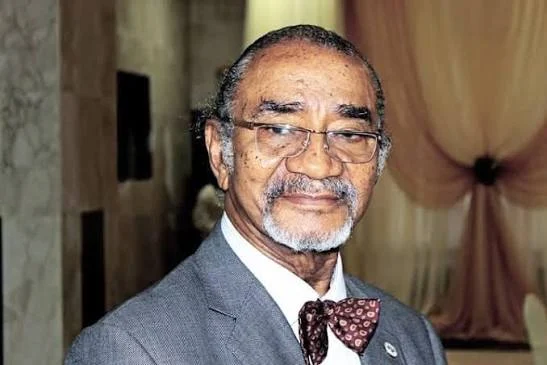
The funeral service for the late Professor J.T.K. Duncan was held on Thursday, April 23, 2026, at the Church of Divine Mercy, Lekki, Lagos. He was aged 95.
The following day, the funeral service for late Professor J.T. Da Rocha Afodu was held at Holy Cross Cathedral, 14 Catholic Mission Street, Lagos. He was aged 89.
The mass was conducted by His Grace, Most Rev. Dr Adewale Martins, the Archbishop of the Catholic Archdiocese of Lagos.
The two professors were truly titans of the medical profession. Their respective academic/professional achievements were as superlative and exceptional as would command respect anywhere in the world. They were rare gems. Indeed, they were irreplaceable icons.
What was truly remarkable was that both of them were born and bred within the vicinity of Campos Square, Lagos, which used to be a sand-filled football pitch when Lagos was a colony (of the British Government). At that time, Lagos was administered under several area councils, with their headquarters at Lagos Area Council, Catholic Mission Street – just across the road from Holy Cross Cathedral.
Unlike what now prevails, to be an “Area Boy” was a badge of honour. It meant that you were from a good home and your pedigree/identity was known to all. Besides, you would have distinguished yourself on the football pitch, where everyone chased the ball with bare feet in addition to doing well at school. In essence, you were destined for a future driven by high expectations and rugged pursuit of success – by dint of hard work (combined with playing football and participating in other sports). Character and integrity were taken for granted as essential ingredients of the communal DNA.
Both Duncan and Dan Rocha-Afodu progressed through teenage and adulthood with “Area Boy” as their compass.
They never wavered. Neither did they disappoint their parents and their respective extended families – and indeed neighbours. They were bound to do well in life.
Professor J.T. Kofi Duncan grew up on Tokunbo Street. He was the eldest of seven children.
As for Da Rocha-Afodu, he was born on March 6, 1937, and died on January 15, 2026. His parents were Ladipo Mobolaji and Candida Adenike Afodu. His twin sister, Mrs Kehinde Somolu, is thankfully still with us. As “Taiwo”, he ranked as the fifth in the pecking order among his parents’ six children. He was only three years old when he lost his father, who was a pharmacist. He died in 1940 while travelling on a ship to the United Kingdom during the Second World War. It was from Strachan Street, Lagos that Mrs Afodu and her six children moved to live with her father Candido Da Rocha at “Casa d’Agua” (“Water House”) at Kakawa Street, Lagos.
Before we relish and savour what both Duncan and Da Rocha-Afodu had in common (apart from having “J.T.” in their initials), let us accord due recognition to the fact that Duncan made the right choice. He attended King’s College, Lagos before proceeding to the University of Ibadan and, thereafter, to the University of Cambridge.
Da Rocha-Afodu attended the “other school” – St. Gregory’s College, Obalende.
At the funeral reception held for Duncan at Harbour Point, Victoria Island, Lagos, in accordance with the tradition of King’s College, the old boys sang the school song: “Floreat Collegium” for the departed. Unfortunately, there were only a handful of old boys of King’s College around.
That was when the old boys of St. Gregory’s College pounced. They quickly assembled and sang the St. Gregory’s College school song: “There is a grand ol team to play for…….” in honour of Duncan, who never attended St. Gregory’s College! The excuse was that two of his brothers – John Kwamina and Ekow were old boys of St. Gregory’s College.
Ironically, they did not sing the school song at the funeral of Da Rocha-Afodu, who was at St. Gregory’s College from 1951 to 1956. He was a day student, and he was always chauffeur-driven to school in an American limousine (Pontiac) LG 3040. His grandfather, Candido Da Rocha, was arguably the richest man in Lagos at the time.
Indeed, on one memorable occasion, Da Rocha-Afodu arrived in the morning in his Pontiac, but in the afternoon, the chauffeur drove into the school compound in a brand new Jaguar to pick him up. Also, during the lunch break, a car would take him home to feed his grandfather’s pets and return him to school.
As for his sister, Kehinde, she attended Holy Child School, next door to St. Gregory’s College. She sat at the back of a Cadillac limousine while she was chauffeur-driven to school.
Taiwo was a brilliant student. Incidentally, his mother was exceptionally fond of me and made it known to all her six children. There was an almond tree in the garden she kept at “Water House”, and she would meticulously save the succulent fruits for me. Even after I had qualified as a chartered accountant and became a Partner at KPMG, she would remind me that if I ever needed money, she was there for me. I never asked, but I remain eternally grateful to her, nevertheless. I adored her. It was a complete surprise to learn that in her “Last Will and Testament”, she bequeathed farmland in Agege to me.
Perhaps I should add that Da Rocha-Afodu passed his final examination (Cambridge School Certificate) at St. Gregory’s College with flying colours. He was accorded the rare honour of being hired to teach science to students from Form 1 to Four in 1957. Unfortunately, there was a crisis. One of the students could not take a joke, which cast him as an “Ode” (fool). Rather than laugh it off, he was profoundly upset. He protested to the young science teacher (Mr Taiwo Da Rocha-Afodu), who warned the entire class to desist from calling the student an “Ode”. However, the students would not stop. Matters came to a head when the distraught student found a piece of paper with “Ode” written on it on his desk.
The teacher asked the entire class for the name of the culprit, but nobody owned up. At that point, young Da Rocha-Afodu, who was entirely perplexed and frustrated, reported the matter to the senior science master (Mr Michael Omolayole), who was in the midst of conducting a science examination. The senior teacher left the laboratory to intervene. The boy (Doherty) whose desk was directly behind the victim’s desk denied any knowledge. So also did the boy (Lawson) whose desk was to the left of that of the victim. There were three Lawsons in the school at the time – Kevin, Ben and one other. All the students were required to present their exercise books.
With considerable detective skills, Omolayole was able to match the piece of paper with “Ode” written on it with a page that had been torn out of one of the exercise books. It turned out that the culprit was the son of the headmaster of Holy Cross Primary School. The father was a stern disciplinarian. The son was in a panic that if the matter got to the ears of his father, the enraged father would literally cut off his son’s head rather than face the disgrace of having his son expelled from the school.
Anyway, to cut a long story short, the matter was duly reported to the Principal of St. Gregory’s College (Father Moran, an Irishman), who reluctantly agreed to impose a lenient punishment of suspension of two weeks from the school and grass cutting in the fields adjoining the school. That was when there was discipline. For the rest of his life, Taiwo Da Rocha-Afodu was the epitome of discipline.
Let us savour the similarities between Duncan and Da Rocha-Afodu. Both were medical doctors who trained in Britain. However, Duncan had six siblings – three boys and three girls.
Da Rocha had five siblings – two boys and three girls.
Both were brought up by their single parent (mother).
Besides, Tokunbo Street, Lagos, where Duncan grew up, is only about 10 minutes’ walk from “Water House”, Kakawa Street, Lagos, where Da Rocha-Afodu spent his childhood and adulthood.
Although Campos Square has always been the vortex and cauldron of politics – both in Lagos and in Nigeria, Professor Duncan and Professor Da Rocha-Afodu steered absolutely clear of politics.
However, during the “End SARS” October 8, 2020, protest against police brutality, Duncan was right there along with his children and grandchildren regardless of the risk of bullets – from the police and the army.
Both Duncan and Da Rocha-Afodu were exceptionally courteous in their dealings with fellow human beings – privately and publicly. They were in their element in the lecture theatre – Duncan was an expert in Radiology while Da Rocha specialised in surgery. They skillfully interjected serious topics with exhilarating humour that kept their students engaged, interested and invested in matters of life and death.
Permit me to share the following research by Harvard University:
“Harvard University Reveals the Secret to Raising Successful Kids”
“Harvard University has just established that giving your kids a better life or making them successful. You know what the greatest predictors have said. Harvard University conducted a 75-year study on whether your child is born to be successful. Harvard tracked children well into their adulthood to determine whether it is grades or being born to be successful. Children who were given chores make them successful and make them be responsible in future making them involve will make them successful and really help develop hard work and give them a sense of responsibility. Give them responsibility. I have to work hard; I have to do this, no matter who your parents are. Let them earn what you give them. Give them the life you have. Now the thinking is backwards because I am successful; I want my kids to be successful.
“If you truly love your kids, instil in them by giving them less. If you give them more, you are actually setting them up for failure in future. Otherwise, you spoil your children. But statistics now show that they are going to be a failure in the long run.”
Now we know why Duncan and Da Rocha-Afodu were so successful. We have been provided with a vital clue. Duncan (as Kofi, the eldest child) did a huge number of chores for his mum – including assisting her at night in her dress-making business to meet orders for delivery on the following day.
In the case of Da Rocha, as a lad he would first have to feed his grandfather’s menagerie of pets ……………………………before setting off for school.
What is fascinating is that I reviewed Duncan’s books: “Milestones; and “Reflections at Eighty”.
He was truly an ambassador and advertisement for the value system that prevailed in Lagos. We had every reason to be proud to be “Area Boys” because our fathers (particularly my dad, Chief J.K. Randle, Lisa, (Prime Minister of Lagos) took keen interest in the football matches played at Campos Square. At the end of the match, gifts (soft drinks and ice cream) would be distributed, but kids from the other areas would be served first. Thereafter, the Area Boys would take their turn. That was sportsmanship!!
Perhaps I should add that other parts of Lagos produced “Area Boys”, e.g. Alhaji Musliu Smith, who recently celebrated his 80th birthday. He was from Olowogbo/Offin Area. He joined the police and eventually became the Inspector-General.
Another “Area Boy” was Gasper Olanrewaju Animashaun from Isale-Eko/Onola Area. He will be eighty years old this week. He joined the Nigerian Army and rose to the rank of Major-General. He also served as Minister of Communications. I have a long list of other Area Boys who are thoroughly disgusted that in recent times, miscreants and thugs have hijacked the honorific of Area Boys and weaponised it to cause mayhem – not excluding extortion, “419” fraud, cultism and drug trafficking. Everything has been bastardised.
I must not forget to include the fantastic “Area Girls” such as Alhaja Lateefat Okunnu (nee Oyekan), who attended Methodist Girls High School, Yaba, followed by Queen’s College, Yaba, and, thereafter, the University College, Ibadan. She became a permanent secretary in Lagos State and served as the deputy governor of Lagos State.
There was also Bisi Gbadamosi (nee Animashaun) who, as a student at Methodist Girls High School, scored “A”s in all her subjects in the WAEC (West African Examination Council) examinations. She was for many years the principal of Ahmadiya Girls’ High School while her husband was the Principal of Ahmadiya Boys’ High School for 17 years.
Another exceptional “Area Girl” was Saidat Anibaba who was born at Tokunbo Street, Lagos and proceeded to Queen’s College, Lagos, where she recorded excellent results in the Cambridge Overseas School Certificate Examinations. In 1960, she graduated with a B.Sc. from the University of Ibadan and followed up with a PhD in 1963 from the University of London. She was married to Professor Abdul Fattah Mabadaje.
Back then in Lagos, most marriages were within the same Area – Area boys would marry Area girls!! As for Alhaji Femi Okunnu (SAN), who came all the way from Isale Eko Area to snatch Alhaja Lateefat Okunnu from Oke Popo Area, that is a subject for another day. Suffice to say that the bride was admonished: “Can you not find a suitable husband in the whole of Tokunbo Street?” The family house was at 109, Tokunbo Street (Okepopo Area).
Perhaps we should acknowledge some of the Area Boys who have departed. Mr Harry Lardner (SAN) entered King’s College, Lagos, where he was the school captain and proceeded to study law at St. John’s College, Cambridge University. Professor Monsuru Kenku attended Ahmaddiya College, Agege. He was born at Orduna Street, Lagos. He obtained a first-class degree in mathematics from the University of Ibadan and completed his post-graduate studies at Baliol College, Oxford University. Dr Gabi Ayodele Williams was from the Isale Eko Area. He attended Methodist Boys’ High School, Lagos before proceeding to St. Mary’s Hospital Medical School, London. He did postgraduate work at Johns Hopkins University School of Hygiene and Public Health, Baltimore, U.S.A. He retired as the Chief Medical Officer of Lagos State.
As for Engr (Dr) Randolph Ademola Adu, he was born at Tokunbo Street. From King’s College, Lagos, he proceeded to Harvard University, USA, and graduated in 1966 (civil engineering). His PhD thesis was titled: “Response and Failure of Structures under Stationary Random Excitation”.
The least we can do is to acknowledge that, as a backlash, all over Lagos the authentic Area Boys of yore are vigorously dusting up their credentials. At Eko Club, Surulere, we have the likes of Engineer Mutiu Gbajumo and Professor Olabode Leigh. Similarly, at Yoruba Tennis Club (“The Basilicca”), every Monday evening the Area Boys are very much around. I must confess that in recent times, the likes of Dr Femi Bucknor and Chief Lola Joseph have been conspicuously absent. On Tuesday afternoon, the Area Boys gather at the Metropolitan Club, Victoria Island.
On Friday evenings at the Boat Club, Awolowo Road (from 6 pm to midnight), Professor Theo Ogunbiyi, the retired surgeon – ex Gbamgbose Street, Lagos (Okepopo Area); Lagos Government School, Okesuna; St. Gregory’s College, Obalende and St. Catherine’s College, Oxford University would hold sway at the table reserved for unrepentant Area Boys. Flanking him would be none other than Prince Francis Awogboro, the insurance magnate – ex St. Paul’s School Yaba, St. Gregory’s College, Obalende, who became a “name” at Lloyds in London. He insists that his own Area is Ebute Metta!
In their midst would be Monsignor Babasia Akpalla; St. Gregory’s College ever ready to offer prayers for the salvation of Nigeria – a country where more people are in the casinos than in churches and mosques.
As for both Duncan and Da Rocha Afodu, they were “Area Boys’ with a sense of purpose. They were role models. They were very cerebral.
Randle, former President of the Institute of Chartered Accountants of Nigeria, writes from LagosTwo ‘Area Boys’ (1)
The funeral service for the late Professor J.T.K. Duncan was held on Thursday, April 23, 2026, at the Church of Divine Mercy, Lekki, Lagos.
He was aged 95.
On the following day, the funeral service for the late Professor J.T. Da Rocha Afodu was held at Holy Cross Cathedral, 14 Catholic Mission Street, Lagos. He was aged 89.
The mass was conducted by His Grace, Most Rev. Dr Adewale Martins, the Archbishop of the Catholic Archdiocese of Lagos.
The two professors were truly titans of the medical profession. Their respective academic/professional achievements were as superlative and exceptional as would command respect anywhere in the world. They were rare gems. Indeed, they were irreplaceable icons.
What was truly remarkable was that both of them were born and bred within the vicinity of Campos Square, Lagos, which used to be a sand-filled football pitch when Lagos was a colony (of the British Government). At that time, Lagos was administered under several area councils, with their headquarters at Lagos Area Council, Catholic Mission Street – just across the road from Holy Cross Cathedral.
Unlike what now prevails, to be an “Area Boy” was a badge of honour. It meant that you were from a good home and your pedigree/identity was known to all. Besides, you would have distinguished yourself on the football pitch, where everyone chased the ball with bare feet in addition to doing well at school. In essence, you were destined for a future driven by high expectations and rugged pursuit of success – by dint of hard work (combined with playing football and participating in other sports). Character and integrity were taken for granted as essential ingredients of the communal DNA.
Both Duncan and Dan Rocha-Afodu progressed through teenage and adulthood with “Area Boy” as their compass.
They never wavered. Neither did they disappoint their parents and their respective extended families – and indeed neighbours. They were bound to do well in life.
Professor J.T. Kofi Duncan grew up on Tokunbo Street. He was the eldest of seven children.
As for Da Rocha-Afodu, he was born on March 6, 1937, and died on January 15, 2026. His parents were Ladipo Mobolaji and Candida Adenike Afodu. His twin sister, Mrs Kehinde Somolu, is thankfully still with us. As “Taiwo”, he ranked as the fifth in the pecking order among his parents’ six children. He was only three years old when he lost his father, who was a pharmacist. He died in 1940 while travelling on a ship to the United Kingdom during the Second World War. It was from Strachan Street, Lagos that Mrs Afodu and her six children moved to live with her father Candido Da Rocha at “Casa d’Agua” (“Water House”) at Kakawa Street, Lagos.
Before we relish and savour what both Duncan and Da Rocha-Afodu had in common (apart from having “J.T.” in their initials), let us accord due recognition to the fact that Duncan made the right choice. He attended King’s College, Lagos before proceeding to the University of Ibadan and, thereafter, to the University of Cambridge.
Da Rocha-Afodu attended the “other school” – St. Gregory’s College, Obalende.
At the funeral reception held for Duncan at Harbour Point, Victoria Island, Lagos, in accordance with the tradition of King’s College, the old boys sang the school song: “Floreat Collegium” for the departed. Unfortunately, there were only a handful of old boys of King’s College around.
That was when the old boys of St. Gregory’s College pounced. They quickly assembled and sang the St. Gregory’s College school song: “There is a grand ol team to play for…….” in honour of Duncan, who never attended St. Gregory’s College! The excuse was that two of his brothers – John Kwamina and Ekow were old boys of St. Gregory’s College.
Ironically, they did not sing the school song at the funeral of Da Rocha-Afodu, who was at St. Gregory’s College from 1951 to 1956. He was a day student, and he was always chauffeur-driven to school in an American limousine (Pontiac) LG 3040. His grandfather, Candido Da Rocha, was arguably the richest man in Lagos at the time.
Indeed, on one memorable occasion, Da Rocha-Afodu arrived in the morning in his Pontiac, but in the afternoon, the chauffeur drove into the school compound in a brand new Jaguar to pick him up. Also, during the lunch break, a car would take him home to feed his grandfather’s pets and return him to school.
As for his sister, Kehinde, she attended Holy Child School, next door to St. Gregory’s College. She sat at the back of a Cadillac limousine while she was chauffeur-driven to school.
Taiwo was a brilliant student. Incidentally, his mother was exceptionally fond of me and made it known to all her six children. There was an almond tree in the garden she kept at “Water House”, and she would meticulously save the succulent fruits for me. Even after I had qualified as a chartered accountant and became a Partner at KPMG, she would remind me that if I ever needed money, she was there for me. I never asked, but I remain eternally grateful to her, nevertheless. I adored her. It was a complete surprise to learn that in her “Last Will and Testament”, she bequeathed farmland in Agege to me.
Perhaps I should add that Da Rocha-Afodu passed his final examination (Cambridge School Certificate) at St. Gregory’s College with flying colours. He was accorded the rare honour of being hired to teach science to students from Form 1 to Four in 1957. Unfortunately, there was a crisis. One of the students could not take a joke, which cast him as an “Ode” (fool). Rather than laugh it off, he was profoundly upset. He protested to the young science teacher (Mr Taiwo Da Rocha-Afodu), who warned the entire class to desist from calling the student an “Ode”. However, the students would not stop. Matters came to a head when the distraught student found a piece of paper with “Ode” written on it on his desk. The teacher asked the entire class for the name of the culprit, but nobody owned up. At that point, young Da Rocha-Afodu, who was entirely perplexed and frustrated, reported the matter to the senior science master (Mr Michael Omolayole), who was in the midst of conducting a science examination. The senior teacher left the laboratory to intervene. The boy (Doherty) whose desk was directly behind the victim’s desk denied any knowledge. So also did the boy (Lawson) whose desk was to the left of that of the victim. There were three Lawsons in the school at the time – Kevin, Ben and one other. All the students were required to present their exercise books.
With considerable detective skills, Omolayole was able to match the piece of paper with “Ode” written on it with a page that had been torn out of one of the exercise books. It turned out that the culprit was the son of the headmaster of Holy Cross Primary School. The father was a stern disciplinarian. The son was in a panic that if the matter got to the ears of his father, the enraged father would literally cut off his son’s head rather than face the disgrace of having his son expelled from the school.
Anyway, to cut a long story short, the matter was duly reported to the Principal of St. Gregory’s College (Father Moran, an Irishman), who reluctantly agreed to impose a lenient punishment of suspension of two weeks from the school and grass cutting in the fields adjoining the school. That was when there was discipline. For the rest of his life, Taiwo Da Rocha-Afodu was the epitome of discipline.
Let us savour the similarities between Duncan and Da Rocha-Afodu. Both were medical doctors who trained in Britain. However, Duncan had six siblings – three boys and three girls.
Da Rocha had five siblings – two boys and three girls.
Both were brought up by their single parent (mother).
Besides, Tokunbo Street, Lagos, where Duncan grew up, is only about 10 minutes’ walk from “Water House”, Kakawa Street, Lagos, where Da Rocha-Afodu spent his childhood and adulthood.
Although Campos Square has always been the vortex and cauldron of politics – both in Lagos and in Nigeria, Professor Duncan and Professor Da Rocha-Afodu steered absolutely clear of politics.
However, during the “End SARS” October 8, 2020, protest against police brutality, Duncan was right there along with his children and grandchildren regardless of the risk of bullets – from the police and the army.
Both Duncan and Da Rocha-Afodu were exceptionally courteous in their dealings with fellow human beings – privately and publicly. They were in their element in the lecture theatre – Duncan was an expert in Radiology while Da Rocha specialised in surgery. They skillfully interjected serious topics with exhilarating humour that kept their students engaged, interested and invested in matters of life and death.
Permit me to share the following research by Harvard University:
“Harvard University Reveals the Secret to Raising Successful Kids”
“Harvard University has just established that giving your kids a better life or making them successful. You know what the greatest predictors have said. Harvard University conducted a 75-year study on whether your child is born to be successful. Harvard tracked children well into their adulthood to determine whether it is grades or was born to be successful. Children who were given chores make them successful and make them be responsible in future making them involve will make them successful and really help develop hard work and give them a sense of responsibility. Give them responsibility. I have to work hard; I have to do this, no matter who your parents are. Let them earn what you give them. Give them the life you have. Now the thinking is backwards because I am successful; I want my kids to be successful.
“If you truly love your kids, instil in them by giving them less. If you give them more, you are actually setting them up for failure in future. Otherwise, you spoil your children. But statistics now show that they are going to be a failure in the long run.”
Now we know why Duncan and Da Rocha-Afodu were so successful. We have been provided with a vital clue. Duncan (as Kofi, the eldest child) did a huge number of chores for his mum – including assisting her at night in her dress-making business to meet orders for delivery on the following day.
In the case of Da Rocha, as a lad he would first have to feed his grandfather’s menagerie of pets ……………………………before setting off for school.
What is fascinating is that I reviewed Duncan’s books: “Milestones; and “Reflections at Eighty”.
He was truly an ambassador and advertisement for the value system that prevailed in Lagos. We had every reason to be proud to be “Area Boys” because our fathers (particularly my dad, Chief J.K. Randle, Lisa, (Prime Minister of Lagos) took keen interest in the football matches played at Campos Square. At the end of the match, gifts (soft drinks and ice cream) would be distributed, but kids from the other areas would be served first. Thereafter, the Area Boys would take their turn. That was sportsmanship!!
Perhaps I should add that other parts of Lagos produced “Area Boys”, e.g. Alhaji Musliu Smith, who recently celebrated his 80th birthday. He was from Olowogbo/Offin Area. He joined the police and eventually became the Inspector-General.
Another “Area Boy” was Gasper Olanrewaju Animashaun from Isale-Eko/Onola Area. He will be eighty years old this week. He joined the Nigerian Army and rose to the rank of Major-General. He also served as Minister of Communications. I have a long list of other Area Boys who are thoroughly disgusted that in recent times, miscreants and thugs have hijacked the honorific of Area Boys and weaponised it to cause mayhem – not excluding extortion, “419” fraud, cultism and drug trafficking. Everything has been bastardised.
I must not forget to include the fantastic “Area Girls” such as Alhaja Lateefat Okunnu (nee Oyekan), who attended Methodist Girls High School, Yaba, followed by Queen’s College, Yaba, and, thereafter, the University College, Ibadan. She became a permanent secretary in Lagos State and served as the deputy governor of Lagos State.
There was also Bisi Gbadamosi (nee Animashaun) who, as a student at Methodist Girls High School, scored “A”s in all her subjects in the WAEC (West African Examination Council) examinations. She was for many years the principal of Ahmadiya Girls’ High School while her husband was the Principal of Ahmadiya Boys’ High School for 17 years.
Another exceptional “Area Girl” was Saidat Anibaba who was born at Tokunbo Street, Lagos and proceeded to Queen’s College, Lagos, where she recorded excellent results in the Cambridge Overseas School Certificate Examinations. In 1960, she graduated with a B.Sc. from the University of Ibadan and followed up with a PhD in 1963 from the University of London. She was married to Professor Abdul Fattah Mabadaje.
Back then in Lagos, most marriages were within the same Area – Area boys would marry Area girls!! As for Alhaji Femi Okunnu (SAN), who came all the way from Isale Eko Area to snatch Alhaja Lateefat Okunnu from Oke Popo Area, that is a subject for another day. Suffice to say that the bride was admonished: “Can you not find a suitable husband in the whole of Tokunbo Street?” The family house was at 109, Tokunbo Street (Okepopo Area).
Perhaps we should acknowledge some of the Area Boys who have departed. Mr Harry Lardner (SAN) entered King’s College, Lagos, where he was the school captain and proceeded to study law at St. John’s College, Cambridge University. Professor Monsuru Kenku attended Ahmaddiya College, Agege. He was born at Orduna Street, Lagos. He obtained a first-class degree in mathematics from the University of Ibadan and completed his post-graduate studies at Baliol College, Oxford University. Dr Gabi Ayodele Williams was from the Isale Eko Area. He attended Methodist Boys’ High School, Lagos before proceeding to St. Mary’s Hospital Medical School, London. He did postgraduate work at Johns Hopkins University School of Hygiene and Public Health, Baltimore, U.S.A. He retired as the Chief Medical Officer of Lagos State.
As for Engr (Dr) Randolph Ademola Adu, he was born at Tokunbo Street. From King’s College, Lagos, he proceeded to Harvard University, USA, and graduated in 1966 (civil engineering). His PhD thesis was titled: “Response and Failure of Structures under Stationary Random Excitation”.
The least we can do is to acknowledge that, as a backlash, all over Lagos the authentic Area Boys of yore are vigorously dusting up their credentials. At Eko Club, Surulere, we have the likes of Engineer Mutiu Gbajumo and Professor Olabode Leigh. Similarly, at Yoruba Tennis Club (“The Basilicca”), every Monday evening the Area Boys are very much around. I must confess that in recent times, the likes of Dr Femi Bucknor and Chief Lola Joseph have been conspicuously absent. On Tuesday afternoon, the Area Boys gather at the Metropolitan Club, Victoria Island.
On Friday evenings at the Boat Club, Awolowo Road (from 6 pm to midnight), Professor Theo Ogunbiyi, the retired surgeon – ex Gbamgbose Street, Lagos (Okepopo Area); Lagos Government School, Okesuna; St. Gregory’s College, Obalende and St. Catherine’s College, Oxford University would hold sway at the table reserved for unrepentant Area Boys. Flanking him would be none other than Prince Francis Awogboro, the insurance magnate – ex St. Paul’s School Yaba, St. Gregory’s College, Obalende, who became a “name” at Lloyds in London. He insists that his own Area is Ebute Metta!
In their midst would be Monsignor Babasia Akpalla; St. Gregory’s College ever ready to offer prayers for the salvation of Nigeria – a country where more people are in the casinos than in churches and mosques.
As for both Duncan and Da Rocha Afodu, they were “Area Boys’ with a sense of purpose. They were role models. They were very cerebral.
Randle, former President of the Institute of Chartered Accountants of Nigeria, writes from Lagos
In this article