
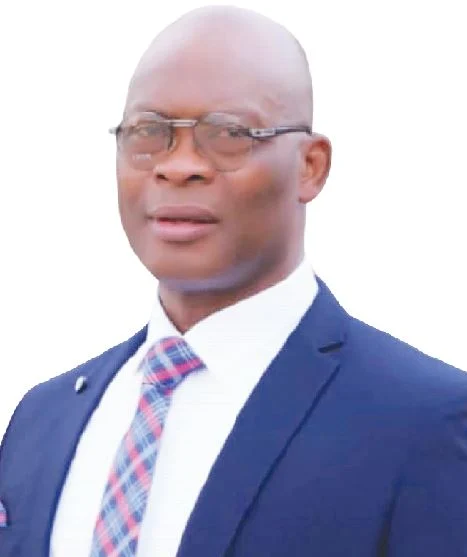
Chairman, Afero Commercial Farmers Association, Prince Wale Orekoya, speaks to Grace Edema on how over 50 farmers were displaced by the military from their 1,000 hectares of land in Afero, Itoikin community, Epe Local Government Area of Lagos State, which was allocated to them by the Lagos State Government
You are one of the farmers allegedly displaced from their farmland by the military. Can you shed more light on the incident?
Initially, we believed the government wanted to use our farmland for the Lagos State International Airport project. It seemed like public interest was being prioritised over ours, even though we are law-abiding citizens and commercial farmers.
At the time, the Lagos State Government took over the expanse of land we were using. Altogether, the farmers occupied about 1,000 hectares.
Personally, I had about 150 acres where I was engaged in livestock and crop farming. Some of us had already planted oil palm trees that were nearing maturity.
When the government, through the former governor, approached us, he appealed to us to release the land with a promise that we would be relocated and compensated.
True to his word, we were compensated and given another piece of land, although compensation is rarely ever adequate.
We relocated and continued our farming. We have been on the new land for about eight years now.
However, recently, the military came in and claimed ownership of the land. We tried to explain that the land was allocated to us by the Lagos State Government, but they insisted otherwise.
Before long, the situation escalated into chaos. There was shooting, and many of our animals—cows, goats, and chickens—were set loose. Some escaped, while workers fled for safety.
When the Lagos State Government officials attempted to intervene, they were denied access by the military. This situation has made it clear that the military is determined to take over the land.
We, the commercial farmers, are about 50 in this cluster. The military has already fenced off over 500 hectares of the land, including areas we had previously fenced ourselves.
What year did this incident occur?
It happened in December 2023.
You mentioned you were about to start harvesting at that time it happened. How true was that?
Yes, it was around the time we were about to begin harvesting.
How many were you on the farm, including workers?
Altogether, we were over 1,000 workers. Our operations covered processing, livestock rearing, poultry, piggery, fish farming, and tree crops. So, there were different departments.
You said you were about to harvest when the military came?
Yes, the military came suddenly. They didn’t consider that we were about to harvest, even though they could see our crops were ready. They started shooting and forced everyone to flee.
I wasn’t at the farm at the time; it happened on a Friday or Saturday. One of my workers called to inform me that the military had invaded the place.
I returned the next day and met the officer-in-charge, Brigadier General Ememe—I still remember his name clearly.
I approached him and presented my documents from the Lagos State Government showing that the land had been allocated to other farmers and me. But he said they had no business with us and directed us to take our complaints to the Minister of Defence in Abuja.
We contacted the Lagos State Government, but the military did not allow their officials to access the site. There have been several meetings between the state government and the military, but the military has refused to cooperate.
They insist they will not compensate us and that the Lagos State Government, which allocated the land to us, should be responsible for any compensation.
That situation led us to organise a peaceful protest. We held a rally in February 2024 on the premises of the Lagos State House of Assembly. We were addressed, and we also attended a hearing at the Lagos State House of Assembly.
What happened during the hearing?
During the hearing, the lawmakers blamed the Lagos State Government for failing to carry out due diligence before allocating the land to us. The government could not provide a strong defence, and in the end, nothing concrete came out of the process.
I believe the Assembly sent recommendations to the governor to address our situation, but since then, we have not heard anything.
We also approached the Multi-Door Courthouse, but the Lagos State Government did not cooperate, largely because they had no defence. They kept delaying the process until the case was eventually dismissed for lack of diligent prosecution on their part.
Following that, we wrote another letter. Some of our members are based in the diaspora—we are a diverse group, including lawyers, engineers, medical doctors, retired Commissioners of Police, and even a retired Brigadier General.
Unfortunately, the situation has taken a toll on us. We have already lost two members due to the hardship caused by this crisis, and some others are currently abroad receiving medical treatment.
With the elections approaching, we felt it was necessary to raise our voices again. That was why we held a press conference recently—to appeal to the Lagos State Government, especially Governor Babajide Sanwo-Olu, to look into our plight, show compassion, compensate us, and allocate another piece of land to us.
In total, we estimate our losses at over N3bn. This figure covers all the farmers involved, not just me. We have already submitted detailed documentation and valuations to the government. Unfortunately, we have received no response.
What has been happening on the land since 2023?
Nothing has been done on the land. The military simply fenced off the entire area.
They fenced the whole 1,000 hectares?
Yes, they fenced it completely—over 1,000 acres. It’s a very large expanse. Up till now, if you pass by the area, you will see that it remains fenced and unused.
Recently, they tried to negotiate with us, suggesting that we could return to the farm and operate there temporarily until they need the land again. But we rejected that idea. We cannot operate under such uncertainty.
How are we supposed to operate when, at any time, they can come in and take over the land again? There is no guarantee or security. That is what really happened. So, at this point, we are appealing to the Lagos State Government to intervene.
What is the Lagos State Government saying now? Have they made any offer?
No, they have not. A committee set up by the Lagos State Government, headed by the Attorney General, Lawal Pedro, made its recommendations to the governor about six months ago.
However, we have been told repeatedly that the governor has yet to review or act on the report. That is where things stand at the moment.
Do you know what the recommendations are?
No, they have not disclosed the details to us. We were only informed that recommendations had been submitted, particularly regarding compensation and possible relocation to another site within the same area.
How have your members been coping since then?
It has been extremely difficult. Some of our members in the diaspora had to return home, while others are relying on pensions—especially retired officers like former Commissioners of Police and other paramilitary personnel among us. Overall, it has been very tough on everyone.
What makes it more concerning is that this is happening at a time when the Federal Government is emphasising food security. In our case, we are not dealing with banditry or external threats—it is the government itself that has disrupted our activities.
What about the crops and animals on the farm?
We were not allowed to take anything. We were told we needed clearance from Abuja before we could even retrieve our property. It has been a very difficult situation.
As for the animals, many of them were left to roam. People were running for their lives during the incident, so there was no opportunity to secure them.
For instance, I personally had about 150 cows. We operated a ranch where buyers could come to purchase cattle, and I even had a slaughterhouse on-site.
But none of that mattered. The military did not show any concern—they simply took over the land. If you go there now, the entire place is fenced off and remains unused.
It has been nearly three years now, and nothing has been done on the land.
So, what happened to all the animals? For instance, those who had poultry—what became of them? Were they just left to roam the streets?
Yes! You know, with the gunshots, the animals became frightened. The entire place was thrown into chaos, and everything was left open. Many of the animals ran off in different directions.
What would you like to say to the government and the military?
The military has already told the Lagos State Government that there is nothing they can do on their part. They insist that it is the state government’s responsibility to compensate us since they were the ones who allocated the land to us in the first place.
I believe the Lagos State Government is already aware of this. If you search the land records, you will see that the area is designated as military land. It was allocated to us by the Lagos State Government, even though it reportedly belonged to the military since 1976.
When was the land allocated to you?
It was allocated to us in 2015.
So, what is your appeal to the Lagos State Government now?
Our appeal is to the Lagos State Government, especially Governor Babajide Sanwo-Olu, to have compassion on us. We are contributing to food security in the state and in the country, which is a critical priority at this time.
We are simply asking the governor to look into our case, approve compensation, and facilitate our relocation to another piece of land.
Do you think relocation is still possible?
Yes, it is possible. The land we are currently on was not originally purchased from the Lagos State Government—we bought it from the Agoro family. We had already started development and farming activities before the government’s involvement.
So, if the government cannot provide us with another piece of land, then they should compensate us adequately so we can acquire land elsewhere.
However, we believe there is still available land within that area that can be allocated to us for continued farming.
We were there for about eight years without any issue. Many of us had already made significant investments. For instance, I personally fenced about 120 acres of land to prevent encroachment.
You can imagine the cost of fencing over 100 acres today—it would run into hundreds of millions of naira. We had already spent substantial amounts developing the land.
The Lagos State Government was aware that the land belonged to the military, which raises questions about why proper steps were not taken earlier, such as engaging the military before allocating the land to us.
By the time the military eventually came to evict us, it was already too late. They did not even allow the Lagos State Government officials to access the site—up till now, they still cannot enter.
At one point, the state had to rely on drones just to monitor activities on the land. But by then, the damage had already been done—extensive losses had already occurred.
What are the implications of situations like this in a country like Nigeria, where farmers, many of them sole proprietors, are striving to produce food and contribute to the economy, only to have their efforts disrupted or destroyed?
The implication is clear—it will lead to food shortages. With food inflation already at about 35 to 40 per cent in the country, situations like this will only worsen it.
When farmers are displaced, it reduces food production. The few farmers who are actively producing are being forced out of the farmland, and that directly affects supply.
Beyond that, many people lost their jobs and sources of income. So, it’s not just about food availability—it also affects livelihoods.
Another major issue is financing. Many of us took loans to run our farms. For instance, I personally secured about ₦150m from a bank to support my operations. Some of our members also obtained loans from financial institutions and even from friends.
Now, the banks are threatening to seize the properties we used as collateral. We have submitted all these documents and evidence to the government.
The real problem is that the governor has not had the time to properly review our case or address it with the urgency and compassion it requires. Imagine being displaced for almost three years, unable to access your livelihood, while still facing family responsibilities and the harsh economic realities in the country.
That is why we are appealing to the Lagos State Government, through the governor, to urgently look into our situation and compensate us.
Time is also a factor. This administration is nearing its end, and if this issue is not resolved soon, it may become even more difficult for a new administration to take responsibility. They might ask why it was not addressed earlier.
It is important to note that it was under this same administration that the demolition and displacement occurred, so we believe it is only right for this government to resolve the matter.
I mean, we’ve been dealing with this for almost seven years now in total. During this administration, we believe the governor should resolve our situation before leaving office so that our efforts and investments will not be in vain.
After all, it was the Lagos State Government that originally allocated the land to us. Also, this is actually the second time something like this has happened to us.
When was the first time you faced a similar challenge?
The first time was when the government said it wanted to use the land for an international airport project. But up till now—over 10 years later—nothing has been done on that site.
They could have allowed us to continue our farming there. Then we were moved to the new location, which is where we are now facing this current problem.
This kind of instability is not good for business, and it is not good for the economy. When people who are trying to contribute to the state’s internally generated revenue are repeatedly displaced, it discourages investment and productivity. It is very unfortunate—very unfortunate.
In this article