
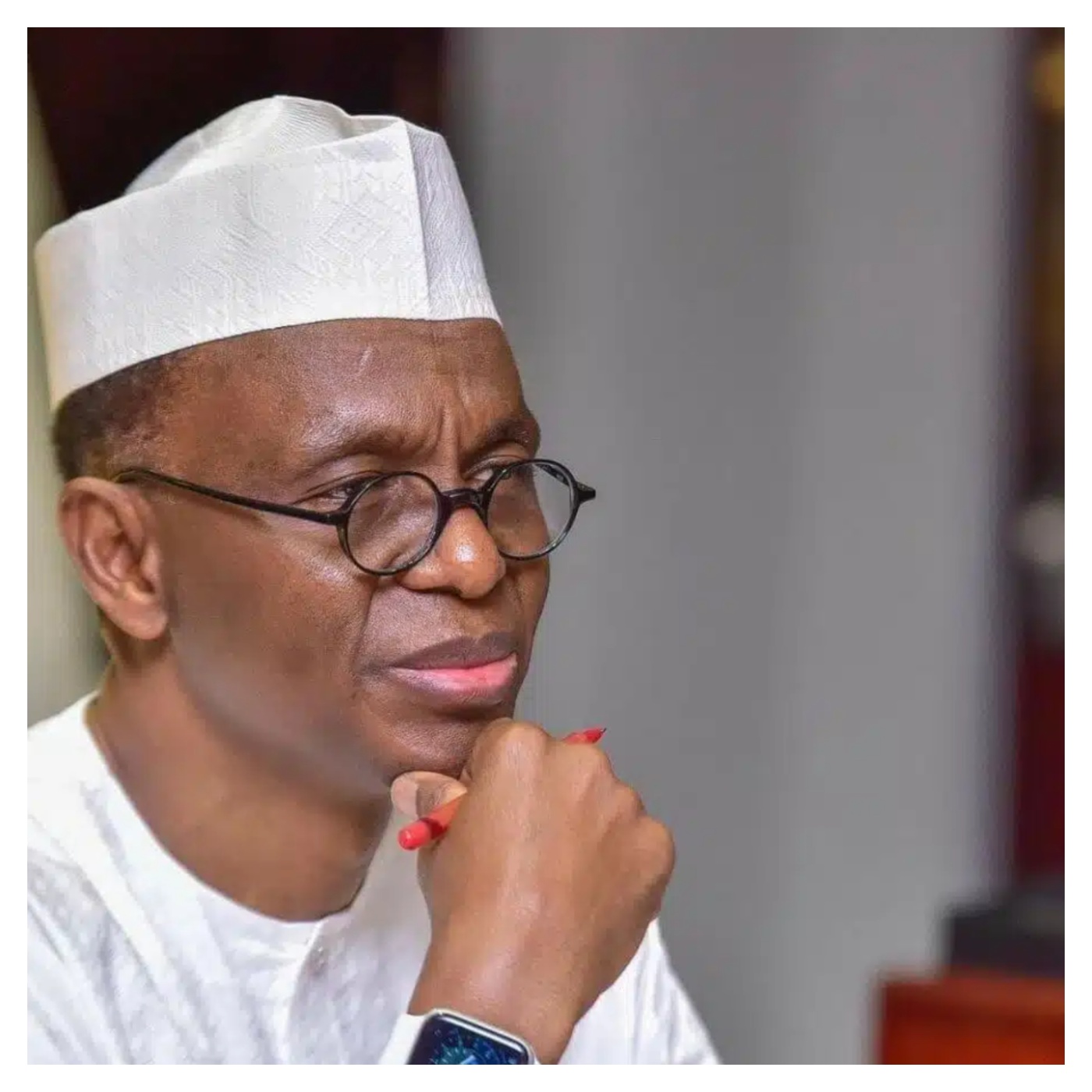
By Luke Onyekakeyah
The unfolding drama around el Rufai is not uncommon in the life and career of top Nigerian politicians. It is a harmless drama that comes and goes and life continues. There comes a time when the powerful politicians fall out with the powers that be, which in turn shakes them to make them stronger.
Nasir Ahmad el-Rufai, former Kaduna State Governor and political heavyweight, with large followership, has for some weeks now been in the news for the wrong reasons. Albeit, el-Rufai, the technocrat turned politician, has been in the limelight since 2003, when he was appointed Minister of the FCT (Abuja) under the Olusegun Obasanjo administration. The turn of events against him is not unconnected with him falling out with the President Bola Tinubu’s administration.
El-Rufai’s falling apart with Tinubu did not happen in one stroke. It built up through 2023 – 2025. It started with ministerial snub in August 2023, when Tinubu nominated him for a ministerial slot right after taking office, but the Senate declined to confirm him, citing an adverse DSS security report (details of which were never made public), but rumours claimed Kaduna unrest and asset controversy. El-Rufai felt betrayed, and abandoned in the cold. He was disappointed that the Tinubu camp did not fight hard enough for him
Then came the internal cracks within the ruling APC and the northern power bloc. El-Rufai, it would be recalled helped Tinubu win the 2023 elections using the northern Muslim-Muslim ticket. Whereas he expected major influence in post election, Tinubu leaned on other Kaduna power brokers and sidelined him. With this development, the outspoken el-Rufai started jabbing Tinubu’s economic reforms, including fuel subsidy removal, forex tinkering, etc, as botched anti-people policies.
Next, el Rufai shifted to full oppositions and began public criticism of Tinubu’s administration. By 2024, he was granting interviews calling Tinubu’s government ‘incompetent’. By 2025, he aligned with the emerging opposition coalitions involving Atiku Abubakar, Peter Obi in ADC platform, aiming at 2027. Following that, el-Rufai became a magnet for allegations – some probe, some political blackmail.
First, his role in the Abuja land/demolitions, when he was Minister of FCT (Abuja), (2003-2007). Allegations range from abuse of power, selective demolitions of opposition properties, illegal revocation of plots, of which he said he cleaned the Abuja Master Plan.
El-Rufai is also accused of corruption and self enrichment. Critics cite his unexplained wealth; contract awards to cronies in the Kaduna projects for which he has been investigated multiple times of which no major conviction has been made. Yet his opponents keep waving audit questions.
He is also accused of engaging in divisive and inflammatory rhetoric. Accused of sectarian language in Kaduna Muslim-Christian tensions; tweeting threats like “foreign interveners will return in body bag: Human rights group say his comments inflame violence, but his supporters say he’s just blunt.
There is also the Southern Kaduna killings and attacks: the locals accuse el-Rufai of inaction and bias. Critics alleged ethnic cleansing as bond its raided communities.
The Zaria massacre of 2015 following the Shi’a (IMM) clash was blamed on el-Rufai as governor. He was held accountable for state security coordination. The demolition of opposition buildings in Kaduna in 2017 was tagged as “authoritarian’’.
The fallout from the foregoing was the DSS memo to Senate alleging poor security assessment, which was used to block his ministerial nomination. No court charge or conviction but only political blackmail. No criminal conviction but a trail of accusations ranging from above of office, to rights violations, incitement, corruption whispers, power-drunk divider.
Inspite of the flury of allegations and blackmail, government hasn’t jailed or convicted el-Rufai, but he is being blocked, probed, harassed (Abuja airport incident), and politically slapped more often. A number of investigations/panels have been set up for him with no conviction yet. These include:
The FCT land probes: various panels reviewed Abuja demolitions/revocations where he faced questioning, but charge stuck.
Kaduna State Assembly/Auditors had dug into contracts and spending; critics raised queries, yet no court conviction.
Human-rights petitions: groups filed complaints over southern Kaduna killings, including IMN Zaria 2015. Investigations named state government but el-Rufai wasn’t personally prosecuted.
The indirect police/legal pressure: critics were arrested, buildings demolished under his watch – opponents flipped it, accusing him of bias, but the state didn’t turn around to arrest him.” After the 2023 fallout, APC Machinery sidelined him, but no EFCC/ICPC trial to date.
Having highlighted the background to el-Rufai’s present ordeal, I would, at this juncture, briefly look at the character of typical Nigerian politicians in order to know whether or not el-Rufai has gone off the track to act differently.
Typical Nigerian politicians act in a way not different from typical Nigerians – huge, diverse, exceptions galore. Some of the common threads include showcasing big personalities that go with big controversies. They portray larger–than-life figures. Many are loud, confident, and will never admit fault, even when central to national gossip.
They tangle up wealth and power. Many enter politics after amassing wealth by business, military, royalties. There is “godfather” dynamics. Some rule like feudal lords in states/LGA, often distributing largesse.
Ethnic-religious cards are on the table – identity politics is real. Many politicians mobilize tribe/region/religion even when it sparks tension. North/South, Christian/Muslim sensitive nerves are touched. They’ll touch these nerves, yet votes reward them for it.
Great rhetorics – promises are loud but delivery slow or non– existent. Grand speeches, social media savy but policy flops. Quits often legal cloud hovers over them. Most face graft/probe rumours but few serve jail because system is slow and corrupt and immunity helps. Few convicted ex-governors exist but the untouchable clout persists. Typical Nigerian politicians are influential, resilient and controversial.
Against the backdrop of the foregoing, it is pertinent to ask in what ways did el-Rufai deviate from the normal behaviour pattern of typical Nigerian politicians/governors/ministers. It is glaring that el-Rufai acted like any other politician and other peers. That being the case, if el-Rufai were to be crucified for what everyone and other politicians are doing, then there will be no exception; no politician would be spared. This is not to say that I am defending el-Rufai, but a statement of the obvious.
As a matter of fact, he has been in the good book of the government since 2003, when he was appointed Minister of the FCT (Abuja). He has remained as a strategic power broker in the north. He strategically contributed in bringing President Tinubu to power in 2023.
Trouble started when he was denied ministerial slot and sidelined in a government he helped to establish, which made him tend to align with the opposition ADC. Truth is if el-Rufai had remained in the APC, nobody would have touched him; all his ‘’sins’’ would have been forgiven like that of a host of others.
El-Rufai was picked and detained by the EFCC on February 17, 2026, over an alleged N432 billion corruption probe. He was later granted bail but was rearrested by the DSS. The DSS charged him for cybercrimes, alleging that he unlawfully wire tapped the phone communications of the National Security Adviser (NSA), Nuhu Ribadu.
Furthermore, the Independent Corrupt Practices and other Related offenses Commission (ICPC), took el-Rufai into custody, seeking to investigate him over allegations of money laundering and abuse of office. A court has ordered that he should be remanded in ICPC custody until March 19, 2026 pending his arraignment or release on administrative bail.
In all of this, due process should be followed in the prosecution. There is no need detaining el-Rufai illegally, indefinitely, as that would amount to persecution and witch-hunting. It is unfair to subject el-Rufai to punishment unduly, simply because he stepped on someone’s toes by switching party. Nigeria is not a one-party-state.
There are many politicians/ex-ministers and governors in the Tinubu government who have petitions and money laundering allegations hanging on their neck, who are not being detained or prosecuted because they switched party and joined the ruling APC. What kind of selective justice is that?
Nigeria should redeem its battered image. It is a case like el-Rufai’s, where justice is turned on its head that drags the country and its judiciary to the mud.
Dr Onyekakeyah, columnist is a public affairs commentator.
In this article