
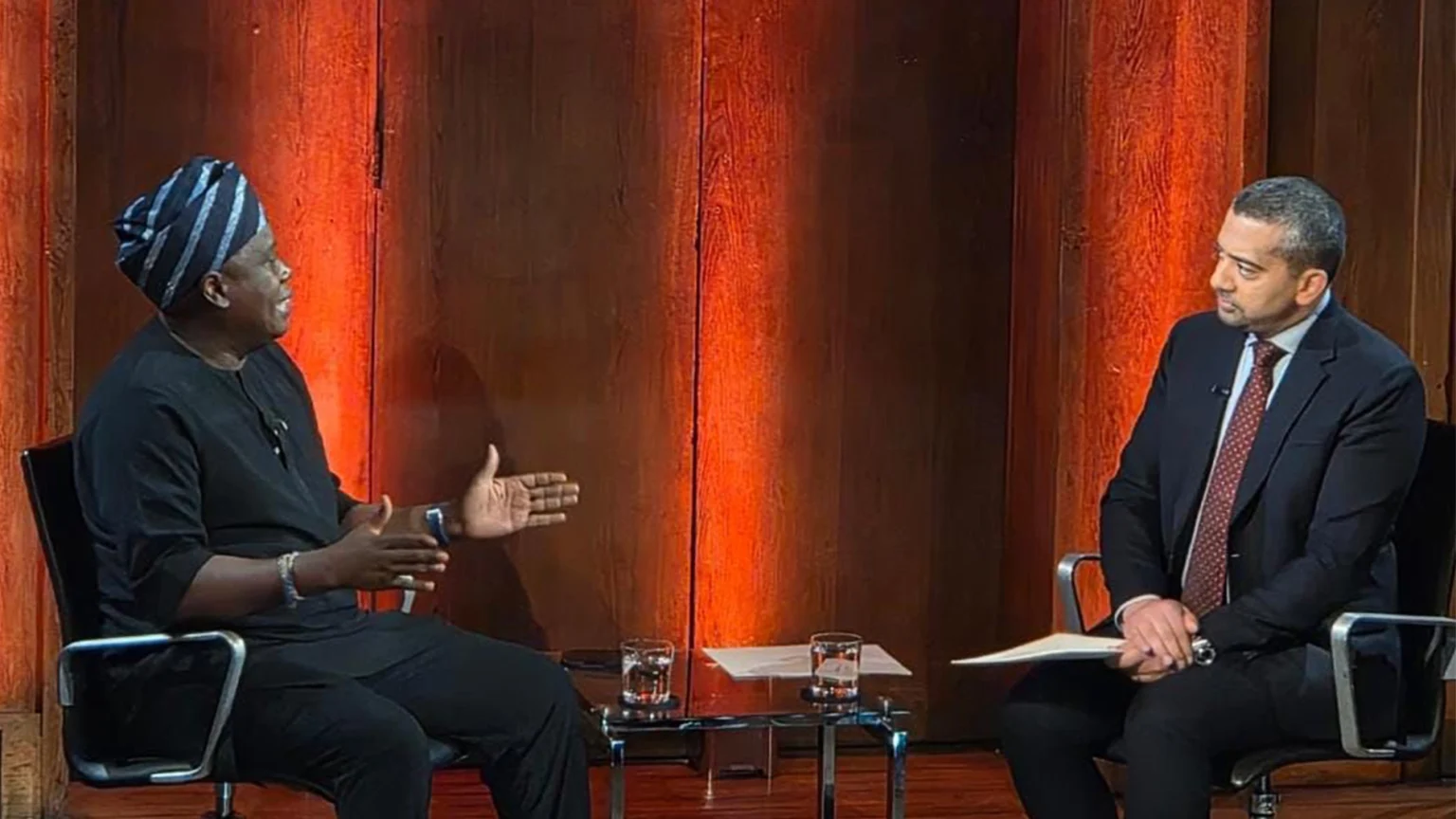
Special Adviser to the President on Media and Policy Communication, Daniel Bwala, during an interview with Al Jazeera’s Mehdi Hassan
Says Tinubu, not bothered about what is said about him
Half of Trump cabinet, criticised him
Presidential media aide, Daniel Bwala, has defended his controversial interview with Al Jazeera, insisting that the network never informed him beforehand that questions would focus on his past political statements about President Bola Ahmed Tinubu.
The interview, conducted by journalist Mehdi Hasan on Al Jazeera’s programme Head to Head, has generated widespread reactions on social media and in political circles.
The interview examined the performance of President Tinubu’s administration, particularly around issues of economic reforms, corruption allegations, and security challenges in Nigeria. However, a major moment of the discussion occurred when Hasan confronted Bwala with previous statements he made while he was in the political opposition, where he had sharply criticised Tinubu.
The clips and quotations presented during the programme quickly circulated online, prompting intense public debate.
In response to the backlash, Bwala released a statement defending his performance and accusing the programme of deviating from the agreed focus of the interview.
According to him, the programme’s producers had contacted him months earlier to discuss governance issues in Nigeria, including security, the economy, and corruption. He claimed that at no time during their communications did they mention that the interview would involve confronting him with past political remarks.
“Nowhere in our almost six months of communication did they mention that they were going to challenge my past,” Bwala said, arguing that if that had been the intention, the programme should have informed him so he could prepare a proper response.
Bwala further accused the programme of employing what he described as “opposition research-style journalism.” He alleged that some of the quotations read during the interview were inaccurate and suggested that others amounted to “outright fake news.”
Despite these criticisms, he maintained that he remained willing to appear on international media platforms to defend the policies and actions of the Nigerian government.
The presidential aide also addressed criticism over his previous statements against Tinubu, noting that such comments were made when he was part of the opposition.
According to him, political positions often change as alliances shift in democratic systems. He argued that it is common in politics for individuals who once criticised a leader to later work within that leader’s administration.
Bwala cited examples from international politics to support his argument, pointing out that several officials in United States President Donald Trump’s administration had previously criticised him before joining his government. He stressed that past political disagreements should not be interpreted as permanent hostility in the fluid environment of democratic politics.
The interview and Bwala’s subsequent reaction have triggered mixed responses from Nigerians online. While some supporters praised him for accepting a tough international interview to defend the government, critics argued that the questions about his past comments were legitimate and part of normal journalistic scrutiny.
Despite the controversy, Bwala insisted he holds no personal grievance against Hasan, describing him as one of the most formidable debaters in journalism. He also expressed openness to participating in another interview where the discussion would focus more directly on government policies and reforms.
In this article