
By Abiodun Ramon Oseni
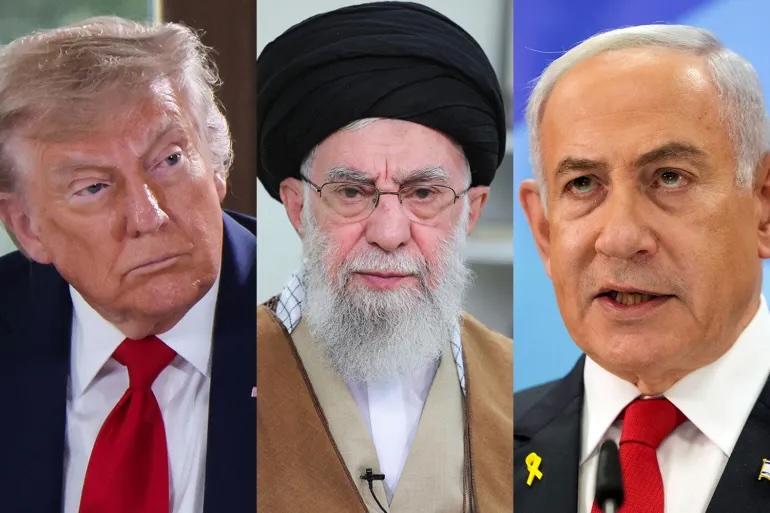
On May 8, 2018, President Donald Trump announced that the U.S. would withdraw from the Joint Comprehensive Plan of Action (JCPOA), commonly known as the “Iran Nuclear Deal.” The JCPOA has been replaced by a strategy of maximum pressure.
The agreement on Iran’s nuclear activities was established in July 2015 by Iran and the P5+1 (the five permanent members of the United Nations Security Council – China, France, Russia, the United Kingdom, and the United States – along with Germany) during President Barack Obama’s administration.
President Trump views the JCPOA as an unfavourable agreement. Part of this perspective is influenced by Israel’s interest in a conflict with Iran, with the support of the United States, as Israeli Prime Minister Benjamin Netanyahu is actively attempting to hinder diplomatic efforts.
Several political analysts have concluded that the United States operates as a foreign policy tool for Israel, while others believe U.S. actions are aimed at supporting Israel as a Middle Eastern ally.
The maximum pressure approach introduced a variety of sanctions on Iran, including secondary sanctions targeting any country that engages in trade with Iran.
This has triggered significant resistance from Iran, making it exceedingly difficult for President Trump to negotiate a deal resembling the JCPOA from which he withdrew during his first term.
The proposal put forth by President Trump included four key demands that provoked considerable opposition from Iran, starting with a complete halt to nuclear enrichment. Second, the limitation of Iran’s ballistic missile range to a level that does not threaten Israel. Third, the cessation of support for proxy groups such as Hezbollah, Hamas, Houthis (Ansar Allah) in Yemen, and other regional proxies, along with an end to the prosecution of protesters detained during the recent demonstrations in Iran.
Ultimately, it’s important to note that diplomacy hasn’t been fully explored, given the presence of these stipulations.
Additionally, Iran’s behaviours may play a role in the U.S. setting forth these four conditions, which many Global South nations have yet to recognise. This could be part of broader ambitions from Israel, which has turned diplomatic efforts into a series of body shots.
Nevertheless, both Iran and the United States continue to utilise the time available to enhance military preparedness and fortify their defences. It appears that conflict between the two countries is likely to occur soon. Iran has only consented to engage in discussions regarding its nuclear objectives.
Diplomatically, Iran shows a willingness to limit its nuclear ambitions to a level of peaceful use as outlined by the International Atomic Energy Agency (IAEA), similar to the framework established in the 2015 nuclear agreement (JCPOA).
This agreement stated that uranium enrichment for Iran was restricted to 3.67%, which is appropriate for civilian energy purposes, along with a capped stockpile.
Iran seeks this in exchange for relief from sanctions. The insistence on complete cessation of enrichment is part of the U.S. and Israeli maximum pressure campaign, which is simultaneously provoking strong resistance from Iran.
This includes demands for reducing the range of Iran’s ballistic missiles to a level that does not threaten Israel.
Furthermore, Prime Minister Netanyahu emphasised that any agreement should also cover Iran’s ballistic missile programme, referring to the 300-kilometre range limit established by the Missile Technology Control Regime (MTCR). This issue is complicated because Iran is not a member or signatory of the MTCR. Iran has made it clear that discussions regarding ballistic missiles are off the table.
The expectation for Iran to cease its support for proxies like Hezbollah, Hamas, and the Houthis (Ansar Allah) in Yemen, which Israel considers terrorist organisations, while Iran and its allies view them as part of the resistance axis, is also significant.
Ultimately, there are no absolute rights or wrongs in this situation, as there is no universally accepted definition of terrorism.
The demand for the release of protesters arrested during the recent demonstrations in Iran ranks as the least substantial among the four primary demands.
Some people think that the United States genuinely supports human rights, especially considering the oppressive regime in Iran. Others argue that the U.S. and Israel prefer their agents who disrupt the organic protests – sparked by economic strains due to U.S. sanctions – to avoid legal repercussions.
This viewpoint is supported by comments from former U.S. Secretary of State and CIA Director Mike Pompeo, who noted that Israeli intelligence (Mossad) operatives were involved in Iran during the large-scale anti-government demonstrations in early 2026.
Additionally, Scott Bessent, speaking at the Economic Club of Minnesota, remarked that “the Iranian economy is on the ropes,” acknowledging that the U.S. played a key role in creating the dollar shortages that incited the protests in Iran.
Nevertheless, some diplomatic efforts can effectively address this demand if both sides are committed to reaching a peaceful resolution.
It’s essential to highlight that President Trump’s maximum pressure strategy has prompted maximum resistance from Iran. Achieving regime change in Iran will not be an easy endeavour because Iran is not akin to Venezuela.
The recent 12-day war has demonstrated that Iran’s ballistic missiles possess greater accuracy and precision than many previously believed. The U.S. under President Trump tends to favour brief wars and military operations, as evidenced by the situations in Venezuela and Yemen.
There is no indication that any assaults on Iran would be quick, partly due to the involvement of other external players such as Russia, China, and North Korea.
Additionally, it’s worth noting that despite extensive Israeli airstrikes and ground operations in Palestine, Hamas continues to persist. Hamas emerged from the tunnel clad in pristine military uniforms to negotiate the exchange of hostages with Israel on live television.
This situation highlights that it is an ideological conflict that requires ideological resolutions for victory. The impact of Iran’s blockade of the Strait of Hormuz on the global economy would be devastating, considering that roughly 20 per cent of the world’s oil transits through territories controlled by Iran.
Given the military strength the US possesses in the Middle East, the likelihood of strikes against Iran by the US has increased. Additionally, President Trump’s currently low approval ratings may also play a significant role in this dynamic.
It would be beneficial for all involved to fully engage in diplomacy since no one desires to witness the return of body bags to the US, nor wishes for the loss of Iranian lives, and it is unreasonable to want any Israeli to perish, or for Israel to make use of its nuclear weapons. All parties need to return to the basics. It is the moment to implement diplomacy supported by international law.
Abiodun Ramon Oseni, a Fellow at the Institute of Security Nigeria, a former U.S. police officer, and U.S. Army veteran, who specialises in international security at Harvard University, and American Military University, wrote via ar.oseni@yahoo.com
In this article