
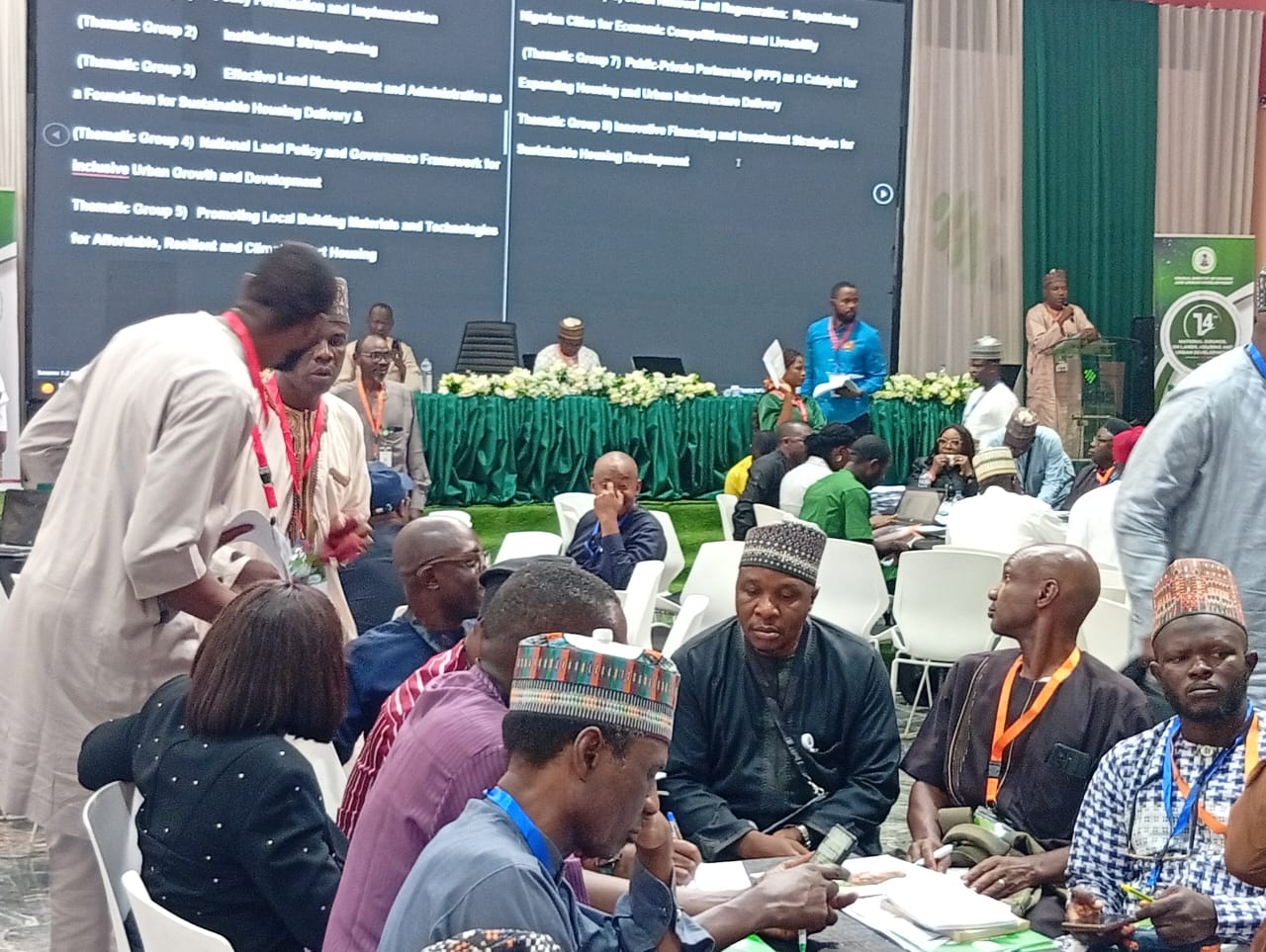
The Federal Government has unveiled a new national housing strategy anchored on land reform, urban renewal and public-private partnerships to address Nigeria’s growing housing deficit.
The Minister of Housing and Urban Development, Ahmed Dangiwa, disclosed this on Monday in Ilorin during the 14th National Council on Lands, Housing and Urban Development meeting.
The theme of the 2025 council meeting is “Achieving Housing Delivery and Sustainable Cities through Effective Land Management, Urban Renewal, Promotion of Local Building Materials, and Public–Private Partnerships in Nigeria.”
Speaking through the Director of Planning, Research and Statistics in the ministry, Alhaji Mukhtar Ilyasu, Dangiwa said Nigeria’s housing deficit, estimated in the tens of millions, remains one of the country’s most pressing socio-economic challenges.
He attributed the housing crisis to rapid urbanisation, population growth, rising construction costs and weak land administration systems.
According to him, “The newly introduced policy direction places effective land administration at the centre of housing delivery, while adopting urban renewal as a strategic tool for rebuilding Nigerian cities.
“The new framework positions private sector investment as the main driver of mass housing development across the country,” the minister said.
Dangiwa added that the policy would guide housing delivery, land administration and urban development planning in the coming years, noting that land management remains the foundation for expanding access to affordable housing nationwide.
He explained that urban renewal and regeneration have now been adopted as national policy tools to modernise cities, address uncontrolled urban growth, and respond to population pressure and climate-related challenges.
The minister further disclosed that the Federal Government is prioritising the large-scale adoption of locally sourced building materials as a cost-reduction strategy aimed at making housing more affordable while boosting local industries.
According to him, public-private partnerships will serve as the major engine for housing and urban infrastructure delivery, with government providing policy support, land governance reforms and investment-friendly frameworks to attract private capital.
“The Federal Government is strengthening national land governance frameworks to remove longstanding bottlenecks that have slowed housing development and promote inclusive urban growth,” he said.
Dangiwa also revealed that innovative housing finance and investment models are being introduced to unlock long-term funding for real estate development and bridge the housing gap.
He stressed that federal and state governments are being aligned under a unified housing and urban development agenda to ensure coordinated implementation and measurable outcomes.
Earlier, the Kwara State Commissioner for Urban and Housing Development, Dr. Olusegun Ogunsola, said the AbdulRahman AbdulRazaq-led administration has taken unprecedented steps in the past six years to address longstanding challenges in land and urban development.
Ogunsola said the state had embarked on policy reforms and sustained investments to tackle unregulated urban growth, decaying infrastructure and poor municipal services.
He cited the restructuring of the Kwara Geographic Information Services (KWAGIS) as a major intervention aimed at making land administration more efficient and transparent.
“The 20,000-hectare Kwara Smart City project is another bold response to the chaotic growth of Ilorin. It is designed to position the state for future development by leveraging its serene environment, vast land resources and private capital,” he said.
According to him, the Ilorin master plan has been reviewed for the first time in decades, reversing years of uncoordinated urban expansion.
“Our capital city, which once looked like an expanding slum, is gradually being transformed. Urban renewal efforts are ongoing, and the results are becoming evident,” Ogunsola added.
He said improvements in road infrastructure, waste management, water supply and intra-city transportation are already having a positive impact on residents and improving the overall livability of urban centres across the state.
In this article