
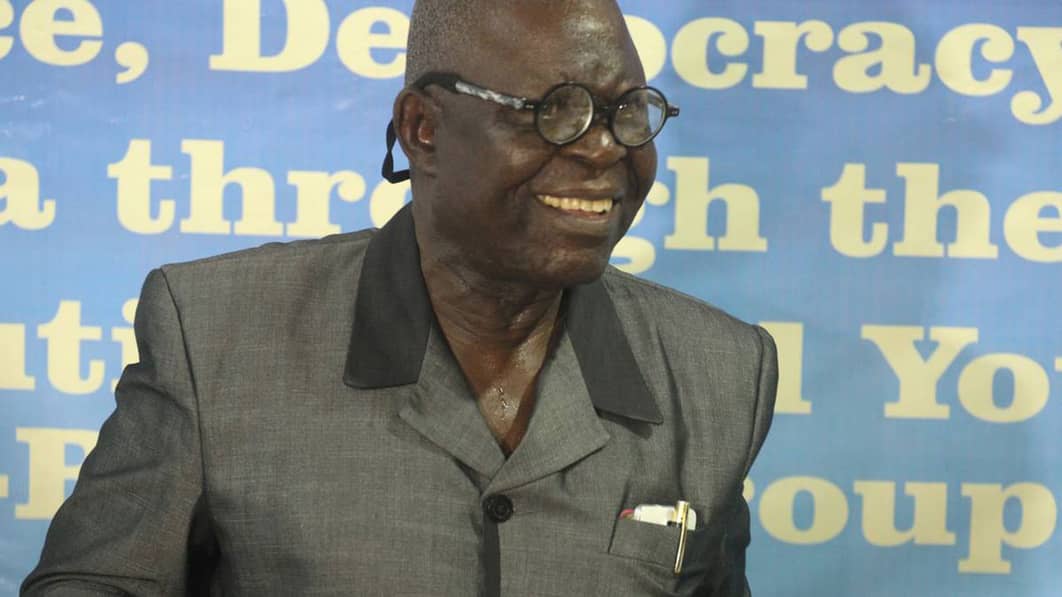
By Sylvester Odion Akhaine
A new book titled The Gun Hegemony by Chief Ayo Opadokun will be unveiled in Lagos on Thursday, January 15, at the Muson Centre. The event curiously will coincide with the 60th anniversary of the first military coup that terminated Nigeria’s First Republic.
The Gun Hegemony is an interesting addition to the pool of literature on military rule in Nigeria. There have been several accounts of that event that snowballed into the country’s civil war. Some of them are Why We Struck by Major Adewale Ademoyega; The Nigerian Revolution and the Biafran War by Alexander Madiebo; Nigeria’s Five Major by Ben Gbulie; 1966: The Dark Truth” by Emmanuel Nwobosi; and A Carnage Before Dawn by Ayomide Akinbode among others.
There are other bodies of literature that seek to interpret the event of 1966 and its enduring impact on the polity. For example, there is “The First Military Coup D‘état of 15th January 1966: Lessons for Nigeria Ediba,” a journal essay published in 2018 by Isaac Ogbogo, P. The author attempts a historical reading of the event.
There is also 2024 paper by Ibiang Ewa, titled “The Military coup d’état in Nigeria Political Life, 1966-1997: A Historical Explanation”, Ibiang Ewa, “The Military coup d’état in Nigeria Political Life, 1966-1997: A Historical Explanation”.
The interesting point really is that more facts are emerging about that epochal event that has shaped much of Nigeria’s post-colonial history. The coup brought the military into the saddle of running the affairs of Nigeria and accounts for the overbearing nature of the military in the affairs of the country, aptly meriting the title of The Gun Hegemony in this new work by Chief Opadokun.
The Gun Hegemony is composed of 15 chapters, accompanied by appendices and an index to facilitate the reader’s perusal of the work. The chapters in the 428 page work are: Chapter 1: Fact File; Chapter 2: Objective State of the Nation before the Army Struck on January 15, 1966; Chapter 3: Historical Background Of The Military Institution; Chapter 4: Preparation of The Military Politicians For The First Military Coup d’état Of January 15, 1966; Chapter 5: Maiden Coup Speeches; Chapter 6: Military Impacts On Socio-Political and Economic Landscape; Chapter 7: Impact On Social Services And Infrastructures; Chapter 8: Military’s Impact on The Judiciary; Chapter 9: Military Impact On The Nigerian Police; Chapter 10: Impact of Military Rule on The Military; Chapter 11: Abuse of Human Rights, Repression And Abuse of Citizens’ Rights; Chapter 12: Impact of Military Rule on the Media; Chapter 13: Military Transitions To Civilian Government; Chapter 14: Societal Levers Sustaining Military Dictatorship; and Chapter 15: Postscript.
The appendices accommodate the Historical List of Coups and Failed Coups Worldwide; Exchanges on the Civil War and Igbo Leadership between Ojukwu and C.C. Onoh; Paper Presented by Chief Arthur Nzeribe; Report on 1966 Coup; Need for Igbo-Yoruba Détente – Chinweizu; Akinjide: Death of an Enigma. The book is complete with a bibliography and index for easy perusal.
The overall content is a rich harvest of facts and information, scholastic analysis, and further research endeavours. The chapters respectively provide insights into the state of the nation before the military struck on January 15, 1966. The country had a functional federal system. But once the men on horseback arrived at the scene, democratic ethos gave way to dictatorial impulse that undermined the foundational values of state institutions and subaltern institutions of civil society, such as the media, repressed and presently corrupted by the prevailing set of politicians in the political arena. We see a judiciary hobbled by ouster clauses, forcing the conclusion reached by the Sage of Biltmore, Henry Louis Mencken, that “the military did not originate as a party of patriots, but as a party of bandits”.
Intriguingly and despite the overwhelming numerous problems of the country, corruption, nepotism, arbitrariness, some of which the coupists of 1966 sought to address, Chief Opadokun, the elder statesman, is able to harvest and offer to younger generation of Nigerians firsthand accounts of the event of 1966 that have not been in print, thereby enriching the repository of literature on the military adventure into Nigerian politics. The only ambitious work that I know that sought to account for the overwhelming presence of the military in our national life is General Chris Alli’s Federal Republic of the Nigerian Armed Forces. The soon-to-be Octogenarian Lawyer, politician, and political activist of the NADECO-fame deserves applause for this patriotic service to the fatherland.
Prof. Akhaine is of the Department of Political Science, Lagos State University.
In this article