
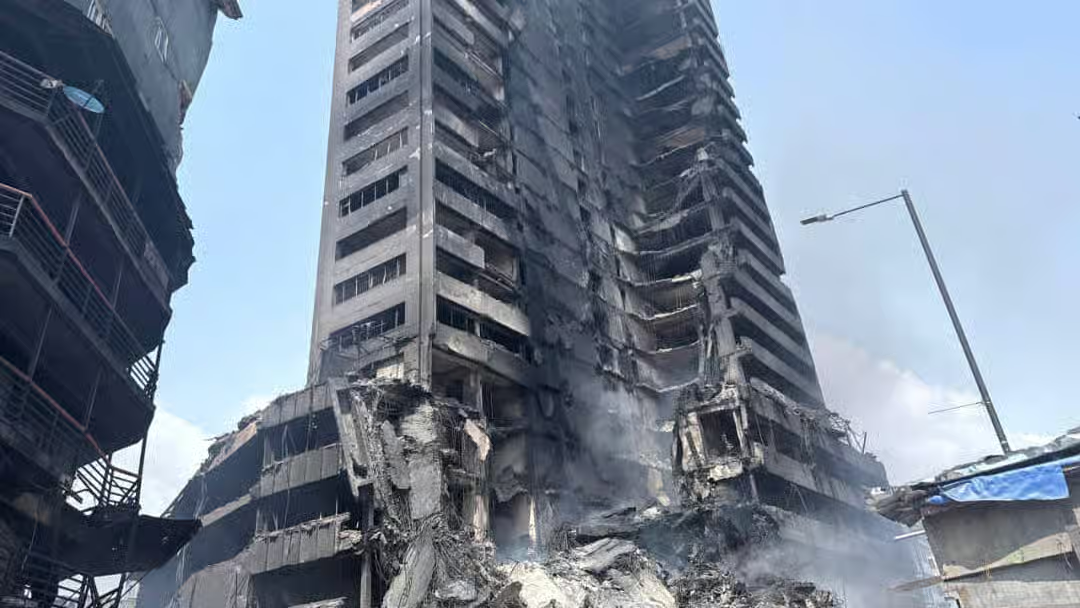
The Building Collapse Prevention Guild (BCPG) Lagos Island Cell has expressed concern over recurring high-rise fires in Lagos Island, most recently the fire incident at the Afriland Building and the inferno at the Great Nigeria Insurance (GNI) House.
These incidents, the group said, are not isolated accidents but clear indicators of systemic failures in fire safety compliance during the operational phase of buildings.
“Unlike one-time design flaws, operational lapses—such as unsafe conversion of offices into warehouses, poor enforcement of fire codes, and inadequate maintenance of fire protection systems—continue to turn Lagos Island’s towers into fire hazards. The GNI House, which has experienced two separate fires in its history, exemplifies how neglect of operational fire standards allows hazards to persist with devastating consequences,” the guild said.
The guild, which visited the GNI building at 47/57 Martins Street for a visual assessment, warned of the imminent danger of collapse of the razed structure.
According to the group, it is alarming that the building has been burning continuously since Christmas Eve, December 24, 2025, with the fire still not fully extinguished. As of 11:00 a.m. on December 27, 2025, additional fire engines and water tankers were still struggling to gain access to the site, causing chaos in surrounding areas, including Nnamdi Azikiwe Street, Martins Street, Gbajumo Street, Kosoko Street and Alli Balogun Street.
While the fire raged, explosive spalling of concrete sent burning fragments flying across the road, forcing bystanders to scamper for safety. Moments later, the high-rise building suffered a partial collapse, raising immediate concerns for public safety.
“Beyond this specific incident, Lagos Island has experienced a pattern of repeated fires affecting major structures. Buildings in the neighbourhood of GNI House have suffered damage from fire propagation, leaving them vulnerable,” it said.
BCPG extended condolences to those who lost family members, loved ones and property, and expressed sympathy with those injured in the tragic GNI building incident during the festive season.
The guild noted that a time meant for joy had been overshadowed by sorrow, adding that its thoughts remained with every affected household as they endure the painful loss.
The misuse of Lagos Island’s high-rise buildings, the guild said, is fuelling disaster risks, as many towers have been converted from their approved corporate use into shops and warehouses packed with combustible materials, creating conditions that heighten fire hazards. This pattern of unsafe remodelling, poor oversight and unregulated occupation has already forced organisations to relocate, leaving several buildings underutilised.
It called for urgent government action to regulate building usage, enforce safety standards and strengthen oversight to close the gaps. In a statement jointly signed by the Coordinator, Mubarak Gbaja-Biamila, and the Secretary, Femi Oyedele, the guild noted that the history of fire incidents on Lagos Island’s skyline is marked by repetition and neglect.
“In 2013, GNI House suffered its first major blaze, setting a troubling pattern. The following year, in 2014, the Financial Trust House was engulfed, underscoring that compliance lapses are not limited to a single building.
“By 2015, Bookshop House—a heritage landmark—was affected, and in 2016, UBA House at Marina was struck. The trend continued: Elephant House burned in 2017, Unity House in 2018, and Western House in 2019. Each incident further eroded public confidence in the safety of Lagos Island’s skyscrapers.”
In light of the recurring high-rise fires and the grave risks they pose to lives, property and Nigeria’s cultural heritage, the Building Collapse Prevention Guild (BCPG) has called on Governor Babajide Sanwo-Olu and all relevant state authorities to take decisive and immediate action.
The guild also proposed a comprehensive framework to strengthen governance, modernise firefighting capacity, enforce compliance and safeguard Lagos Island’s historic and commercial landmarks from further devastation.
It urged the Lagos State Government to commission, without delay, a comprehensive investigation into the GNI building fire and ensure that its findings are made public to promote transparency and accountability.
According to the guild, the knowledge gained from the inquiry must be applied to extract lessons from the current hazard situation involving high-rise structures on Lagos Island, Nigeria’s former capital.
The group further called for a comprehensive audit of all high-rise buildings on Lagos Island within 90 days to assess fire safety readiness and structural integrity.
It said a safety commission should be empowered to enforce compliance, publish yearly reports and sanction violators without political interference, with a specific mandate to address the operational phase of buildings—the critical stage long neglected in favour of pre-approval oversight.
It said: “Clear penalties should be defined and enforced for landlords, contractors and officials who neglect fire codes, ensuring accountability across both private and public actors.
“High-rise structures should be subject to annual public disclosure of their fire safety status, with inspection results made accessible to tenants, regulators and the public.
“The Lagos State Government should enforce the provisions of the Nigerian Insurance Industry Reform Act 2025 by mandating compulsory fire insurance for all high-rise and commercial buildings, ensuring that property owners and tenants maintain valid coverage as a condition for occupancy and continued operation.
“A dedicated Fire Safety Fund should be allocated, drawing from government budgets, insurance levies and public-private partnerships, to guarantee sustainable financing for infrastructure, training and enforcement.
“Whoever approved the remodelling of high-rise buildings should be prosecuted. Anyone who rents out such buildings without fire protection facilities should face the law.”
In this article