
By Abimbola Adelakun
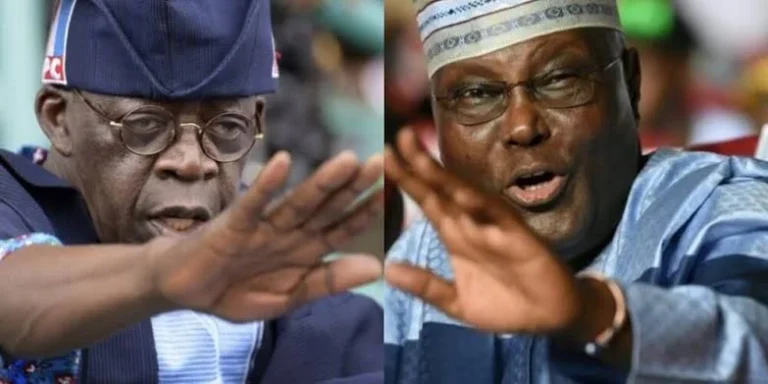
Thanks to ADC presidential candidate Atiku Abubakar, who is now promising to restore the fuel subsidies that the Bola Tinubu administration removed in 2023, the matter will be a major campaign issue. As expected, the APC crowd quickly reminded Atiku that removing the fuel subsidies was his campaign promise during the 2023 electioneering; going back on his word makes him look inconsistent. Atiku was not the only one who promised to remove the fuel subsidy. Two other leading presidential candidates also did, reflecting a lack of ideological polarisation in our political parties. It is the bane of our politics that political parties do not have a distinct ideology, competing economic or moral vision, or contrasting strategy for execution, and, therefore, no distinguishable policy plan. Candidates tend to go for what is politically expedient and calculated to excite voters, which is also why people generally vote for personalities (representing tribe and religion) rather than policy.
In any case, Atiku is not the only opportunist here. Tinubu himself staunchly opposed subsidies when his party was the leading opposition voice, only to remove them as President. While one can argue that he evolved politically and ideologically to change his position, one is also unsure what truly changed with Tinubu. He did not appear at the presidential debates, not merely because he lacks persuasive rhetorical skills, but also because he has not had a single idea in decades that had not been curated by a battery of assistants and ghostwriters whose ideological persuasions themselves are incoherent. He cannot defend rethinking his previous stance because he likely did not fully understand what he previously said.
Even worse, little suggests he thought through the policy’s implications or planned for the fallout. In his own confession, he claimed he took the decision because he was inspired by “spirits”. If today the whole subsidy affair has resulted in severe economic deprivation and they have nothing to offer Nigerians other than vague promises of El Dorado in an indeterminate future, it is because they did not sit down to count the policy cost and determine how they would manage the consequences. Tinubu simply said it, probably first as a slip of the tongue (or genuinely heard voices in his head). As reality adjusted to the proclamation, he saw an opportunity to do what had vexed previous governments (for instance, the Muhammadu Buhari administration removed fuel subsidies about three times) and doubled down.
Under different circumstances (and with different outcomes), sticking with the decision would be an example of administrative resoluteness, integrity, and even the courage of conviction. Yes, because leaders must sometimes make hard, unpopular decisions, knowing that temporary sacrifices will eventually produce better results. Countries like China and Singapore did not become the economic giants they are today because their leaders waffled on defining economic decisions. They not only made sacrifices, but they also subjected themselves to disciplined thinking and habits (that leaders of most African nations have yet to master anyway). Buhari was one leader who especially liked the China economic turnaround story but never subjected himself to the hard work of thinking and acting that that transformation required.
He thought it was about posturing poverty, and when that did not work, he simply shifted the burden to poor Nigerians, presuming that if they suffered enough, they would become innovative somehow. The Tinubu administration is offering us the same attitude.
The spirits that instructed Tinubu to remove the subsidies did not follow up by telling him to provide evidence-based arguments on how the plan will unfold, what to expect and when, and how to build and maintain public trust throughout. The outcome Nigerians were told to expect from the subsidy removal policy will not manifest merely because you triggered a set of variables. There will be fallout, and there must be a contingency plan to manage it so people are not so demoralized by the strangulations of the economy that they stop innovating altogether. This is part of what has been missing in Tinubu’s administration’s approach to removing subsidies in key sectors like energy. Because they did not plan well ahead regarding how the effects would be managed, they have been in full reactionary mode since 2023. A coherence gap exists between their conception of an ideal abstract policy and the real-life consequences of the pain it has inflicted.
Three years into their government, their best argument for what the policy has achieved is the meagre gains of more money at state levels to pay salaries and pensions, fewer queues at filling stations, and some outstanding obligations paid. These are good developments, but so what? The fuel subsidy debate in Nigeria has subsisted for almost four or more decades—longer than a significant chunk of our present population has lived. Did we spill all that ink just for some modest achievements? If we go by the arguments for which they said fuel subsidy removal was necessary, Nigeria should be awash with money and the initiatives to diversify our economy. Whatever happened to the projections of all the money that would be supposedly freed up and diverted into the infrastructure of education, health, and public utility? Those sectors have yet to receive the promised upgrades.
Instead, they have been beating us on the head with the disaster the policy supposedly averted. They insist Nigeria would have fallen into disaster if the decision had not been taken. But what immediate difference does it make to a person whose house is being swept off by a flood that the disaster was not a tsunami? Besides, that specter of imminent dystopia has been hanging over the nation forever. In 1992, IBB said he looked at the Nigerian economy and wondered why it had not yet collapsed. About 34 years later, we are still sliding on the spectrum of “about to collapse”, “almost collapsed”, and “saved from an imminent collapse” rather than elevating into the stage of social flourishing.
Their promises of future gains from the policy are no longer convincing. We have heard all this before; why should we believe you now? We have been circling the mountain of promises forever, but hardly much has changed. Maybe part of the problem is that our leaders keep imagining “collapse” as a spectacular breakdown of all financial activity rather than a far less dramatic situation where inflation is distressingly high, unemployment is high, productivity is low, and purchasing power is low. While it is one thing to exchange words with Atiku, the Tinubu administration needs to sit itself down and rethink this policy rather than handing out promises like cheap candies. Is this going anywhere, or are we merely the subject of cruel economic experimentation? Merely moving people from scaremongering to beautiful promises is not reassuring. You cannot frighten us with how policy reversal will reverse economic gains when the only ones who have benefited from subsidy removal are the usual fat cats.
Call Atiku a chancer, but he at least seems more responsive to the poorly managed consequences of the subsidy removal by considering a reversal or a phase-out. If there are no socially transformative gains to be made from subsidy removal despite the decades-old argument that thought otherwise, a reversal should be on the table. The policy itself may be useful, and the problem may be Tinubu’s shoddy execution, but we cannot hold out indefinitely. We are humans with tolerable limits, not the laboratory mice upon whom you experiment with abstract ideas. While I am unconvinced that reversing the subsidy policy would bring immediate relief to Nigerians (things do not easily go down when they go up), at least he is thinking of relieving Nigerians of their burden. That is something Tinubu’s administration has not thought of as an urgent concern.
Abimbola Adelakun
In this article